


A tongue tie can make breastfeeding harder, but it is not always the cause when feeding hurts or your baby seems unsatisfied. Many babies with a visible tie feed well, and many feeding problems come from something else. The useful question is not “does my baby have a tie?” but “is the tie limiting how my baby’s tongue works at the breast?” This guide shows you the signs to watch for, how a careful assessment works, what support to try first, and when a release is reasonable.
TL;DR
- Tongue tie (ankyloglossia) is a short or tight band under the tongue that limits movement. It can affect latch and milk transfer, but plenty of babies with one feed normally.
- Warning signs include a shallow or unstable latch, long feeds, clicking, poor weight gain, and nipple pain, damage or repeated mastitis for the parent.
- Skilled lactation support comes first. A release is considered when pain or poor milk transfer persists despite that help.
- Poor weight gain or declining growth needs prompt medical evaluation, not a wait-and-see approach.
- Function matters more than appearance. A thorough exam includes watching a feed, not just looking under the tongue.
Table of Contents
- What a tongue tie is and how it can affect feeding
- Signs that a tie may be affecting breastfeeding
- Why tongue tie is not always the answer
- How a careful assessment works
- What to try before a release
- When a release may be reasonable
- Perspective: what we tell parents
- If you decide on a release: what comes next
- Seeing us in Fremont
- FAQ
- Sources
What a tongue tie is and how it can affect feeding
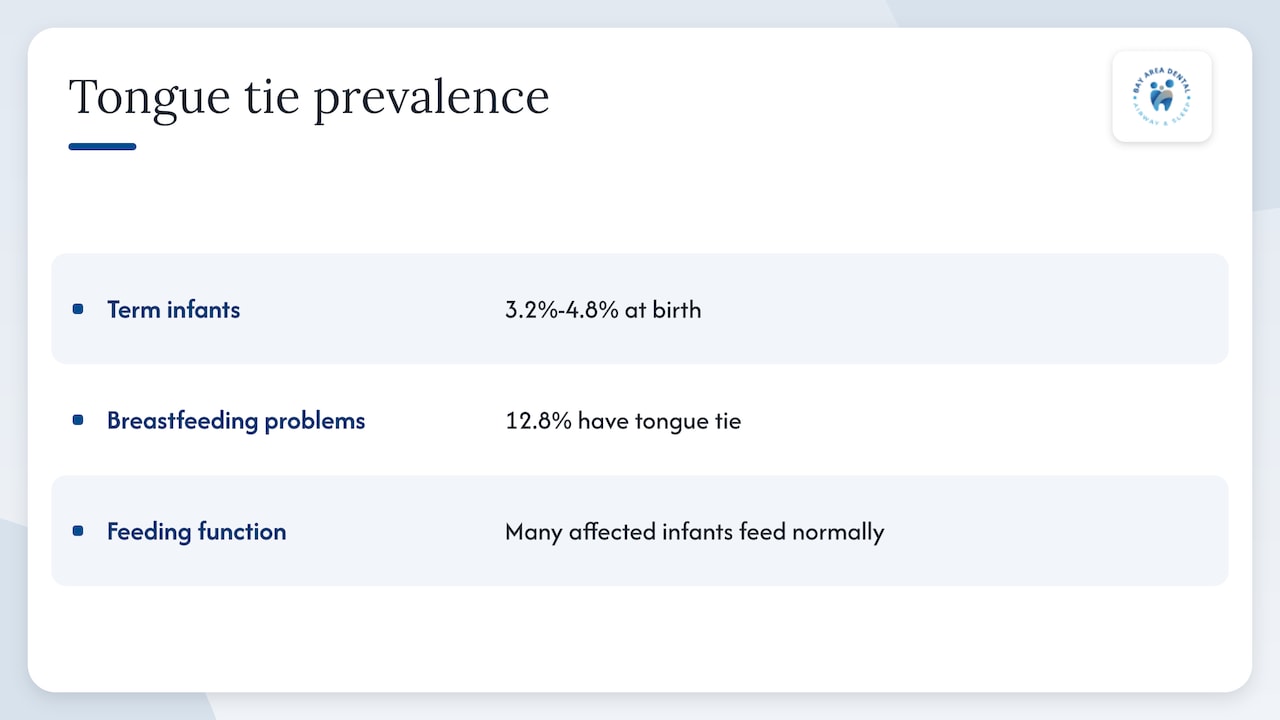
Tongue tie happens when the band of tissue under the tongue, the lingual frenulum, is short, tight or attached in a way that restricts the tongue. The Academy of Breastfeeding Medicine describes it as a frenulum that changes the tongue’s appearance or function because of reduced length, lack of elasticity or attachment point. The same protocol reports it in roughly 3.2% to 4.8% of term infants at birth, and in 12.8% of infants who have breastfeeding problems.
To nurse well, a baby needs to draw the breast deep into the mouth, extend the tongue over the lower gum and move it in a wave to remove milk. If the tongue cannot do that, the baby may latch shallowly, slip off, or work hard for little milk. That is how a tie can lead to pain for you and slow transfer for your baby.
The key phrase is “can.” The American Academy of Pediatrics notes that many infants with the condition feed normally, which is why the exam has to look at function and not only anatomy.
Signs that a tie may be affecting breastfeeding
No single sign proves a tie is the problem. Look for a pattern that persists after positioning and latch have been checked.
In your baby
The ABM protocol lists these infant signs:
- Difficulty latching or staying latched
- Frustration, or falling asleep at the breast
- Long feeds and a baby who still seems dissatisfied
- Poor weight gain or failure to thrive
The UK’s NHS adds clicking sounds and being unsettled during feeds to the list. A review in PMC also notes that suboptimal intake can bring jaundice.
In the breastfeeding parent
The same ABM protocol describes parent complaints that include traumatized nipples, severe pain with feeding, incomplete breast drainage, plugged ducts and breast infections, and sometimes an inability to let down because of the pain. The NHS also lists cracked nipples, mastitis and low milk supply.
Nipple pain is common in the early days even with a perfect tongue, so pain alone is not a diagnosis. Pain that stays severe, leaves compression marks or damages the skin after a latch check deserves a closer look.
When it is not a feeding-support question anymore
Some signs call for a medical visit now. The AAP says any infant with growth faltering should be promptly evaluated, including a baby below the weight-for-age or weight-for-length percentile, or whose weight gain drops across two major percentiles. Call your pediatrician as well if feeds involve choking, coughing, feeding refusal or color changes, which the AAP lists among symptoms of infant swallowing difficulty.
Why tongue tie is not always the answer
The top-ranking advice on this topic, and the professional bodies, agree on one thing: feeding trouble has many causes. The ABM position statement warns that problems may be wrongly blamed on a normal frenulum, which is why a full assessment with differential diagnoses matters. Positioning, a shallow latch for other reasons, low supply, a fast letdown, prematurity or jaundice-related sleepiness can all look similar.
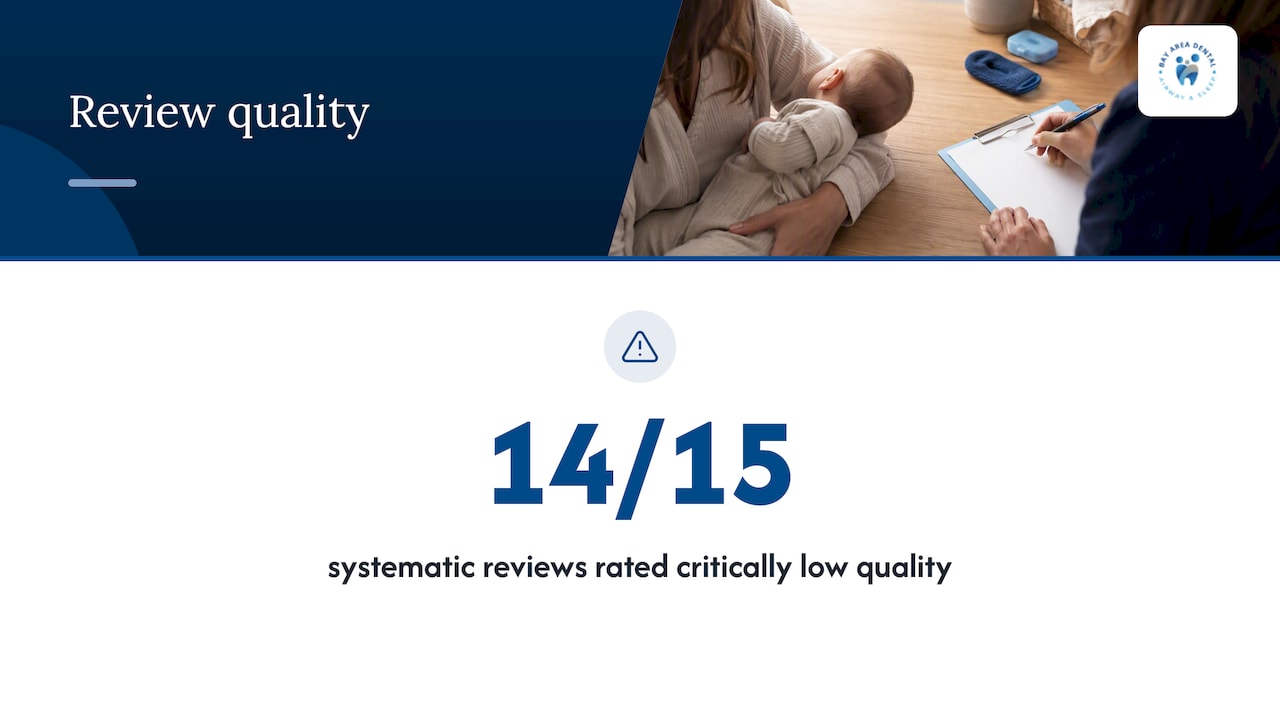
There is also real debate about rising release rates. The AAP says concern exists about possible overdiagnosis given the dramatic increase in procedures in recent years, and AAP News links the rise partly to no standardized way to diagnose or classify ankyloglossia. A 2025 umbrella review found that 14 of 15 systematic reviews were critically low quality and called the evidence inconclusive.
We think parents deserve that honesty. A release can help some babies and parents. It is not a default fix for every hard feeding journey.
Lip ties and cheek ties
Lip ties get a lot of attention online. The ABM states there is no published evidence that treating labial or buccal frenula improves milk transfer or reduces nipple trauma, and that buccal ties should not be released. If you are trying to sort out which band is which, this breakdown of when a lip tie affects breastfeeding walks through assessing before deciding. Our own page on why feeding function matters more than a lip tie’s appearance covers the same principle.
Posterior tongue tie
This is the most contested label. Some authors describe a shorter, thicker or submucosal frenulum attached farther back, but a PMC review stresses that ankyloglossia should not be diagnosed without actual restriction of tongue movement. AAP News calls the term inaccurate and notes there is no validated assessment tool or randomized trial supporting frenotomy for it. If someone tells you a posterior tie is the cause, ask what restriction they saw and how it connects to the feeding problem. Our posterior tongue tie checklist for parents gives you questions to bring.
How a careful assessment works
A good evaluation is a feeding evaluation. The ABM position statement says assessment combines a clinical exam, observation of the pair at the breast, evaluation of the baby’s tongue anatomy and function, and a thorough feeding history. No single tool is considered definitive for deciding on surgery.
AAP News describes two aids a pediatrician may use: the Bristol Tongue Assessment Tool and the LATCH mnemonic (Latch, Audible swallowing, Type of nipple, Comfort, Hold), alongside observing the position of the feed and the baby’s mouth and tongue.
Here is what to expect from a thorough visit:
- History. Your baby’s feeding pattern, wet and dirty diapers, weight trend, your pain level and any breast problems.
- A watched feed. The clinician sees the latch, the swallowing and how your baby behaves.
- Mouth exam. Tongue lift, extension, movement and how the frenulum attaches.
- A plan. Often support first, with a clear check-back date.
If you want to understand who does what among your pediatrician, lactation consultant and dentist, see our guide on tongue tie and lactation consultants.
What to try before a release
The ABM says skilled lactation consultation on positioning, attachment and suckling should be the first-line approach before considering surgery. Its older protocol adds that conservative management may be all that is needed: breastfeeding help, education and reassurance.
In practice that can mean:
- Trying different holds and a deeper latch with hands-on help
- Checking milk transfer and weight at a follow-up
- Treating nipple damage while you work on the latch
- Pumping or supplementing under guidance if weight is a concern
A lactation consultant and a dentist who treats ties work best together. The consultant fixes what can be fixed with technique, and the dentist checks whether the tongue itself is restricted.
When a release may be reasonable
The ABM says a frenotomy may be offered when maternal nipple pain or poor milk transfer cannot be corrected in a timely way with conservative measures. A pooled analysis in that statement found reduced maternal nipple pain afterward. It lists the risks as pain, bleeding, infection and oral aversion, and the ABM protocol adds possible injury to Wharton’s duct, though complications are rare.
So a release is most defensible when:
- A clinician has watched a feed and found a restricted tongue
- Pain or poor transfer has persisted after skilled lactation help
- The family understands the benefits, the limits and the risks
It is a weaker fit when the baby feeds well, when only a lip or cheek band is present, or when no one has assessed the feed. The AAP handout adds that there is little evidence linking tongue tie to later problems, and that if feeding is fine there is generally little cause for concern. For the speech question, see what the evidence says about tongue tie and speech delay.
Perspective: what we tell parents
At Bay Area Dental, Airway & Sleep in Fremont, we look at the whole picture, not only the band under the tongue. We think about how a baby feeds, breathes and sleeps, because mouth function connects to airway and long-term health. That is why we start with the feeding story and a hands-on exam, and why we work alongside pediatricians and lactation consultants rather than in place of them.
We do not believe every tie needs a release. We believe every baby with suspected feeding trouble deserves a proper function check, and that parents should hear plainly what a release can and cannot do. When a release is the right step, we use laser technology to keep treatment minimally invasive, and we explain aftercare before the day arrives. Our guides on function-first tongue tie revision and infant tongue tie guidance for avoiding unnecessary surgery lay out how we think about the decision.
— Admin
If you decide on a release: what comes next
A release is the start of a recovery plan, not the end of the story. Expect to keep working on latch with your lactation consultant afterward, and to follow your clinician’s aftercare instructions closely. These pages explain what the first days and weeks can look like at our practice:
- Breastfeeding after a frenectomy: the first 72 hours and when to call
- Frenectomy aftercare for parents
- Stretches and care after a tongue tie release
- Laser frenectomy recovery over the first one to two weeks
- Bottle feeding changes with a tie
Bottle-fed and combination-fed babies can have the same tongue restriction, so the same function-first approach applies.
Seeing us in Fremont
If your baby has had a feeding assessment and you are weighing a release, we can examine your baby’s tongue function and talk through your options, including the choice not to treat. We offer laser frenectomy for infants, children and adults, and our pediatric dental care covers children as they grow. Pricing is not published, so contact the office for details. If you are newly postpartum, bring your lactation consultant’s notes and your baby’s recent weights to the visit.
FAQ
Can a tongue tie cause breastfeeding pain?
Yes, it can. A restricted tongue may cause a shallow latch that damages nipples, and the ABM lists severe nipple pain among parent complaints. But early soreness is common without a tie, so have your latch checked by a lactation professional before assuming the tie is the cause.
Should we see a lactation consultant before a tongue tie release?
In most cases, yes. The ABM calls skilled lactation help on positioning, attachment and suckling the first-line approach. A release is considered when pain or poor milk transfer continues despite that help.
Does a lip tie affect breastfeeding?
The evidence is weak. The ABM states there is no published evidence that treating lip or cheek frenula improves milk transfer or reduces nipple trauma. A tongue-function assessment matters more than how the lip band looks.
How do I know if my baby is getting enough milk?
Watch weight gain, diapers and your baby’s behavior after feeds, and have your pediatrician track growth. The AAP says infants whose weight gain falls across two major percentiles should be evaluated promptly. Call your pediatrician right away if you are worried.
Sources
- ABM Protocol #11: Neonatal ankyloglossia
- ABM Position Statement on Ankyloglossia, 2021
- AAP: Identification and Management of Ankyloglossia
- AAP News: Unraveling breastfeeding problems tied to ankyloglossia
- AAP handout: Tongue-tie (ankyloglossia)
- NHS: Tongue-tie and breastfeeding
- Ankyloglossia, PMC review
- Lingual Frenotomy in Breastfeeding Infants: An Umbrella Review
- AAP: Growth Faltering in Newborns and Infants
- AAP: Feeding Issues
- When a lip tie affects breastfeeding