

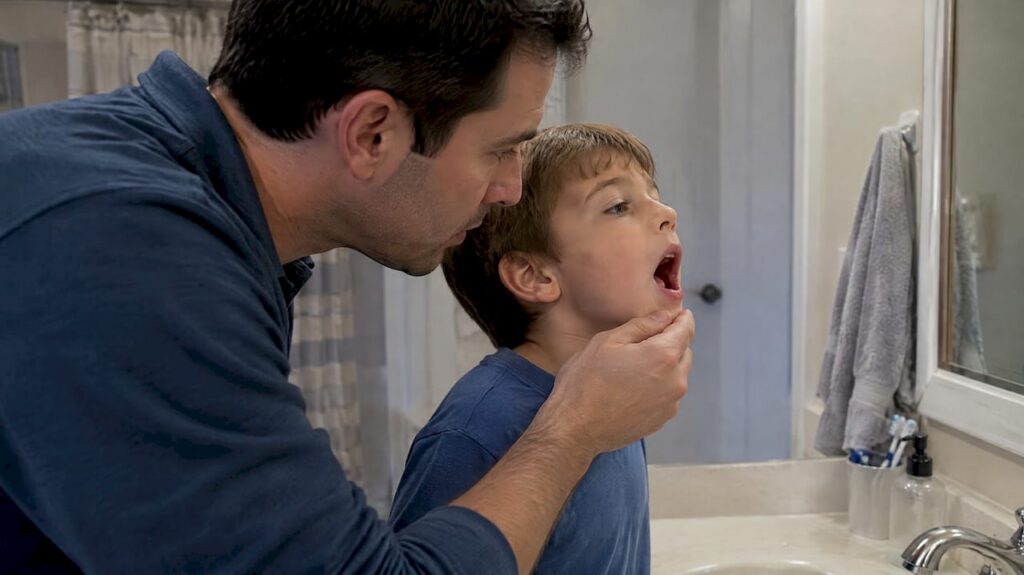
Most babies, children, and adults heal from a frenectomy within 1 to 2 weeks with simple home care: feed or eat to comfort, use cold compresses for swelling, and follow the dosing your provider gives you for pain relief. Expect a white film over the wound by day 3, gradual soreness relief through day 7, and continued tissue remodeling over the following weeks. Call your provider right away for heavy bleeding, fever, or a baby who refuses to feed.
TL;DR:
- A white or yellow film appears by days 3 to 5 as a normal fibrin layer; spreading redness, fever, or worsening bleeding warrants a call.
- If your provider prescribes stretches, start the next day and use brief, gentle sessions several times daily; protocols differ, and forceful routines are not advised.
- Breastfeeding benefits are not assured: trials found no consistent improvement in rates at three months, so pair release with lactation support when feeding problems persist.
- Children should receive acetaminophen no more than five times in 24 hours; ibuprofen is an option only after six months unless the provider advises otherwise.
Table of Contents
- How long does the frenectomy healing process take?
- What should you do in the first 24 to 48 hours after surgery?
- How do you manage pain and swelling safely?
- How should you feed your child during recovery?
- What does normal healing look like, and when is it a problem?
- What about stretches and exercises after a frenectomy?
- When should you follow up or call your provider?
- How we think about aftercare and follow-up
- Ready for a minimally invasive frenectomy with real follow-up support
- FAQ
- Sources
How long does the frenectomy healing process take?
Healing happens in stages, and knowing what to expect at each one keeps small, normal changes from feeling alarming.
- Day 0 to 2: The wound is pink or red, mild swelling is common, and infants may be fussier than usual during feeds.
- Days 3 to 7: A white or yellow film forms over the site. This is a fibrin layer, part of normal healing, not an infection.
- Weeks 2 to 4: The tissue continues to remodel and soreness fades; stretching, if prescribed, matters most during this window to limit reattachment.
Healing speed varies with age, the technique used, and the individual. Diode laser frenectomy has been associated in randomized trials with less bleeding, less pain, and faster early healing than scalpel techniques, which is one reason many clinics favor it for anxious parents and young patients. For a closer look at what a laser recovery timeline looks like day by day, our laser frenectomy recovery guide walks through it in more detail.
What should you do in the first 24 to 48 hours after surgery?
The first two days set the tone for the rest of recovery, and a few simple steps lower the chance of complications; for comprehensive guidance, see our after tooth extraction instructions: post-operative recovery.
- Check the wound gently; a small amount of blood-tinged saliva is normal, but steady bleeding is not.
- Feed your infant right away if your provider has cleared it. Feeding comforts the baby and helps control minor bleeding.
- Offer cool or room-temperature fluids and avoid straws, hot drinks, and alcohol-based rinses for the first day.
- Keep older children calm and seated, with light activity only, and skip the waterpik near the site for at least a week.
- Let your child rest with their head slightly elevated to reduce swelling overnight.
Pro Tip: Keep a small notebook or phone note of feeding times and any bleeding you see; it makes the follow-up call or visit much faster.
How do you manage pain and swelling safely?
Most discomfort peaks in the first 48 hours and eases steadily after that. Cold compresses on the jaw, extra skin-to-skin contact, and shorter, more frequent feeds all help without medication.
When medication is needed, dosing accuracy matters more than the drug itself:
- Acetaminophen (160 mg/5 mL) can be given every 4 hours for children under 12, up to the recommended maximum number of doses in 24 hours, always measured with the dosing device that comes with the product, per Healthychildren.
- Ibuprofen is an option every 6 to 8 hours for infants older than 6 months unless your provider says otherwise.
- Avoid multi-symptom cold or allergy medications in infants, since they can lead to accidental double-dosing of acetaminophen.
The AAP’s own dosing chart sets the ceiling at 5 doses of acetaminophen in 24 hours for children, a limit worth writing down somewhere visible during a sleep-deprived week.
How should you feed your child during recovery?
Feeding is both nutrition and comfort, and getting it right speeds healing for infants and older kids alike.
- Nurse or bottle-feed as soon as your provider allows; sucking motion itself can soothe the wound.
- Adjust latch and positioning gently in the days after release, since the tongue or lip may move differently than before.
- If bottle-feeding, slow the flow and pace feeds to avoid frustration while the mouth is still tender.
- For older children or adults, stick to soft foods such as yogurt, mashed potatoes, or scrambled eggs for several days, and skip anything hard, spicy, or acidic.
- Seek out an IBCLC or feeding specialist if latch difficulties or discomfort continue past the first week.
Evidence on long-term breastfeeding gains after frenotomy is mixed. The FROSTTIE trial found no consistent increase in breastfeeding rates at 3 months compared with breastfeeding support alone, though some mothers reported more confidence. An earlier randomized trial found reduced nipple pain in the short term but no reliable long-term feeding benefit on its own. That is why pairing the procedure with lactation support, not expecting it to work alone, tends to produce the best outcomes. Our piece on lip tie and feeding function covers this balance in more depth.
What does normal healing look like, and when is it a problem?
A clean mouth heals faster, but “clean” does not mean scrubbing the site.
- Rinse gently with warm salt water a few times a day for older children; skip alcohol-based or peroxide mouthwash near the wound.
- Hold off on waterpiks directed at the site for a few weeks.
- Expect a white or yellow film to appear by day 3 to 5; this is a fibrin clot, the body’s natural healing layer, not pus.
- Watch for red flags: spreading redness or heat around the wound, pus accompanied by fever, or bleeding that worsens instead of easing.
- Resume normal brushing near the area as soon as it feels comfortable, usually within a few days.
Some clinic handouts describe this film as alarming to parents on first sight, which is why comparing daily photos is more useful than reacting to a single moment.
What about stretches and exercises after a frenectomy?
Not every provider prescribes stretches, and philosophies differ here more than in most other parts of aftercare.
- When prescribed, gentle tongue or lip stretches typically start the day after the procedure to limit the wound from reattaching as it heals.
- Technique matters more than frequency: a light, brief stretch several times a day beats one long, forceful session.
- Research on stretching protocols is mixed, and providers vary in how strongly they recommend them, so follow your own clinic’s specific plan rather than a generic online routine.
- Pair stretches with a feeding or calming routine your child already expects, which makes them easier to stick with.
Pro Tip: A quick check mark on a calendar after each stretch session makes it obvious at a glance whether you are keeping pace with the plan.
Our guide on starting stretches the day after release walks through technique in more detail if your clinic has prescribed them.
When should you follow up or call your provider?
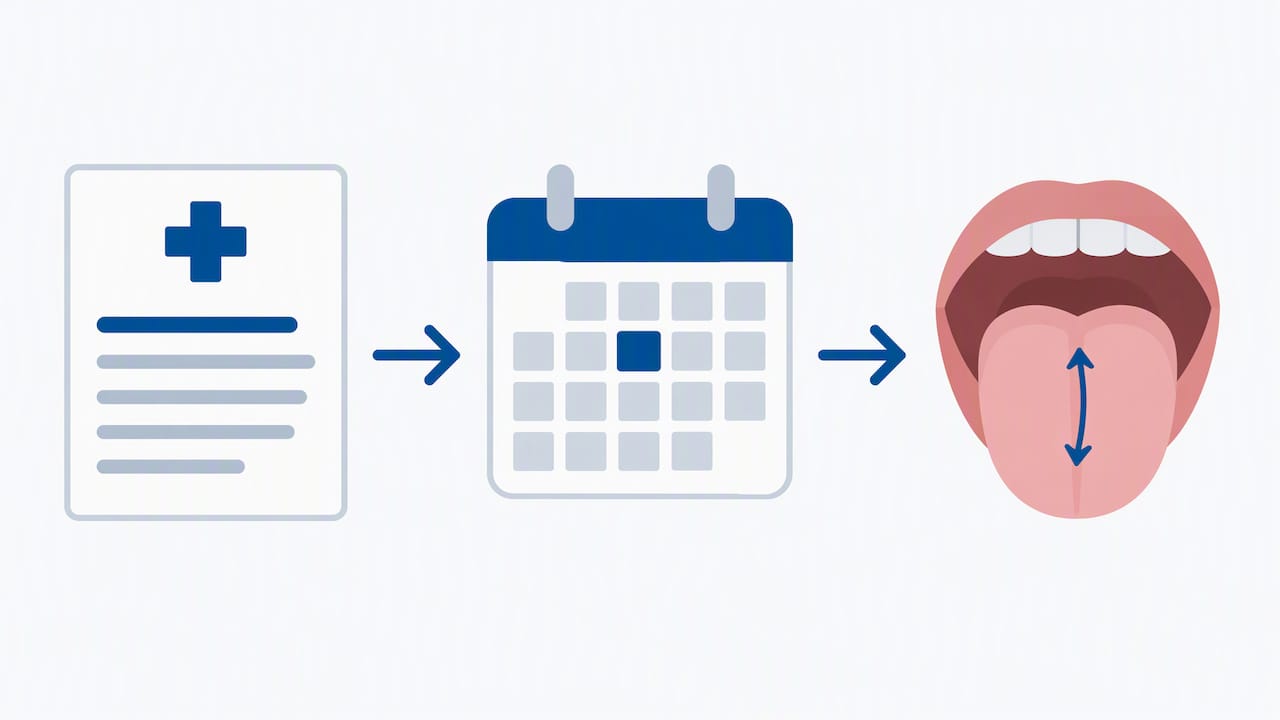
Routine follow-up usually happens within the first week or two, when your provider checks healing, feeding progress, and wound appearance.
- Contact your provider right away for bleeding that does not slow with gentle pressure or feeding.
- Call for a fever over 100.4°F, refusal to feed, or noticeably fewer wet diapers than usual.
- Reach out if redness spreads beyond the wound or you see pus along with other signs of illness.
- Bring a short feeding log, any photos of the wound, and a list of medications given to your follow-up visit; it speeds up the check-in considerably.
How we think about aftercare and follow-up
Aftercare works best as a process, not a single handout. At Bay Area Dental, Airway & Sleep, we built our approach around airway therapies, restorative and cosmetic dentistry, and myofunctional therapy because feeding and tongue function rarely improve from a single procedure alone. We also rely on 3D imaging and laser treatment to keep the procedure itself minimally invasive, which supports more comfortable early healing. Real recovery depends on what happens in the days and weeks after the appointment: how feeding goes, whether stretches are done correctly, and whether small concerns get caught early instead of left to resolve on their own. That is why we treat follow-up as part of the procedure, not an afterthought, and why we coordinate with lactation consultants and therapists when a child’s needs go beyond the release itself, consistent with how Cleveland Clinic describes team-based care for tongue-tie.
— Admin
Ready for a minimally invasive frenectomy with real follow-up support
If you are weighing a frenectomy for your infant, child, or yourself, a laser procedure paired with a clear aftercare plan makes the first two weeks far less stressful to manage at home. We perform laser frenectomy at our Fremont practice with a structured follow-up schedule, so you are never guessing whether a symptom is normal or worth a call.

Reach out to schedule a consultation and walk through what recovery will look like for your specific case before the day of the procedure.
This article is general information, not a substitute for advice from a qualified doctor. Consult a qualified healthcare professional about your own circumstances before acting on anything here.
FAQ
How is a tongue-tie diagnosed in adults?
A tongue-tie is typically diagnosed through a physical exam of the lingual frenulum along with an assessment of tongue mobility, speech, and any feeding or swallowing difficulties the adult reports. There is no single universal scoring tool used across all providers, so findings and recommendations can vary between clinicians.
What are standard post-operative instructions after frenectomy surgery?
Standard instructions include feeding or eating to comfort soon after the procedure, using cold compresses for swelling, avoiding straws and hot drinks for the first day, and following a specific medication dosing schedule from your provider. Most people also get instructions on gentle wound hygiene and, in some cases, stretches to prevent reattachment.
What does the procedure to release a tongue-tie involve?
The procedure, called a frenotomy or frenectomy, involves releasing the thin band of tissue connecting the tongue to the floor of the mouth using a laser or surgical instrument. A diode laser approach has been linked in trials to less bleeding and faster early healing compared with a traditional scalpel technique.
How much does tongue-tie release typically cost?
Cost varies by provider, technique, and whether the patient is an infant, child, or adult, so there is no single published figure that applies everywhere. We do not list a set price for laser frenectomy publicly; reach out directly for a quote based on your specific case.
Is it normal to see a white film on the wound after frenectomy?
Yes, a white or yellow film appearing around day 3 to 5 is a normal fibrin layer that forms as the wound heals, not a sign of infection. Contact your provider if you notice spreading redness, fever, or bleeding that worsens instead of improving.
Sources
- Acetaminophen for fever and pain | HealthyChildren (AAP)
- Frenotomy procedure to treat tongue-tie | Cleveland Clinic
- Evaluation of patient perceptions, healing, and reattachment after conventional and diode laser frenectomy | PMC
- Frenotomy with breastfeeding support versus breastfeeding support alone for infants with tongue-tie | PubMed
- Randomised controlled trial of early frenotomy in breastfed infants with mild-moderate tongue-tie | PubMed