

The best way to choose a dentist in Fremont is to narrow the field on practical facts (location, hours, insurance), verify the license of any dentist you are considering, and then book a first visit that works as an interview. Decide after that visit, not after the reviews. This guide walks through each step, with the questions to ask and the red flags to watch for, whether you are choosing for yourself, a toddler, or a whole household.
TL;DR
- Start with logistics: distance from home or work, office hours, and whether the practice is in your insurance network.
- Check the license of any dentist you are considering on the state’s free DCA License Search before you book.
- Treat the first visit as an interview: look at the office, ask how emergencies and fees are handled, and notice whether you feel heard.
- Match the practice to your real needs: kids, sleep and airway concerns, tongue-tie, cosmetic work, or accessible communication for Deaf patients.
- Get fees and options explained before treatment, including the option of waiting.
Table of Contents
- Start with the practical filters
- Verify the license first
- Check insurance, fees, and payment options
- What to look for when your family needs one dentist
- Match the dentist to what you actually need
- Accessible care, including for Deaf patients
- Use your first visit as an interview
- What we believe about choosing a dentist
- Meet us before you decide
- A short checklist to take with you
- FAQ
- Sources
Start with the practical filters
Before you compare philosophies or technology, remove the practices that will not work in daily life. The American Dental Association’s consumer site, MouthHealthy, recommends starting with practical considerations such as location, office hours, and whether the dentist is in your network, then arranging a consultation to meet the dentist and staff.
In Fremont, those practical filters usually come down to a few questions:
- Commute. Fremont is spread out, with Warm Springs, Centerville, Niles, Irvington, and Mission San Jose each a real drive from one another at rush hour. If you cross the Dumbarton or Highway 880 corridors for work, a dentist near your job may beat one near home. Pick the one you will actually reach for a 7:30 a.m. cleaning or a lunch-hour filling.
- Hours. Do they offer early, late, or Saturday appointments? A practice that only fits a Tuesday at 2 p.m. gets skipped, and skipped checkups become emergencies.
- Network status. If you have dental benefits, confirm the dentist is in your plan’s network before the first appointment, not at the front desk after your exam.
- Who is the practice built for? A single office may treat adults, teenagers, and toddlers, or only some of them. If you want one place for the whole family, ask early.
Write down three or four candidates. That is enough to compare. More than that and the decision drags on.
Verify the license first
Every dentist practicing in California must be licensed by the Dental Board of California. The Board regulates dentists and points consumers to the DCA License Search to verify a license. It takes two minutes.
On the DCA License Search, enter the dentist’s name and look for three things:
- Status. The license should be current, not expired.
- Discipline. The record shows whether the license has been subject to disciplinary action.
- Match. The name on the license should match the dentist who will actually treat you, not just the practice owner.
A license tells you a dentist is legally allowed to practice. It does not tell you whether the dentist is a good fit for you. For that, you need the next steps.
Check insurance, fees, and payment options
Cost surprises are the most common reason people leave a dental practice. Do the homework up front.
If you have a PPO or other commercial plan: confirm network status with both your insurer and the office. Ask the staff directly about their policies on filing claims, their fee structures, and whether they offer payment plans for larger treatments.
If you have Medi-Cal: the state’s Medi-Cal Dental program runs a Find-A-Dentist directory to locate providers near you. Note that a listing is not a guarantee a given office is taking new patients, so call before you plan around it.
If you are on Medicare: original Medicare generally does not cover routine dental, which surprises many people. This overview of what Medicare does and doesn’t cover for dental, vision and hearing is a good place to see what your plan type may add before you book.
If you have no insurance: ask whether the office offers payment plans or an in-house arrangement. Do it before treatment is scheduled. According to the ADA’s long-standing consumer guidance, dentists should be willing to discuss fees and payment plans before treatment. A practice that gets vague when you ask about money is telling you something.
Three questions worth asking by phone:
- What is the fee for a new patient exam, X-rays, and a cleaning, and how much of that does my plan usually pay?
- If I need more than a filling, will I get a written treatment plan with costs before we start?
- Do you offer payment plans or financing?
What to look for when your family needs one dentist
Families tend to do best with a prevention-oriented practice. The ADA’s consumer guidance describes a good family dentist as one who takes a sincere interest in your general and oral health, and notes that a general-practice dentist is fully qualified for routine care and can coordinate referrals when a specialist is needed.
That last point is the key. You do not need a specialist for every problem, but you do want a dentist who will tell you honestly when you do, and who will coordinate the handoff.
For families with children, add these checks:
- Does the office see infants and toddlers, and does it have a plan for a nervous first visit?
- Will the dentist look beyond cavities, at how your child breathes, sleeps, swallows, and feeds?
- Are parents welcome in the room and given time for questions?
If your child snores, breathes through the mouth, or has trouble feeding as a baby, it is reasonable to look for a dentist who screens for airway and tongue-tie concerns as part of care. You can see how one practice approaches this on our page for children’s airway dentistry in Fremont.
Match the dentist to what you actually need
“Dentist” covers a wide range of practices. Ask what the office does routinely, not what it can technically do.
General and preventive care
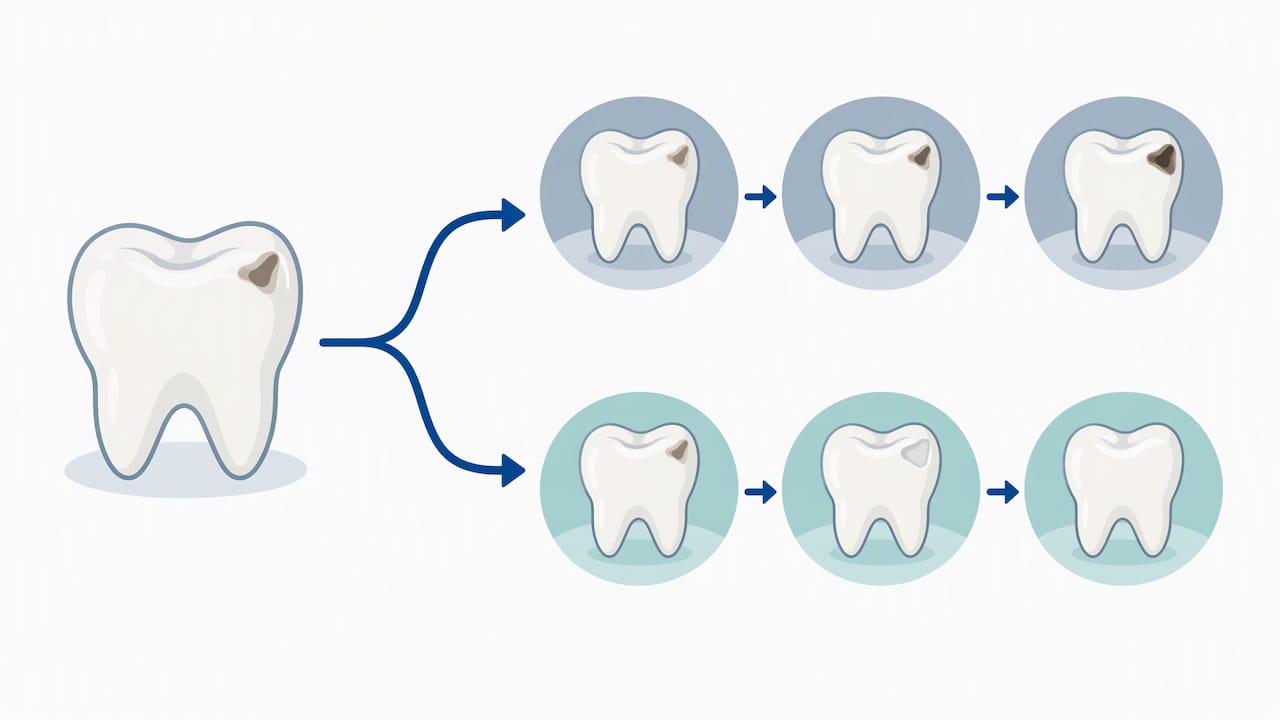
This is the baseline: exams, cleanings, X-rays, fillings, and an emergency plan. Ask how the office decides when to treat a small area of decay and when to watch it. A dentist who explains the choice, including conservative approaches that avoid drilling where appropriate, is giving you real information.
Cosmetic and restorative work
For veneers, bonding, or a smile makeover, ask to see before-and-after cases for patients similar to you, and ask how long the work typically lasts and what maintenance it needs. Ask whether the dentist considers bite and gum health alongside appearance. Cosmetic results that ignore function tend not to age well.
Sleep apnea and snoring
Dentists can play a real role here. According to the ADA, dentists can identify risk factors for obstructive sleep apnea through clinical examination and medical history, and can work with physicians to provide oral appliance therapy for mild to moderate cases. The ADA also notes that dental evaluations can include screening for features such as large tonsils, a high arched palate, or a retrusive jaw.
The operative phrase is “with physicians.” A dentist does not diagnose sleep apnea alone. Ask any practice that offers this care:
- Do you coordinate with my physician or a sleep specialist for diagnosis?
- What does the screening involve?
- What can a dentist do, and what can’t they do? (Our own page on home sleep tests and the limits of dental involvement explains where we draw that line.)
Tongue-tie and lip-tie
If you are a parent whose baby struggles to latch, or an adult wondering whether a tight frenulum affects speech or sleep, ask whether the dentist uses a laser, how many of these procedures they perform, and what aftercare they give. Ask too whether they will work with your pediatrician or lactation consultant. Function matters more than appearance, a point we cover in our piece on baby lip tie and feeding.
Orthodontics
Whether you are looking at aligners or palatal expansion, ask whether the practice considers breathing and airway in treatment planning. Our article on why a sleep study should come first in airway orthodontics shows what that looks like in practice.
Accessible care, including for Deaf patients
Comfort and communication are part of quality, not extras. Healthcare communication specialists quoted in ADA New Dentist News suggest that when patients feel their concerns are heard, they experience less anxiety and discomfort and are more likely to follow treatment recommendations.
For Deaf and hard-of-hearing patients, this is more than a preference. California regulations require health care providers to offer appropriate auxiliary aids and services, such as sign-language interpreter services, to support effective communication. That document, a 2008 state rulemaking record, is a useful reference for what the rules say.
When you contact a practice, ask these directly:
- How do I request an interpreter, and who arranges and pays for it?
- Can I book by text or email instead of a phone call?
- How will the dentist communicate during treatment, when masks and the dental chair make lipreading hard?
- Is there a way to signal a pause?
The answers show how seriously the office takes access. A confident, specific answer is a good sign. Hesitation or “we’ll figure it out” is not.
Use your first visit as an interview
A first appointment is the best evidence you will get. The ADA’s consumer guidance suggests reserving time during the visit to ask about patient education, medical histories, and emergencies, and to notice whether you are comfortable with the dentist’s communication style and manner.
Here is a simple scorecard to carry in your head:
| What to notice | A good sign | A reason to keep looking |
|---|---|---|
| The office | Neat, clean, and orderly, from the front desk to the treatment room | Clutter, dirty surfaces, or a rushed, chaotic front desk |
| The conversation | The dentist asks about your health history and goals before looking in your mouth | Treatment recommendations before any real conversation |
| Explanations | Findings are shown to you with images or a mirror, and in plain words | Jargon, or “trust me” without showing you |
| Cost | A written plan with fees and options before you agree | Pressure to schedule large work the same day |
| Emergencies | A clear plan for after-hours problems | “Just go to urgent care” with nothing else |
| Pace | Time for your questions | Feeling hurried or dismissed |
The office check comes straight from the ADA: it advises observing whether the office, dentist, and staff are neat, clean, and orderly.
Ask about emergencies
MouthHealthy specifically advises patients to ask how the practice handles emergencies outside of office hours, and about financial options and payment plans. A cracked tooth on a Saturday night is not the time to learn that your dentist has no plan.
Expect real informed consent
Good dentistry is a conversation, not a sales pitch. Ethics guidance published in the Virginia Dental Journal says informed consent should include potential outcomes, costs, and the alternative of doing nothing. If you have never heard “or we could simply watch it” from a dentist, ask. A trustworthy one will tell you when that is a fair option.
What we believe about choosing a dentist
We are a Fremont practice, so we will say plainly how we think about this. Dentistry works best when it looks at the whole person. A worn tooth may be a bite problem. A child’s crowded teeth may trace back to how they breathe. Snoring can show up first as damage in the mouth, which is why we wrote about when snoring damages your teeth. We try to treat root causes rather than only the symptom in front of us, and we use tools like 3D imaging and lasers to keep treatment minimally invasive and comfortable.
We also think access is part of care. We work to serve patients who are often underserved, including Deaf patients, with communication tailored to them.
Our advice to anyone choosing a dentist, us included: do not pick on price, a star rating, or a nice waiting room alone. Pick the dentist who explains your options clearly, shows you what they see, respects your pace, and tells you the truth even when it means less treatment. Meet two practices if you can, and go with the one where you felt like a partner.
— Admin
Meet us before you decide
If you are weighing options in Fremont, we would be glad to be one of the practices you visit. We offer general, preventive, restorative, and emergency dentistry for adults and families, plus laser frenectomy for tongue and lip ties, oral appliance therapy and sleep solutions, orthodontics, and cosmetic dentistry. Our Google listing shows 5 stars across 70 reviews. Bring your questions from this guide, and ask us every one of them. You can see everything we offer on our main site.
A short checklist to take with you
- List three or four Fremont practices that fit your commute and hours.
- Confirm each is in your network, or ask about self-pay and payment plans.
- Look up each dentist on the DCA License Search.
- Call and ask about emergencies, fees, and how they handle your specific need (kids, sleep, tongue-tie, interpreter access).
- Book a first visit and use the scorecard above.
- Ask for a written plan with options, including the option to wait, before agreeing to anything major.
- Decide based on how you were treated, not just what you were told.
FAQ
How do I pick a new dentist if I’ve just moved to Fremont?
Start with your insurance network and a short list of offices near home or work. Verify each dentist’s license, then book a first visit and judge the office, the explanations, and how comfortable you feel. Ask your new neighbors and your doctor for names, but treat those as leads, not answers.
Should I choose a general dentist or a specialist?
Most people start with a general dentist, who is qualified for routine care and can refer you when something needs a specialist. Go straight to a specialist only when a general dentist or your physician has recommended it for a specific problem.
Can a dentist help with sleep apnea?
In part. Dentists can screen for risk factors and, working with a physician, provide oral appliance therapy for mild to moderate obstructive sleep apnea, according to the ADA. Diagnosis and the overall treatment plan involve your physician or a sleep specialist.
How do I know if a dentist is licensed in California?
Search the dentist’s name on the state’s DCA License Search. It shows whether the license is current or expired and whether there has been disciplinary action.
When is it time to switch dentists?
Switch if you feel rushed or dismissed, if costs are not explained before treatment, if your questions go unanswered, or if the office has no emergency plan. Your records belong in your hands when you need them, so ask the old office to transfer them to the new one.
Sources
- How to Find a Dentist | MouthHealthy
- Search – DCA License Search
- Information for Consumers – Dental Board of California
- Choosing a Dentist – MetLife
- Welcome to the Medi-Cal Dental Program
- How to become a wise dental consumer – ADA
- Sleep Apnea (Obstructive) – American Dental Association
- R-28-02 Final Statement of Reasons – DHCS
- New Dentist News (May 2008) – ADA
- Ethics: Informed Consent – Virginia Dental Journal