

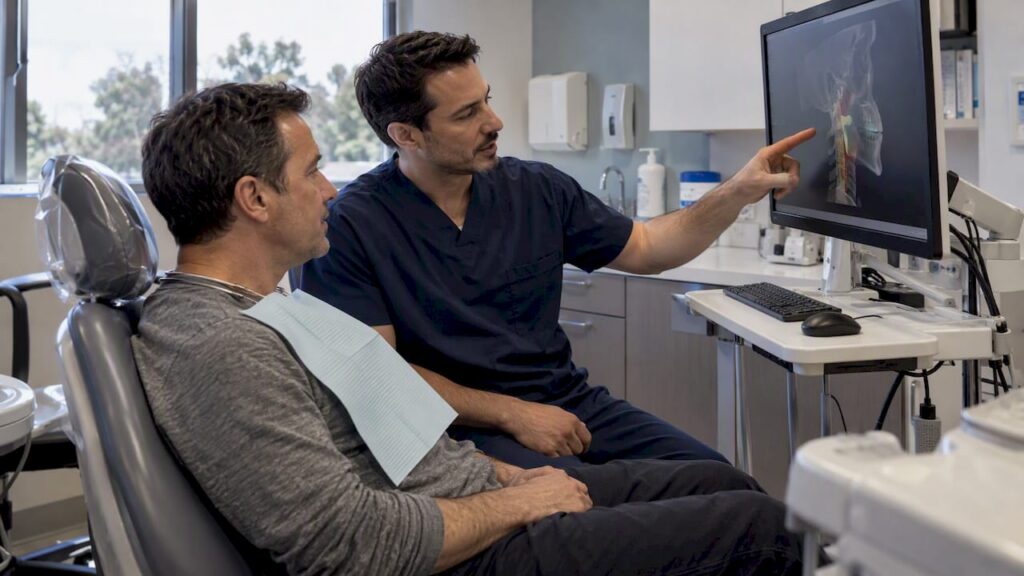
Yes, snoring can signal airway problems that harm your teeth, and dentist-led treatment can reduce snoring for the right patients. The AASM/AADSM guideline backs custom oral appliances for primary snoring, the FDA regulates these devices for safety, and practices like Bay Area Dental, Airway & Sleep coordinate care between dentists and sleep physicians. See a dentist for dental symptoms and a sleep physician if you suspect obstructive sleep apnea.
TL;DR:
- Dental signs like tooth wear, jaw pain, gum recession, and bad breath can indicate underlying snoring or airway issues needing evaluation.
- Structural jaw and palate features, especially in children, influence airway size and may predispose individuals to snoring that affects development.
- Untreated snoring can cause ongoing dental damage, including bruxism, tooth wear, gum disease, and jaw disorders, increasing long-term oral health risks.
- Customized oral appliances and orthodontic interventions can help reduce snoring but require dental assessment, imaging, and follow-up to avoid potential side effects.
- Addressing airway-specific causes first improves treatment success and safety, especially when combined with a coordinated approach involving both dental and sleep medicine professionals.
Table of Contents
- Dental Signs That Point to a Snoring Problem
- Why Dental Anatomy Can Drive Airway Collapse
- The Dental Toll of Chronic, Untreated Snoring
- What Dentists Can Actually Do About Snoring
- Oral Appliance Risks and the Case for Dental Follow-Up
- Dentist First or Sleep Physician First?
- An Airway-First Approach to Snoring and Oral Health
- The Overlooked Part of Snoring Treatment
- Getting Dental Support for Snoring and Airway Health
- FAQ
- Sources
Dental Signs That Point to a Snoring Problem
A dentist often spots snoring-related damage before a patient connects the dots. Repeated sleep arousals trigger bruxism, which grinds down enamel and cracks fillings and crowns. Mouth breathing dries out saliva’s protective flow, raising cavity and gum disease risk. Jaw clenching overnight can leave the jaw joint sore and inflamed by morning.
- Tooth wear or fractured restorations: grinding during sleep arousals flattens cusps and breaks fillings.
- Morning jaw pain or TMD symptoms: nighttime clenching strains the jaw joint and surrounding muscles.
- Gum recession and chronic dry mouth: reduced saliva from mouth breathing exposes roots and invites decay.
- Persistent bad breath: dry, oxygen-poor airflow lets odor-causing bacteria thrive.
If you also have witnessed pauses in breathing or feel excessively sleepy during the day, those are red flags for sleep apnea that deserve prompt evaluation beyond the dental chair.
Why Dental Anatomy Can Drive Airway Collapse
The airway and the mouth share the same real estate; therefore, the shape of your jaw and palate directly affects how easily air moves while you sleep. A narrow or high-arched palate shrinks the space available for the tongue and airflow. A recessed lower jaw or a large overbite pushes the tongue backward, narrowing the throat further.
- Narrow maxilla or high-arched palate: reduces nasal and oral airway volume.
- Retrognathia or significant overjet: positions the tongue closer to the back of the throat.
- Low, forward-resting tongue posture: often linked to tongue-tie, keeps the airway from staying open.
Children’s airways and jaws are still developing, which makes early habits like mouth breathing especially consequential. A 2026 study in the Journal of Clinical Pediatric Dentistry compared 63 children and found the snoring group had about 1.2 millimeters less maxillary intercanine width, along with maxillary crowding in 68% of snoring children versus far fewer non-snoring peers. That pattern suggests chronic snoring during growth years may shape how the jaw and teeth develop, not just how a child sleeps.
The Dental Toll of Chronic, Untreated Snoring
Snoring that goes unaddressed for months or years tends to leave a trail of oral damage that compounds over time. A 2024 literature review tied obstructive sleep apnea to higher rates of bruxism, dry mouth, periodontal disease, TMD, and measurable changes in palate shape and tooth position, concluding that oral appliance users need ongoing dental monitoring for occlusal shifts.
- Bruxism and restoration failure: repeated grinding cycles shorten the lifespan of crowns, fillings, and even natural enamel.
- Elevated caries and gum inflammation: dry mouth from nighttime mouth breathing, worsened in some CPAP users, removes saliva’s buffering effect against bacteria.
- TMD and tooth mobility: sustained jaw clenching can shift bite alignment and loosen teeth over years, not months.
A large population study found that people at high risk for obstructive sleep apnea had about 47% higher odds of reporting dental pain compared with low-risk peers, a pattern consistent with the grinding and dryness mechanisms above. The relationship runs both ways: airway problems damage teeth, and some dental or jaw structures make airway collapse more likely in the first place.
What Dentists Can Actually Do About Snoring
Dental treatment for snoring works best when it targets a clear anatomic or functional cause, and it works within limits that any reputable dentist should explain upfront.
- Oral appliance therapy (custom mandibular advancement devices): fitted and titrated by a qualified dentist, these devices hold the lower jaw forward to open the airway, and they suit patients with primary snoring or mild to moderate OSA who cannot tolerate CPAP.
- Night guards versus MADs: a standard occlusal splint protects teeth from bruxism damage but does not reposition the jaw, so it will not address airway-based snoring and, fitted incorrectly, could worsen it.
- Myofunctional therapy: targeted tongue and oral muscle exercises can improve resting tongue posture, though evidence for snoring reduction alone is still developing.
- Orthodontic palatal expansion: widening a narrow maxilla increases nasal and airway space, particularly useful in growing children.
- Frenectomy for tongue-tie: releasing a restrictive lingual frenulum can improve tongue mobility and posture in selected cases, with evidence strength varying by patient.
Pro Tip: Skip the drugstore boil-and-bite device. A properly fitted, titratable appliance from a dentist costs more upfront but avoids the bite changes and poor fit that untested devices often cause.
Expect noticeable improvement in snoring loudness and bed-partner sleep in many cases, but confirming changes in actual breathing events during sleep usually requires a follow-up sleep study arranged with a physician.
Oral Appliance Risks and the Case for Dental Follow-Up
Oral appliances are effective for many patients, but they are not risk-free, and that is exactly why ongoing dental supervision matters.
- Possible side effects: the FDA lists tooth movement, TMJ soreness, gum soreness, and dry mouth as documented risks of intraoral devices.
- Who should avoid them: loose teeth, advanced periodontal disease, central sleep apnea, and age under 18 are common contraindications.
- Follow-up signs that need attention: new bite misalignment, persistent jaw pain, or increasing daytime sleepiness despite appliance use all call for reassessment.
The AASM/AADSM guideline states that oral appliances are a standard recommendation for primary snoring and should be delivered as custom, titratable devices with dentist follow-up, not one-size-fits-all retail products. That follow-up requirement is not bureaucratic caution. It is how dentists catch the tooth movement and jaw soreness the FDA has flagged before they become permanent.
Dentist First or Sleep Physician First?
Where to start depends on which symptoms show up first.
- Start with a dentist if your main concerns are tooth wear, cracked restorations, morning jaw pain, or chronic dry mouth alongside snoring.
- Request a sleep referral if you have witnessed breathing pauses, significant daytime sleepiness, or multiple STOP-Bang risk factors like a large neck circumference or high blood pressure.
- Follow the coordinated pathway when OSA is suspected: a sleep physician confirms diagnosis and prescribes oral appliance therapy when appropriate, a qualified dentist fits and titrates the device, and both providers monitor progress over time.
Neither path excludes the other. Many patients end up seeing both a dentist and a sleep physician within the same few months.
An Airway-First Approach to Snoring and Oral Health
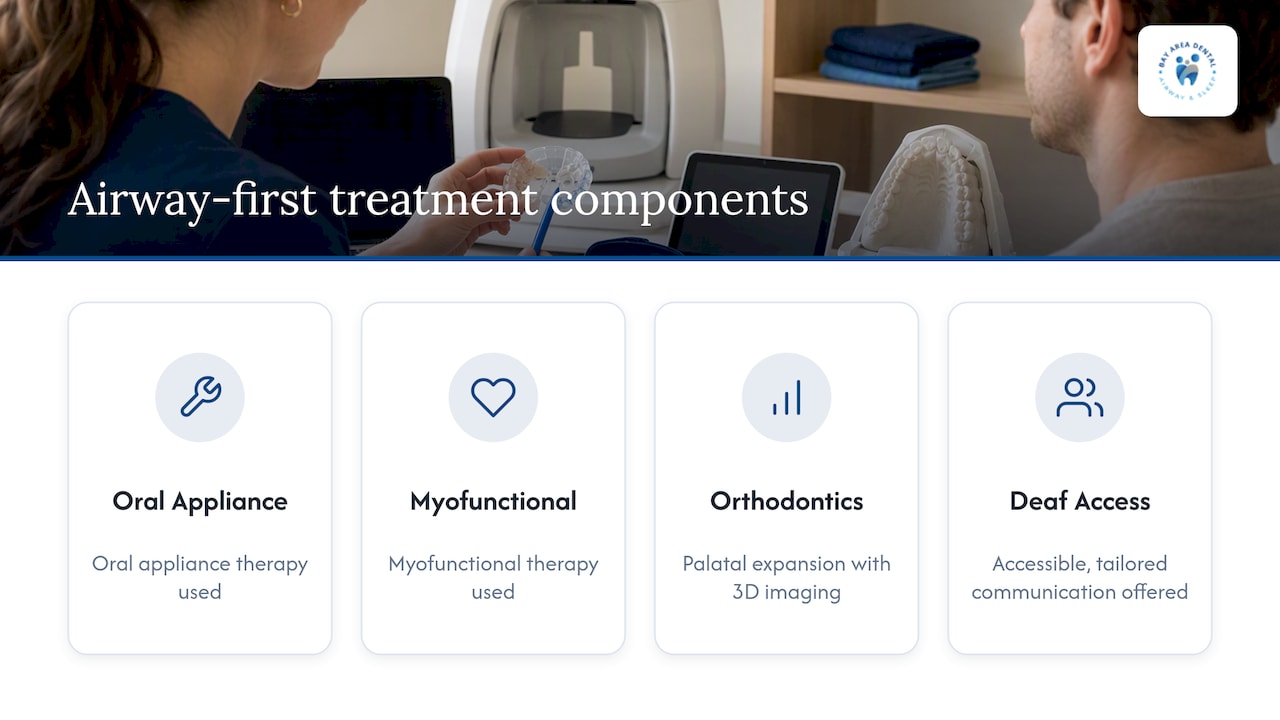
We treat snoring as a whole-airway issue rather than an isolated symptom. Our approach combines oral appliance therapy, myofunctional therapy, and orthodontic options like palatal expansion with 3D imaging to map airway anatomy before recommending treatment. We also extend accessible, tailored communication to Deaf patients, reflecting our broader commitment to care that fits each person’s needs.
The Overlooked Part of Snoring Treatment
Most snoring advice jumps straight to appliances or surgery and skips the step that actually determines success: identifying whether the cause is primarily anatomic, muscular, or both. A mandibular advancement device fitted without checking tongue posture or palate width treats a symptom while ignoring the structure driving it, which is why some patients report partial relief at best.
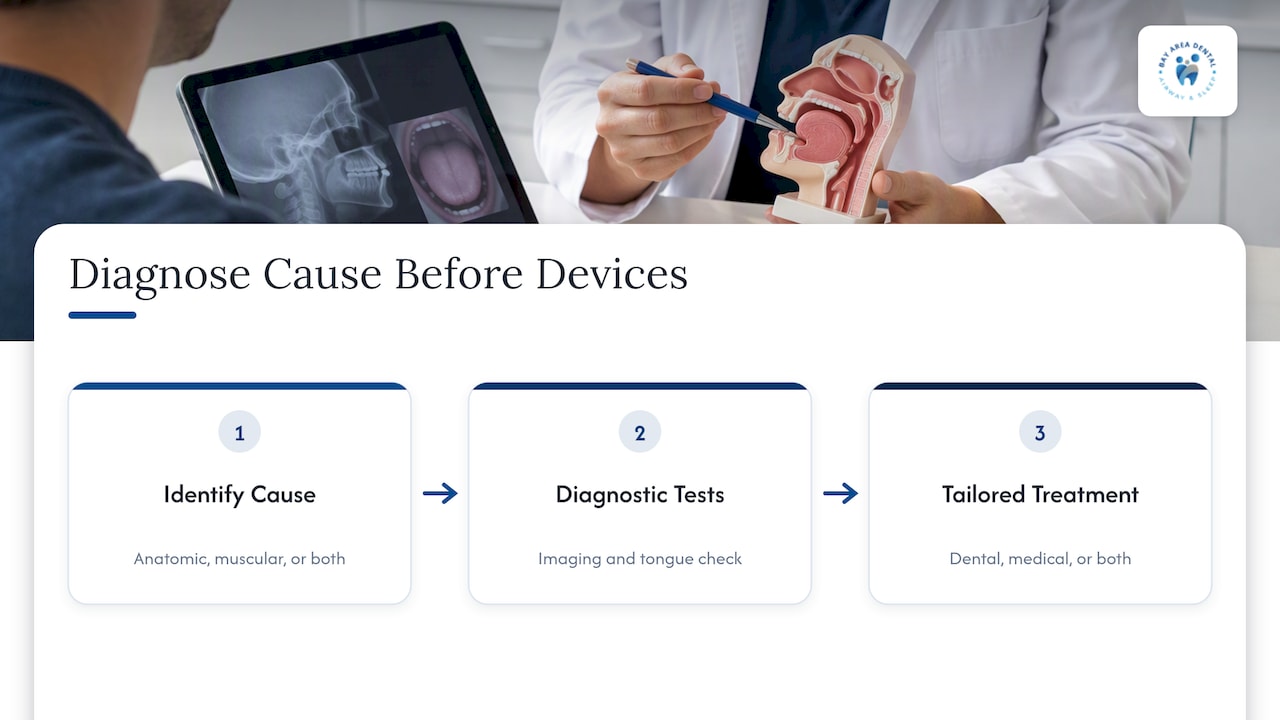
The conventional wisdom that any mouthguard-style device will quiet snoring undersells how specific these devices need to be. A device built for someone else’s jaw, or a retail version with no titration, can shift your bite while doing little for your airway. What deserves more attention is the diagnostic step before treatment: imaging, a tongue-posture assessment, and an honest look at whether a dental fix or a medical one, or both, fits your case.
If you snore and also grind your teeth or wake up with a dry mouth, do not treat those as separate problems. They are often the same problem showing up in different places, and the fix usually starts with whichever symptom is bothering you most.
— Admin
Getting Dental Support for Snoring and Airway Health
If snoring has left you with worn teeth, jaw pain, or a dry mouth every morning, an airway-focused dental evaluation is a practical place to start. We offer a range of services built around this exact connection between oral health and sleep.
- Oral Appliance Therapy (OAT): custom, titratable devices fitted and monitored by our team.
- Myofunctional therapy: exercises to improve tongue posture and muscle function.
- Laser frenectomy: tongue-tie release for patients whose tongue restriction affects posture or airway.
- Airway-friendly orthodontics: palatal expansion and clear aligners designed with airway space in mind.
- 3D diagnostic imaging: a clear picture of your airway anatomy before any treatment decision.
Most patients start with an airway-focused consultation and imaging, and when the findings point to sleep apnea rather than primary snoring, we coordinate a referral to a sleep physician for diagnosis. Visit our sleep and breathing services page to see how we approach evaluation and treatment.
This article is general information, not a substitute for advice from a qualified doctor. Consult a qualified healthcare professional about your own circumstances before acting on anything here.
FAQ
How can a dentist fix snoring?
A dentist can fit a custom, titratable mandibular advancement device that repositions the jaw to keep the airway open during sleep, following AASM/AADSM guidance. Myofunctional therapy and orthodontic palatal expansion are additional options depending on the underlying cause.
What is the number one cause of snoring?
There is no single universal cause, since snoring results from airway narrowing that can stem from jaw structure, tongue posture, nasal obstruction, excess tissue in the throat, or enlarged tonsils and adenoids. A dental or sleep evaluation helps identify which factor applies to a specific case.
Can dental problems cause snoring?
Yes, a narrow palate, a recessed jaw, or restricted tongue mobility from tongue-tie can all narrow the airway and contribute to snoring. These structural issues are part of why dentists play a role in snoring evaluation alongside sleep physicians.
Are you unhealthy if you snore?
Occasional snoring is common and not automatically a sign of poor health, but frequent, loud snoring paired with witnessed breathing pauses or daytime sleepiness can indicate obstructive sleep apnea, which is linked to higher odds of dental pain and other health risks. A sleep evaluation can clarify whether snoring reflects a more serious underlying condition.
Sources
- Journal of Clinical Pediatric Dentistry (2026) — study on snoring and maxillary development
- U.S. Food and Drug Administration — Intraoral devices guidance
- Clinical practice guideline update (AASM/AADSM) — oral appliance therapy for snoring and OSA
- Oral health implications of obstructive sleep apnea: literature review (2024)