

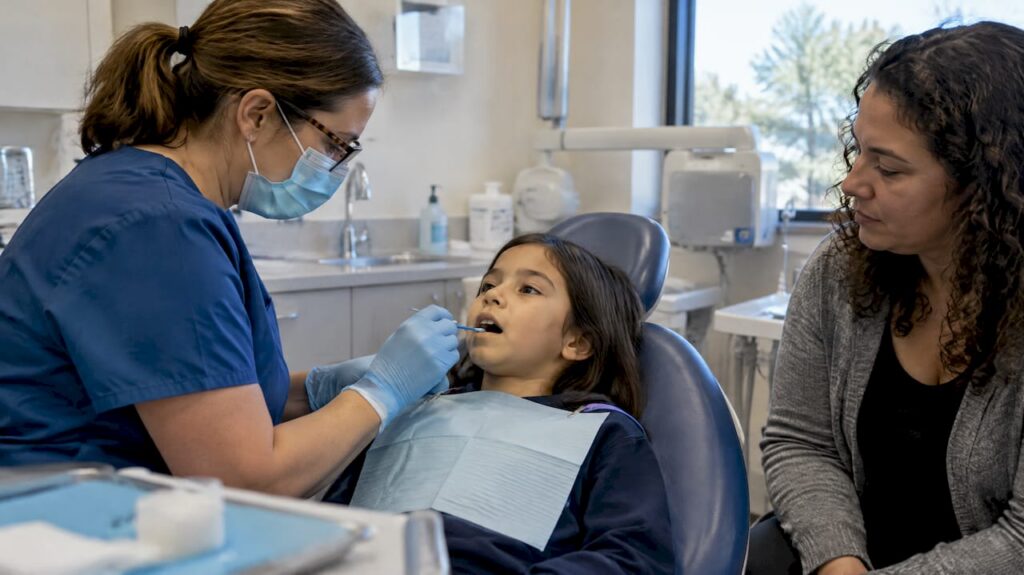
Fluoride varnish is safe for children when it is applied as recommended by a dentist or pediatric provider. The strongest evidence comes from the U.S. Preventive Services Task Force, a large prospective safety study tracked by the CDC, and a JADA review of adverse-event reports. Allergic reactions are rare, though parents with a known allergy history should flag it before treatment.
TL;DR:
- A CDC study found no adverse events linked to varnish among thousands of children tracked across applications for up to three years.
- Most young children receive 5% sodium fluoride in a 0.25 milliliter dose twice yearly; children at higher cavity risk may be seen every three months.
- Ask for the ingredient list if your child has an allergy, especially to colophony or casein, and discuss alternatives or delaying treatment for mouth ulcers.
- Varnish sets quickly; avoid hard foods for several hours and resume brushing the next day, and seek prompt care for vomiting or breathing trouble.
Table of Contents
- Key studies and guideline recommendations that support safety
- What side effects have been reported and how common are they?
- What parents should expect at the visit: formulation, dose, and aftercare
- When to delay or skip varnish and what medical history matters
- Evidence and clinic practice: why you can trust this guidance
- Questions to ask, consent points, and next steps after the appointment
- Our take on fluoride varnish safety for families
- Get pediatric care built around the evidence, not guesswork
- FAQ
- Sources
Key studies and guideline recommendations that support safety
Three separate lines of evidence point the same direction, and together they explain why fluoride varnish has become a routine part of pediatric preventive care, not a controversial add-on.
- A prospective caries-prevention study tracked thousands of children ages 0 to 5 through many varnish applications and reported zero varnish-related adverse events over follow-up periods of up to three years, as documented in the CDC’s Preventing Chronic Disease journal.
- The USPSTF issues a Grade B recommendation that primary care clinicians apply fluoride varnish to primary teeth starting at tooth eruption, a grade that signals moderate net benefit, meaning the evidence supports real protective value with only minor downsides.
- A JADA review of FDA adverse-event data found reporting rates low enough to support continued routine use, with most reported issues mild and tied to specific ingredients rather than the fluoride itself.
No varnish-related adverse events were reported across thousands of applications in children under five, according to the CDC-tracked prospective study, which is about as clean a safety signal as pediatric preventive care gets.
Pharmacokinetic data reinforce the picture. Plasma and urinary fluoride rise briefly after a varnish application, then return to baseline within 24 hours, consistent with a small, short-lived dose rather than ongoing systemic exposure. Fluoride varnish itself is cleared by the FDA as a Class II medical device; its cavity-fighting use is a widely accepted off-label application of that clearance, which is standard practice in pediatric dentistry and not a sign of weak regulatory footing.
What side effects have been reported and how common are they?
Most reactions to fluoride varnish are mild and pass quickly. Parents should know what is common, what is rare, and what deserves a call to the dentist.
- Transient burning or soreness at the application site, along with occasional lip or mucosal rash, typically resolves within hours without treatment.
- True allergic reactions, including rare anaphylactic events logged in FDA’s MAUDE database, are uncommon and usually respond well to antihistamines.
- Enamel fluorosis is unlikely from professionally applied varnish at recommended frequency and dose, since the amount of fluoride delivered per visit is small compared to daily ingested sources like toothpaste or water.
- Formulations containing colophony (a rosin derivative) or casein-based additives carry ingredient-specific sensitivity risks worth asking about in advance.
A JADA review of a decade of FDA reports found very few adverse-event reports and estimated a very low reporting rate per million applications, according to the JADA/ADA analysis of MAUDE data. Swelling and burning were the most common symptoms logged, and colophony-related sensitivities showed up in isolated cases documented in the CDC-affiliated safety study, which is one reason clinics keep ingredient lists on hand.
What parents should expect at the visit: formulation, dose, and aftercare
Knowing the mechanics of a varnish visit helps explain why the systemic exposure stays so low.
- Formulation: Most varnish used on young children is 5% sodium fluoride, equal to 2.26% fluoride, painted directly onto the tooth surface rather than swallowed.
- Dose: A typical unit dose for infants and young children runs around 0.25 milliliters, delivering a small, fixed amount of fluoride per visit rather than a variable one.
- Frequency: Guidelines commonly call for application twice a year for the general pediatric population, with children at higher cavity risk sometimes seen every three months.
- Setting time: Varnish feels sticky for a few minutes right after application but sets quickly; most clinics advise skipping hard or crunchy foods for several hours afterward.
- Return to normal routine: Regular toothbrushing typically resumes the next day, once the varnish has had time to work into the enamel surface.
Because the unit dose is so small, swallowed fluoride from varnish is limited compared with other professionally applied topical treatments, which is a key reason the safety profile holds up across repeated visits.
When to delay or skip varnish and what medical history matters
A handful of situations call for a conversation with your child’s provider before treatment, rather than a routine application.
- A known allergy to colophony or other varnish ingredients warrants asking your provider for the product’s ingredient list or requesting a colophony-free alternative.
- Active mouth ulcers or stomatitis may be a reason to delay the appointment until the tissue heals.
- Children with swallowing disorders, severe kidney disease, or other complex medical conditions benefit from an individualized plan rather than a default schedule.
- If your child vomits after application or shows any breathing difficulty, seek medical attention promptly and report the reaction to the treating dentist.
Evidence and clinic practice: why you can trust this guidance
The consensus across USPSTF, the CDC-tracked prospective trial, and the JADA review of adverse-event data points to the same conclusion: fluoride varnish carries a strong safety record alongside a meaningful reduction in childhood cavities. That combination, moderate-benefit guideline grading plus a near-absence of serious adverse events across tens of thousands of tracked applications, is why varnish remains a default recommendation rather than an optional extra.
At Bay Area Dental, Airway & Sleep, our team applies this same evidence base to everyday pediatric care, treating root causes of oral health issues rather than symptoms alone and using advanced imaging to plan conservative, minimally invasive treatment.
- We can walk you through a product’s ingredient sheet at your child’s visit if you want to check for colophony or casein-based additives.
- We encourage families to keep a simple record of varnish dates and any reactions, useful for tracking cumulative fluoride exposure over time.
Pro Tip: Ask for the varnish product name and lot information at each visit so you have a complete record if you ever need to discuss cumulative fluoride exposure with a provider.
Questions to ask, consent points, and next steps after the appointment
A short set of questions at the visit covers most of what matters for an informed decision.
- Does this product contain colophony, and what concentration and volume will be used on my child?
- How often do you recommend we return, and would that change if my child is considered higher risk for cavities?
- Can I get a copy of the product name for our records, in case we need to track any reaction later?
Pro Tip: Write down the date, product name if provided, and any reaction immediately after the visit, while details are still fresh.
For most children, varnish paired with fluoride toothpaste at home and basic diet counseling covers routine prevention. For deeper grooves or active decay risk, your dentist might also discuss sealants or silver diamine fluoride as complementary or alternative options depending on your child’s specific situation.
Our take on fluoride varnish safety for families
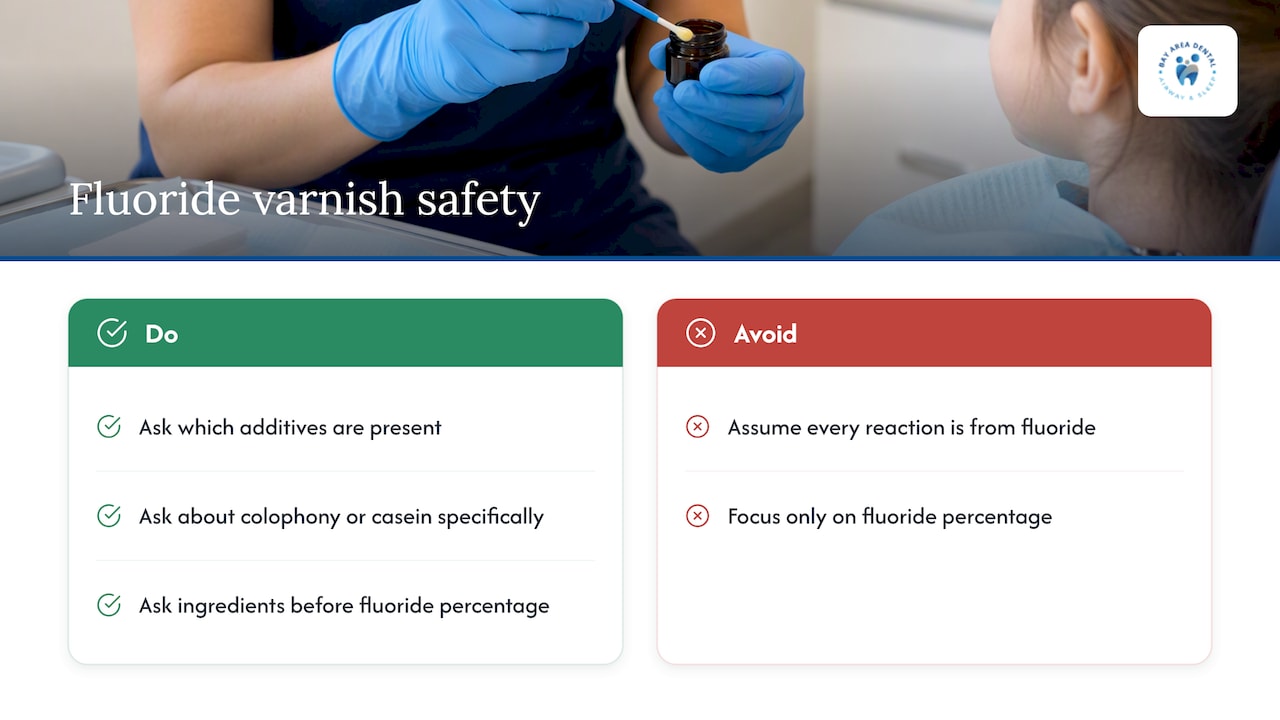
The loudest objections to fluoride varnish tend to focus on fluoride exposure in general, not on what the varnish-specific evidence actually shows. That is a meaningful distinction. The research on varnish itself, small unit doses, transient systemic uptake, a near-zero adverse-event rate across thousands of tracked applications, is some of the cleanest safety data in pediatric preventive dentistry. The conventional advice parents hear often skips the ingredient-level nuance, treating all reactions as fluoride reactions when colophony or casein additives are frequently the actual trigger.
If we had to prioritize one thing, it would be this: ask about ingredients before you ask about fluoride percentage. Most of the rare adverse events on record trace back to a specific additive, not the active mineral. A parent who asks a pointed question about colophony gets more useful information than one who simply asks if varnish is safe.
— Admin
Get pediatric care built around the evidence, not guesswork
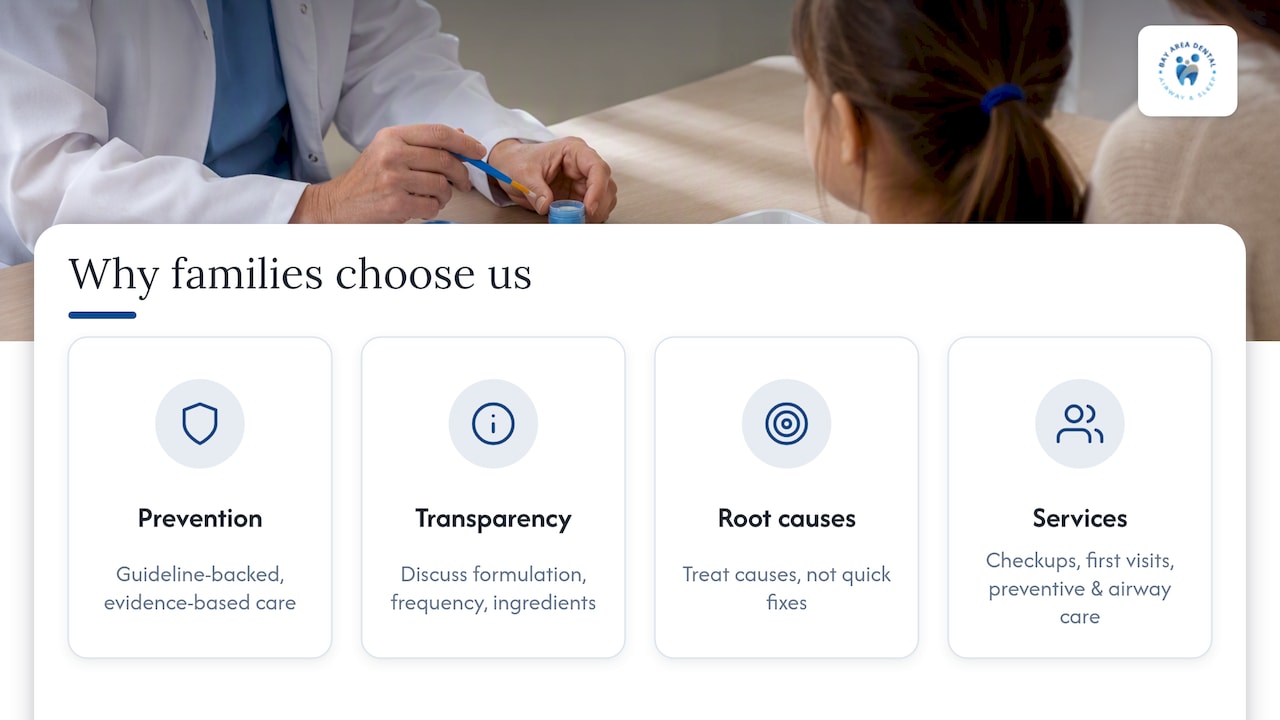
We built our pediatric approach at Bay Area Dental, Airway & Sleep around the same evidence base covered above: guideline-backed prevention, transparent conversations about what goes into every treatment, and a focus on root causes rather than quick fixes. If your child is due for a checkup, a first visit, or ongoing preventive care, our team can walk through formulation details, frequency recommendations, and any ingredient concerns before anything touches your child’s teeth.
Families across Fremont and the wider Bay Area turn to us for everything from routine pediatric dental care to airway-focused treatment planning, all under one roof. If you want a provider who will explain the “why” behind every recommendation, schedule a visit with our pediatric team and bring your questions with you.
This article is general information, not a substitute for advice from a qualified doctor. Consult a qualified healthcare professional about your own circumstances before acting on anything here.
FAQ
What are the risks of fluoride varnish?
The main risks are mild and short-lived: transient burning, soreness, or a brief rash at the application site. Rare allergic reactions, including reactions to ingredients like colophony, have been reported in FDA adverse-event data, but estimated reporting rates sit at very low levels per million applications according to the JADA review of MAUDE data.
Why are people against fluoride varnish?
Most objections stem from broader concerns about fluoride exposure generally, rather than evidence specific to varnish. A large prospective study tracked through the CDC followed thousands of applications in young children and found no varnish-related adverse events, which is a stronger safety signal than the general concern suggests.
Is fluoride varnish really necessary?
It is not strictly mandatory, but the USPSTF gives it a Grade B recommendation for all infants and children starting at tooth eruption, reflecting moderate net benefit for cavity prevention. Families can discuss alternatives like sealants with their dentist if they prefer a different preventive path.
How long should fluoride varnish stay on teeth?
Varnish typically feels sticky for a few minutes right after application and sets quickly on the tooth surface. Most clinics recommend avoiding hard or crunchy foods for several hours afterward, with normal brushing usually resuming the next day.
Sources
- Absence of Fluoride Varnish–Related Adverse Events in Caries Prevention Trials in Young Children, United States
- Is fluoride varnish safe? (JADA review summarizing MAUDE data)