

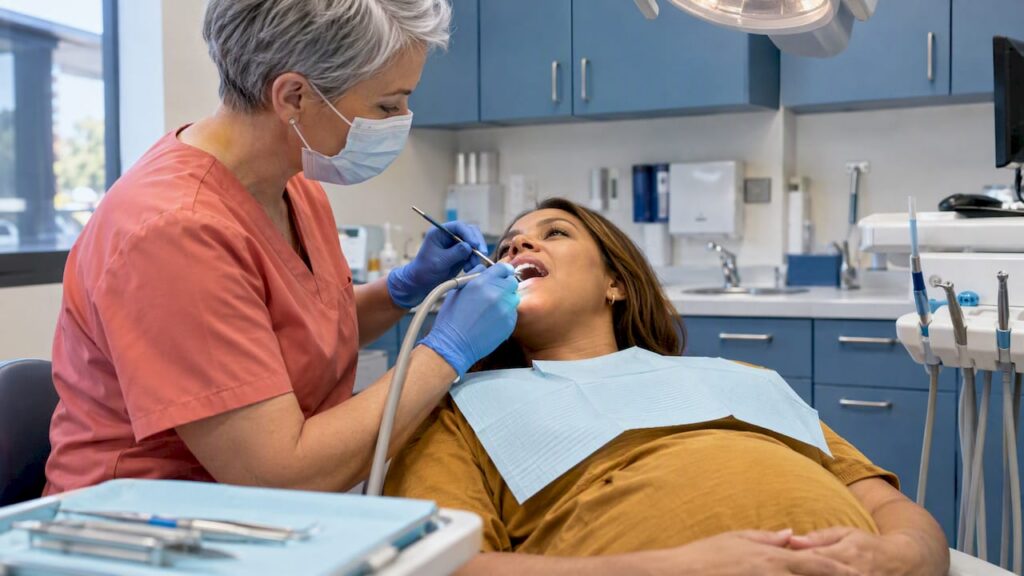
Yes, you should see a dentist while you are pregnant. Cleanings, exams, X-rays, fillings and urgent treatment such as root canals are considered safe at any stage of pregnancy, and putting off a problem tooth usually makes it harder to treat later. The American Dental Association says diagnostic, preventive and restorative care is safe at any point in pregnancy. What changes is mostly the logistics: how you sit, what you skip, and what you tell your dental team.
This guide covers what is safe, what to postpone, why your gums behave differently right now, how to handle morning sickness and your teeth, and how to pay for care in California.
TL;DR
- Exams, cleanings, dental X-rays, fillings, crowns, root canals and extractions are safe during pregnancy. Local anesthetic is safe too.
- Elective cosmetic work, such as whitening or veneers, can wait until after delivery. Pain, infection and broken teeth should not wait.
- Hormones raise your risk of gum inflammation, loose-feeling teeth and acid erosion. Brush twice a day with fluoride toothpaste, floss daily, and rinse with baking soda water after vomiting.
- Tell your dentist you are pregnant and your due date. Ask them to avoid nitrous oxide and to coordinate with your OB if you need sedation.
- In California, Medi-Cal dental coverage continues for people who are pregnant and for one year postpartum.
Table of Contents
- Which dental treatments are safe during pregnancy
- Are dental X-rays safe when you are pregnant?
- Does the trimester matter?
- How often should you go?
- Why your mouth changes during pregnancy
- Morning sickness and your teeth
- Daily routine that actually works
- Urgent problems: do not wait for the baby
- What to tell your dentist and what to ask
- Paying for dental care when you are pregnant
- Our perspective
- Care at Bay Area Dental, Airway & Sleep
- FAQ
- Sources
Which dental treatments are safe during pregnancy
The short answer from federal and professional guidance is that almost everything you would normally need is safe. HRSA, the federal health resources agency, states that cleanings, exams, fillings, crowns and root canals are safe during pregnancy, and that you should talk with your obstetrician before IV sedation or general anesthesia.
Here is how that breaks down in practice.
| Treatment | During pregnancy | Notes |
|---|---|---|
| Exam and cleaning | Safe, recommended | Gums bleed more easily, so a cleaning is a treatment as much as a routine visit |
| Dental X-rays | Safe | Shielding and technique matter; see the X-ray section below |
| Fillings, crowns | Safe | Treat active decay rather than waiting |
| Root canal | Safe | Infection left alone is the bigger risk |
| Extraction | Safe when needed | Often planned with local anesthesia only |
| Local anesthesia | Safe | Lidocaine, mepivacaine and bupivacaine are named in ADA guidance |
| Nitrous oxide | Generally avoided | Limit exposure strictly if it is used at all |
| IV sedation, general anesthesia | Discuss with your OB first | Reserve for cases where it is truly needed |
| Whitening, veneers, elective cosmetic work | Usually postponed | A matter of timing and comfort, not a proven hazard |
Numbing medicine
You do not need to suffer through a procedure to protect your baby. The ADA’s pregnancy guidance lists lidocaine, bupivacaine and mepivacaine, with or without epinephrine, as safe for dental procedures. Untreated pain and stress are not good for you either.
Nitrous oxide
Nitrous oxide, often called laughing gas, is the one common dental tool pregnant patients are told to be careful with. The ADA notes that it and NIOSH advise avoiding nitrous oxide for pregnant patients and dental staff, and strictly limiting exposure if it is used. If you are anxious, ask about alternatives such as a calm environment, breaks, and good numbing, before asking about sedation.
Cosmetic work
Nothing in the guidance says whitening or veneers are harmful, but they are elective, and your gums are swollen and your bite may feel different right now. Results are more predictable once hormones settle. Many patients plan a smile makeover after delivery and breastfeeding questions are sorted out. Treat anything painful, broken or infected now.
Are dental X-rays safe when you are pregnant?
Yes. The ADA states that radiographs can be taken at any point in pregnancy, and ACOG and the ADA agree they do not need to be delayed. A dental X-ray aims a very small dose at your mouth, far from the abdomen.
That said, a good practice does not take images casually. Ask what the image is for, whether it changes the treatment plan, and what protection the office uses. We wrote a separate piece on dental X-ray safety and what to ask, including why lead aprons are no longer routine in many offices. If you have a toothache, an X-ray is how the dentist finds the cause, and it is far better than guessing.
Does the trimester matter?
The official answer is that urgent care can happen at any time. The ADA says urgent treatments such as root canals, extractions and restorations can be done during pregnancy, and delay may lead to more complex problems. Where needed, your dentist can consult your obstetrician.
Some guidance adds a comfort and timing layer. New York State’s guidelines say needed treatment can be provided throughout pregnancy, though the 14th to 20th week is ideal. A review in the medical literature suggests that extensive elective treatment in the first trimester should be avoided because it is the period of organogenesis. Put those together and you get a sensible plan:
- First trimester: have your exam and cleaning, address emergencies, and postpone anything elective or lengthy. Morning sickness can make long appointments miserable anyway.
- Second trimester: the most comfortable window for most people. Do planned restorative work, deeper gum treatment and any necessary fillings.
- Third trimester: shorter visits are usually better. Lying flat on your back for a long time can be uncomfortable, so ask to be tilted to your left side or propped up. Urgent problems still get treated.
The common thread is that nobody recommends leaving an infected or painful tooth alone because of a trimester.
How often should you go?
ACOG recommends that a pregnant woman schedule a dental exam if she has not had one in the past six months or has oral health concerns, and an oral health assessment at the first prenatal visit. The ADA recommends regular checkups and cleanings. For most people that means:
- One visit early in pregnancy, ideally before your second trimester.
- A second visit in the second or early third trimester if your gums are inflamed, you have a history of gum disease, diabetes or high blood pressure, or you had cavities recently.
- A postpartum checkup, because newborn life is not kind to routine appointments and it is easy to lose a year.
If you are planning a pregnancy, a visit beforehand lets you finish non-urgent work on your own schedule.
Why your mouth changes during pregnancy
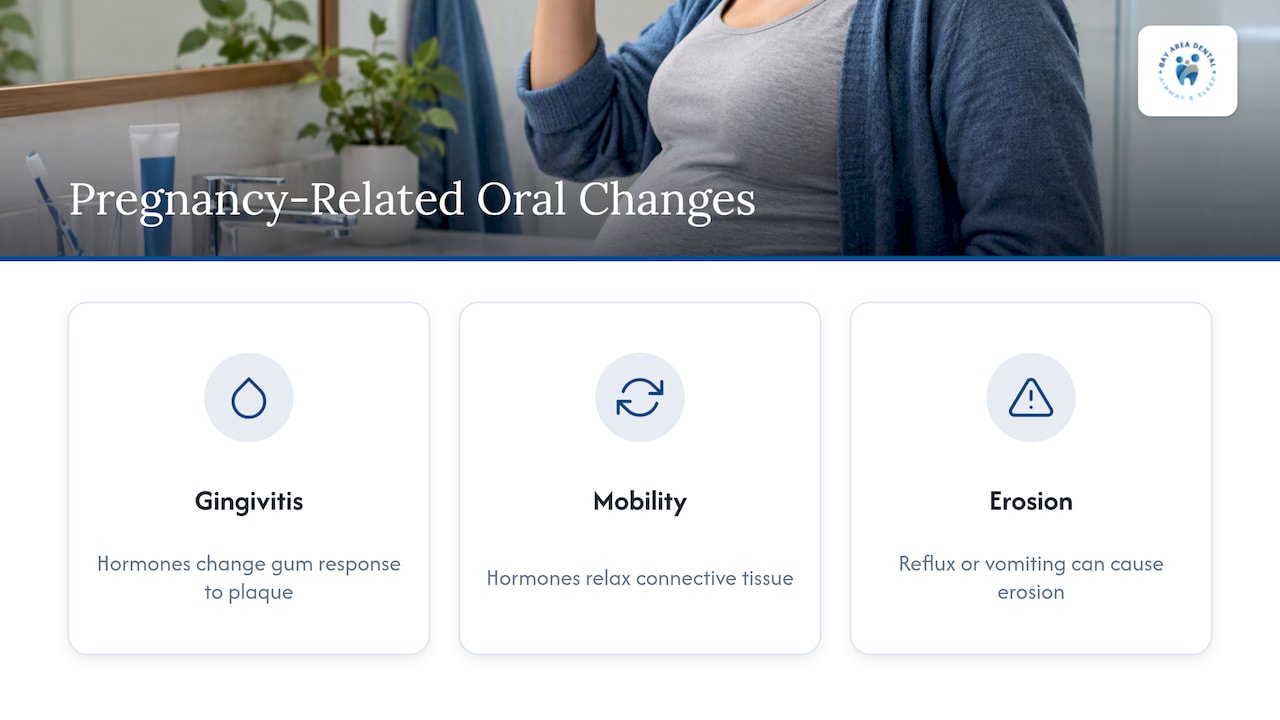
If your gums bleed when you brush, you are not imagining it. Rising progesterone and estrogen change how gum tissue responds to plaque. March of Dimes notes that hormone increases during pregnancy affect the gums, and public health guidance describes three common issues. The Massachusetts Department of Public Health lists pregnancy gingivitis, tooth mobility from hormonal relaxation of connective tissue, and erosion from reflux or vomiting.
Pregnancy gingivitis
Red, puffy gums that bleed with brushing or flossing are the classic sign. It is common and reversible, but it is not something to ignore: untreated gingivitis can progress to periodontitis. A professional cleaning, careful daily plaque removal and a soft brush are the treatment. Do not stop flossing because of bleeding; bleeding gums are asking for cleaner gums, not less cleaning.
Loose-feeling teeth
Hormones relax connective tissue, and teeth can feel slightly mobile. This usually settles after delivery. If a tooth feels very loose, painful, or the gum is swollen around it, have it examined, because infection or advanced gum disease can look similar.
Pregnancy tumors and other lumps
Some people develop a soft, red growth on the gum, often called a pregnancy granuloma. They are benign and usually shrink after birth, but bleeding or interference with eating is a reason to see your dentist rather than wait.
Cavities
Snacking more often, food cravings, and less thorough brushing when you are exhausted or nauseated all add up. The ADA also emphasizes that pregnancy can increase risk of gingivitis and decay, so brushing twice daily with fluoride toothpaste and flossing once daily matters. If you can, keep sweet drinks and grazing to mealtimes, and finish snacks with water.
Snoring and sleep
Swelling, weight gain and nasal congestion make pregnancy a time when many people start snoring. Snoring can dry the mouth and change how teeth wear and gums feel, as we explain in our article on when snoring damages your teeth. If you have loud snoring, gasping, or you wake unrefreshed, mention it to your OB as well as your dentist.
Morning sickness and your teeth
Stomach acid is strong enough to soften enamel, and repeated vomiting or reflux exposes teeth to it again and again. The instinct to brush right away is understandable, but it works against you because acid-softened enamel is easier to scrub away.
What the public health guidance recommends instead:
- Rinse your mouth with water, or with a baking soda solution. Maryland’s guidance suggests one teaspoon of baking soda in one cup of water after vomiting.
- Wait before brushing. Many dentists suggest about 30 minutes so enamel can re-harden.
- Brush with fluoride toothpaste, twice daily, as the guidance recommends.
- If the taste of toothpaste makes you gag, try a milder flavor, a smaller brush head, or brushing at a calmer time of day. Fluoride rinse can fill the gaps.
- Tell your dentist if you vomit often. They can look for early erosion, suggest a fluoride treatment and note it for your care plan. Severe, constant vomiting is also a reason to call your OB.
Daily routine that actually works
Pregnancy is not the time for a complicated regimen. A simple one you can sustain is better.
- Brush for two minutes, twice a day, with fluoride toothpaste and a soft brush.
- Floss or use interdental brushes once a day. Water flossers help if your gums are tender.
- Drink water, especially after meals and snacks.
- Choose snacks that are less sticky and less sugary, and keep juice to mealtimes.
- If you have heartburn, rinse with water afterwards and avoid lying down right after eating.
- Keep dental appointments you have booked. Cancelling because of fatigue is how six months becomes eighteen.
Urgent problems: do not wait for the baby
Call a dentist promptly for:
- A toothache that wakes you up or does not respond to over-the-counter relief your provider has approved.
- Swelling of the face, jaw or gums, or a pimple-like bump on the gum, which can mean an abscess.
- A cracked or broken tooth.
- Fever with dental pain. If swelling affects your breathing or swallowing, go to an emergency room.
The ADA’s position is that delaying urgent care can lead to more complex problems. Ask your dentist what medications are appropriate, since pain relievers and antibiotics should be chosen with your obstetrician in mind. Do not guess on your own.
One more note on cavities. Not every early cavity needs a drill. Depending on the case, early decay can sometimes be monitored or treated conservatively, which fits the approach professional bodies describe as minimally invasive dentistry. If you are hesitant about shots in pregnancy, ask your dentist whether a no-shot approach for early cavities is appropriate for your tooth. Active, deep decay still needs proper treatment, so this is a clinical decision, not a preference.
What to tell your dentist and what to ask
The more your dental team knows, the better they plan. Bring:
- Your due date and your OB or midwife’s name.
- Any pregnancy complications, such as gestational diabetes or high blood pressure. North Carolina’s framework recommends sharing pertinent information with prenatal providers about conditions such as diabetes or hypertension.
- Your medications and prenatal vitamins.
- How often you vomit or have reflux.
Questions worth asking:
- Is this treatment urgent, or can it wait until after delivery?
- Do you need X-rays today, and why?
- Which anesthetic will you use?
- Can we keep the appointment short, and can I sit up or lean to my left?
- Will you speak with my OB if sedation comes up?
If you are Deaf or hard of hearing, you also have a right to effective communication at your appointments. We cover this in our guide to Deaf dental care, your rights and what to ask.
Paying for dental care when you are pregnant
Free dental care during pregnancy is not universal in the US, and coverage depends on where you live. ACOG notes that Medicaid often covers dental visits during pregnancy, with coverage varying considerably by state, and that lack of insurance and money are real barriers to care.
In California, the state health department explains that recent changes to Medi-Cal for some adults based on immigration status do not apply to people who are pregnant or within one year postpartum. If you are unsure whether you qualify, the department’s page for current rules is the place to check, along with your county office. Rules in this area change, so confirm the current details before you plan around them.
If you have private insurance, call the plan and ask about cleaning frequency, whether pregnancy changes it, and your coverage for fillings and root canals. Ask any dental office for a written estimate before treatment.
Our perspective
We see pregnancy as a moment when the mouth and the rest of the body are unusually connected. Hormones, sleep, reflux, diet and stress all show up in the gums and teeth, and the mouth often shows the first signs that something else needs attention, such as disrupted breathing at night.
That is why we treat dental care during pregnancy as whole-health care rather than a cosmetic or optional visit. We would rather see you early, treat gum inflammation while it is still reversible, and give you a plain plan: what to do now, what can wait, and what to watch. We use laser treatments and 3D imaging for minimally invasive care, and we aim to explain every step so you do not feel rushed or in the dark. For families, it also helps that we look at airway, sleep and breathing in the same practice, because many parents come to us after pregnancy with questions about their baby’s feeding and development.
Our advice to any expecting patient: do not let fear of the dentist, or a well-meaning rumor, keep you from care you need. Bring your questions, and bring your OB’s name.
— Admin
Care at Bay Area Dental, Airway & Sleep
If you live in or near Fremont, our team offers preventive care, restorative dentistry and emergency dental services for adults and families under one roof. Tell us you are pregnant when you book, share your due date, and we will plan your visit around your comfort. You can reach us through our main site.
After your baby arrives, we also care for little ones. Our guide to the first dental visit by age one explains what to expect, and our article on fluoride varnish safety for parents answers a common question for new parents. Parents of newborns who struggle to feed can also read about baby lip tie and why feeding function matters.
FAQ
What dental treatments are safe during pregnancy?
Exams, cleanings, X-rays, fillings, crowns, root canals and extractions are considered safe. Local anesthetics are safe, while nitrous oxide is generally avoided and IV sedation or general anesthesia should be discussed with your obstetrician first. Elective cosmetic work is usually postponed by choice.
Do you get free dental care when pregnant?
Not automatically, but many people qualify for coverage. Medicaid often covers dental visits during pregnancy, and the details vary by state. In California, people who are pregnant or within one year postpartum are not affected by the recent Medi-Cal changes that apply to some other adults, so check your eligibility with the state or your county.
Can I get a cleaning in my first trimester?
Yes. Preventive cleanings and exams are safe at any stage and are recommended. Keep the visit short if you feel nauseated, and postpone long elective procedures until the second trimester.
Why do my gums bleed so much now?
Pregnancy hormones make gum tissue react more strongly to plaque, which causes pregnancy gingivitis. Keep brushing and flossing gently, and book a cleaning. If bleeding is heavy, or a gum lump bleeds or hurts, see a dentist.
Should I brush right after throwing up?
Rinse first with water or a teaspoon of baking soda in a cup of water, then wait a while before brushing so acid-softened enamel is not scrubbed away. Then brush with fluoride toothpaste as usual.
Sources
- Oral Health and Pregnancy, HRSA
- Pregnancy, American Dental Association
- Oral Health Care During Pregnancy and Through the Lifespan, ACOG
- Oral Health Practice Guidelines for Pregnancy and Early Childhood, Massachusetts
- Oral Health Care During Pregnancy, Maryland Department of Health
- Oral Health Care During Pregnancy and Early Childhood, New York State
- Oral Health Care During Pregnancy, North Carolina
- Medi-Cal Dental Benefit Changes FAQ, California DHCS
- Dental health during pregnancy, March of Dimes
- Oral care in pregnancy, PubMed Central