

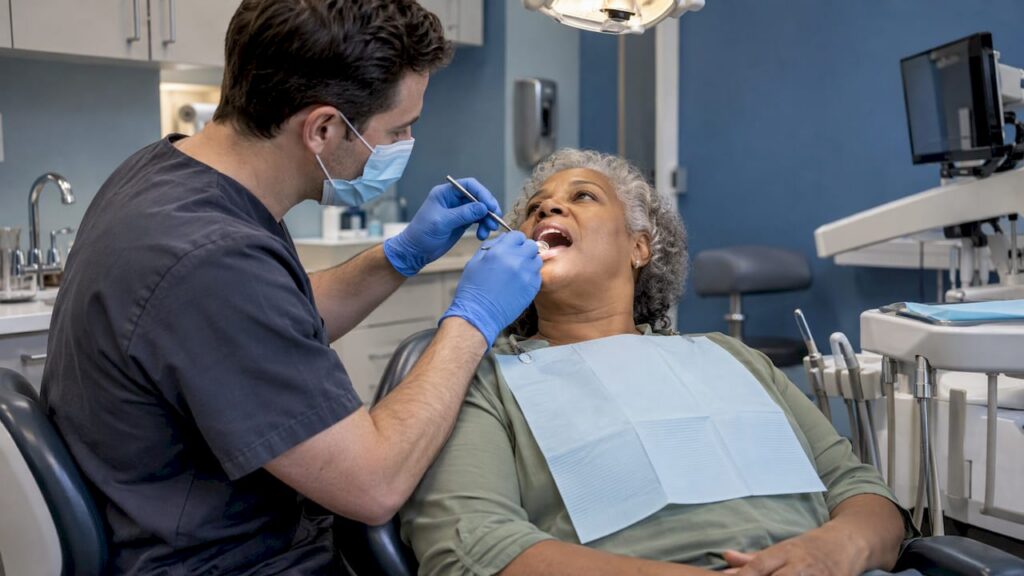
Yes, acid reflux can erode your teeth, and it can do it quietly. Stomach acid that reaches the mouth softens enamel, and enamel does not grow back. The good news is that erosion caught early can be slowed or stopped, and worn teeth can be rebuilt. Your dentist sees the first signs, your physician treats the reflux itself, and the two together protect your smile. At Bay Area Dental, Airway & Sleep in Fremont, we treat the whole-body side of dental health, so we look at what is causing the wear, not only at the tooth in front of us.
TL;DR
- Reflux acid has a pH of about 1.2, far below the level at which enamel dissolves, and erosion happens when acid exposure outpaces what your saliva can neutralize.
- Night reflux is the most damaging because you swallow less and produce less saliva while lying down.
- Early signs are sensitivity to hot, cold or sweet, a yellowish tint, and chewing surfaces that look smooth, glossy or cupped.
- At home: rinse with water, wait 30 to 60 minutes before brushing, use a soft brush and fluoride toothpaste, and stop eating 3 hours before bed.
- Persistent reflux needs a physician. Worn enamel needs a dentist, and both should happen together.
Table of Contents
- How reflux wears down enamel
- Signs your teeth are being eroded
- What happens if erosion continues
- Protecting your teeth at home
- Treat the reflux and the teeth together
- How a dentist diagnoses and repairs reflux erosion
- Night-time clues: reflux, mouth breathing and sleep
- Why we look at the cause, not only the tooth
- Get your teeth checked in Fremont
- FAQ
- Sources
How reflux wears down enamel
Enamel is the hard outer shell of each tooth. It is made of minerals that dissolve in strong acid. According to a 2012 review in the International Journal of Dentistry, stomach acid has a pH of roughly 1.2, well below the point where tooth mineral starts to dissolve. The same review notes that acid displaces saliva easily, while saliva does not easily push acid away.
Saliva is your natural defense. It dilutes and neutralizes acid. The American Dental Association (ADA) explains that erosion occurs when acid exposure exceeds saliva’s buffering capacity, usually several times a week over an extended period. That is why occasional heartburn after a big meal is a very different risk from reflux that happens most nights.
The ADA also points out that reflux reaching the mouth during sleep is especially harmful. Swallowing and saliva flow drop while you sleep, and when you lie on your back the lower molars can be bathed in acid. The damage builds slowly, so many people only learn about it from a dental exam.
How common is the link?
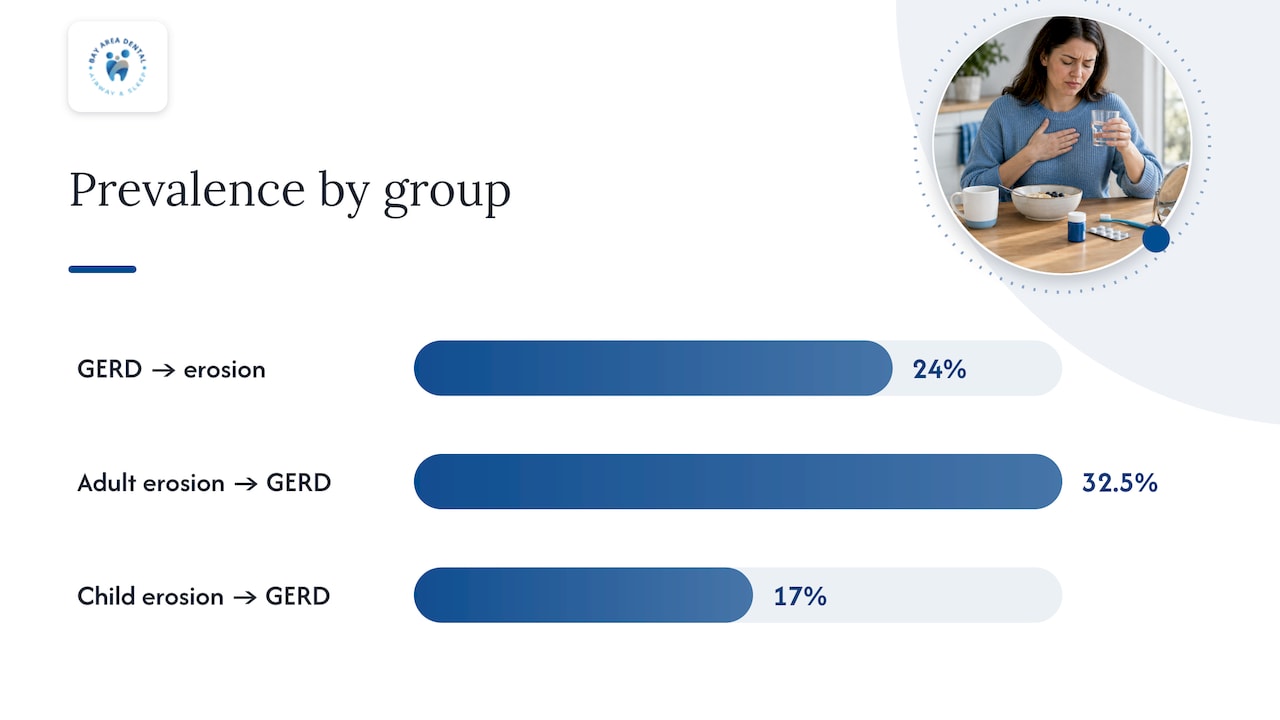
The 2012 review pooled 17 studies and found a strong association between gastroesophageal reflux disease (GERD, the chronic form of acid reflux) and erosion. The median prevalence of erosion among people with GERD was 24%. Among adults with dental erosion, the median prevalence of GERD was 32.5%, and among children with erosion it was 17%. In short, reflux is a common cause, but not the only one, and erosion can also come from acidic food and drinks.
This matters for families too. Reflux-related erosion can affect children as well as adults, so a child with unexplained worn or sensitive teeth deserves a dental check.
Signs your teeth are being eroded
Erosion is easy to miss because it rarely hurts at first. Watch for these, drawn from guidance by the ADA’s consumer site MouthHealthy:
- Pain or sensitivity to hot, cold or sweet drinks
- A yellowish tint as the enamel thins and the darker layer underneath shows
- Fillings that look different or seem to stand out from the tooth
- More cavities than you would expect
A dentist looks for more specific changes. The ADA lists a loss of normal enamel texture, a silky, glossy or “melted” look, cupped or flattened chewing surfaces and shallow defects. A 2018 systematic review describes advanced lesions as yellowish, rounded islands of exposed dentin sitting lower than the thin enamel around them. A JADA patient article adds that erosion often begins on the chewing surfaces of back teeth or the inside surface of front teeth, and that advanced wear can make front teeth look shorter.
That inside surface is easy to miss in the mirror, which is one reason regular exams matter.
Reflux symptoms outside the chest
The Academy of General Dentistry’s fact sheet on acid reflux and oral health lists heartburn, chronic cough, difficulty swallowing, regurgitation, a burning sensation in the mouth, bad breath, nausea and tooth sensitivity among the signs of GERD. If several sound familiar, mention them to both your dentist and your physician.
What happens if erosion continues
Erosion is permanent. According to MouthHealthy, once enamel is lost you may eventually need fillings, crowns, a root canal or, in the most severe cases, a tooth removed. Extreme cases can lead to an abscess or tooth loss. The 2018 review adds consequences such as appearance changes, speech and chewing problems, sensitivity and complications involving the tooth’s pulp, the living tissue inside.
A 2025 review in Cureus on erosive tooth wear and GERD stresses early prevention for another reason: wear of the surrounding tooth can cause restorations to fail. A beautiful filling or veneer placed on teeth that keep dissolving will not last. That is why treating the cause and the damage together gives the best result.
Reflux medicine and dry mouth
There is one more link worth knowing. The ADA notes that many acid reflux medicines can cause dry mouth. Because saliva neutralizes acid and washes away food particles and bacteria, less saliva may raise your cavity risk. If you take reflux medication, tell your dentist so your prevention plan can account for it, and keep taking the medicine your physician prescribed.
Protecting your teeth at home
The habits below come from the ADA, the 2025 Cureus review and a Canadian dental hygienists’ regulator’s reflux fact sheet. They work best alongside medical care for the reflux itself.
- Rinse, do not brush, right after acid. After a reflux episode or acidic food, rinse with water or a fluoride mouthwash. The CDHO suggests a baking soda rinse, one teaspoon in an 8-ounce glass of water. The ADA also lists milk as a rinse option after vomiting.
- Wait before you brush. Acid-softened enamel scrubs away easily. Wait 30 to 60 minutes, as the Cureus review, the CDHO and the JADA article advise.
- Use gentle tools. A soft-bristled brush and fluoride toothpaste, ideally with low abrasiveness. The ADA recommends prescription or over-the-counter fluoride and desensitizing toothpastes.
- Boost saliva. Chew sugar-free gum carrying the ADA Seal of Acceptance. The JADA article suggests sugarless gum or candies, and also notes plain yogurt and milk as enamel-friendly choices.
- Change the evening routine. MouthHealthy recommends not eating for 3 hours before bedtime. The Cureus review also suggests raising the head of the bed or sleeping on your left side.
- Limit the other acids. Avoid sipping acidic drinks between meals, use a straw, drink water with meals, and skip alcohol and smoking.
If your dentist recommends it, a higher-strength prescription fluoride toothpaste, in-office fluoride varnish or a nighttime mouth guard can add protection. The Cureus review mentions a 5,000-ppm fluoride toothpaste and varnish as options, and the CDHO mentions a nighttime guard. Parents who want to know more about varnish can read our page on fluoride varnish safety.
Treat the reflux and the teeth together
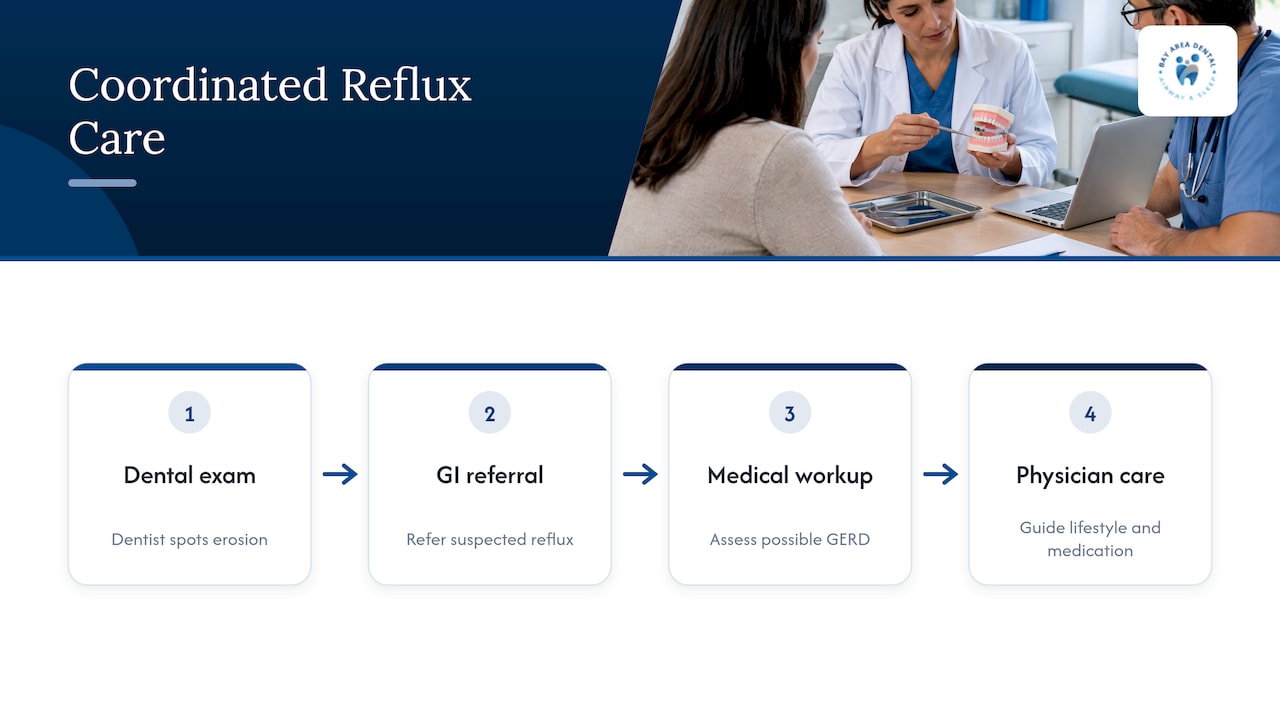
Your dentist can spot erosion, but cannot confirm GERD. The 2022 American College of Gastroenterology guideline states that dental erosion is associated with GERD but is not a reliable stand-alone sign of it. That means worn teeth should prompt a proper medical workup, not a guess.
A 2014 review says a dentist who suspects reflux as the cause of erosive wear should refer the patient to a gastroenterologist, a physician who specializes in the digestive tract. The 2012 review treats medical management as the primary prevention method, and reports a randomized trial showing short-term suppression of active erosion after confirmed GERD was treated with a proton pump inhibitor (PPI), a medicine that reduces stomach acid.
The ACG guideline lists the lifestyle steps your physician is likely to discuss: weight loss if you are overweight, avoiding meals within 2 to 3 hours of bedtime, and raising the head of the bed for nighttime symptoms. Medication decisions belong to your physician. A 2024 guideline update from the American Society for Gastrointestinal Endoscopy also advises reviewing dose and duration for people on long-term PPI therapy, which is a good reason to schedule regular check-ins with your doctor.
When to see a physician
See a physician if you have heartburn or regurgitation that interferes with daily life, trouble swallowing, or a chronic cough. The 2025 Cureus review cites English clinical guidelines that recommend gastroenterology referral when reflux symptoms disrupt life, when tests are inconclusive, or when erosive wear keeps progressing despite dietary changes. Severe wear limited to one side of the teeth is another reason to ask for a medical opinion.
How a dentist diagnoses and repairs reflux erosion
The ADA says erosive wear is diagnosed by combining a detailed health history, a review of risk factors and a full clinical exam. Treatment centers on prevention and reducing exposure, usually through diet and lifestyle changes, with restorative work when needed to stop the damage from progressing. The Cureus authors argue for a joint medical and dental approach with advice matched to severity.
What repair looks like depends on how far the wear has gone:
| Stage | What you may notice | Typical dental focus |
|---|---|---|
| Early | Dull, chalky or glossy enamel, mild sensitivity | Monitoring, fluoride, home routine changes |
| Moderate | Thin enamel, cupped chewing surfaces, yellowing | Protective restorations such as bonding |
| Advanced | Shortened teeth, exposed dentin, chipping, pain | Veneers or crowns, sometimes root canal care |
The CDHO fact sheet describes the same progression, from a chalky or frosted look through a smooth, glazed surface to thinned, pitted enamel and flat chewing surfaces. It also notes that erosion is especially pronounced on the inner surfaces of upper teeth.
MouthHealthy notes that veneers are an option to restore appearance once erosion has changed the look of teeth. At our Fremont practice, restorative and cosmetic care includes dental veneers, smile makeovers and composite bonding. Our tooth wear treatment guide explains the options and when to act, and our page on minimally invasive dentistry explains why we prefer to preserve as much natural tooth as we can. For those who want to know how bonded work holds up, see our overview of cosmetic bonding longevity.
If you are considering whitening, thinned enamel changes what is comfortable and sensible, so read our teeth whitening options first.
Night-time clues: reflux, mouth breathing and sleep
Because the worst reflux damage happens while you sleep, nighttime habits matter. Snoring, mouth breathing and poor sleep can also dry the mouth and leave teeth worn, and they sometimes overlap with reflux. Our article on how snoring damages your teeth explains the airway side of tooth wear. If you wake with a dry mouth, a sore throat or a sour taste, tell us. Sleep and airway dentistry is one of the things we focus on, so we can look at the whole picture of your night.
Why we look at the cause, not only the tooth
At Bay Area Dental, Airway & Sleep, our approach is whole-body. A worn tooth is a symptom, and we want to understand what is behind it. Reflux, a dry mouth, night-time breathing and diet can all be part of the story.
That is why we pair careful examination with advanced tools such as 3D imaging, and why our care leans toward minimally invasive solutions that protect healthy tooth structure. When erosion has already changed a tooth, we rebuild it in a way meant to last, and we keep the plan personal to you.
We also know that comfort and clear communication decide whether people come back for care. We tailor communication for our Deaf patients, and we explain every step, whatever your age. If reflux is suspected, we encourage you to work with your physician, and we adjust your dental plan around what you learn.
Bay Area Dental, Airway & Sleep
Get your teeth checked in Fremont
If you have reflux, sensitivity or teeth that look flatter or more yellow than before, an exam is the clearest way to see where you stand. Our team in Fremont offers general, preventive and restorative dentistry, and we see children and families through our pediatric dental care.
Bring a list of your reflux symptoms and any medicines you take. We will examine your teeth for the patterns described above and talk through a prevention and repair plan that fits you.
FAQ
Can acid reflux cause tooth erosion even without heartburn?
Yes. Reflux can reach the mouth without a strong burning feeling, particularly at night. Clues include a sour taste, chronic cough, dry mouth, bad breath and tooth sensitivity. If your dentist sees erosion with no clear dietary cause, a medical evaluation is the next step.
Should I brush right after acid reflux?
No. Enamel is soft right after acid contact, so brushing can scrub it away. Rinse with water or a fluoride mouthwash first, then wait 30 to 60 minutes before brushing with a soft brush and fluoride toothpaste.
What toothpaste is best for reflux-related erosion?
The ADA recommends fluoride toothpaste and, for sensitivity, desensitizing toothpaste, both available over the counter or by prescription. The 2025 Cureus review favors low-abrasivity formulas and notes that a 5,000-ppm fluoride toothpaste can be prescribed. Your dentist can tell you which fits your level of wear.
Can eroded enamel grow back?
No, erosion is permanent. Fluoride can help strengthen what remains, and restorations such as bonding or veneers can rebuild shape and protect the tooth. The earlier erosion is found, the more natural tooth you keep.
Can a dentist tell if I have GERD?
A dentist can recognize erosion patterns and suspect reflux, but cannot diagnose GERD from the teeth alone. The ACG guideline notes that dental erosion is not a reliable diagnostic sign. Your dentist will recommend that you see a physician, often a gastroenterologist, to confirm it.
Sources
- Dental Erosion, American Dental Association
- Tooth Erosion and Acid Reflux, MouthHealthy
- Gastroesophageal Reflux Disease and Tooth Erosion, International Journal of Dentistry (2012)
- Dental erosion in gastro-esophageal reflux disease, systematic review (2018)
- Erosive Tooth Wear and Gastroesophageal Reflux Disease, Cureus (2025)
- Understanding Acid Reflux and Oral Health, Academy of General Dentistry
- Gastroesophageal Reflux Disease fact sheet, CDHO
- Do not let dental erosion eat away at your enamel, JADA (2024)
- ACG Clinical Guideline for the Diagnosis and Management of GERD (2022)
- Dental approach to erosive tooth wear in gastroesophageal reflux disease (2014)
- ASGE guideline update on GERD, VideoGIE (2024)