

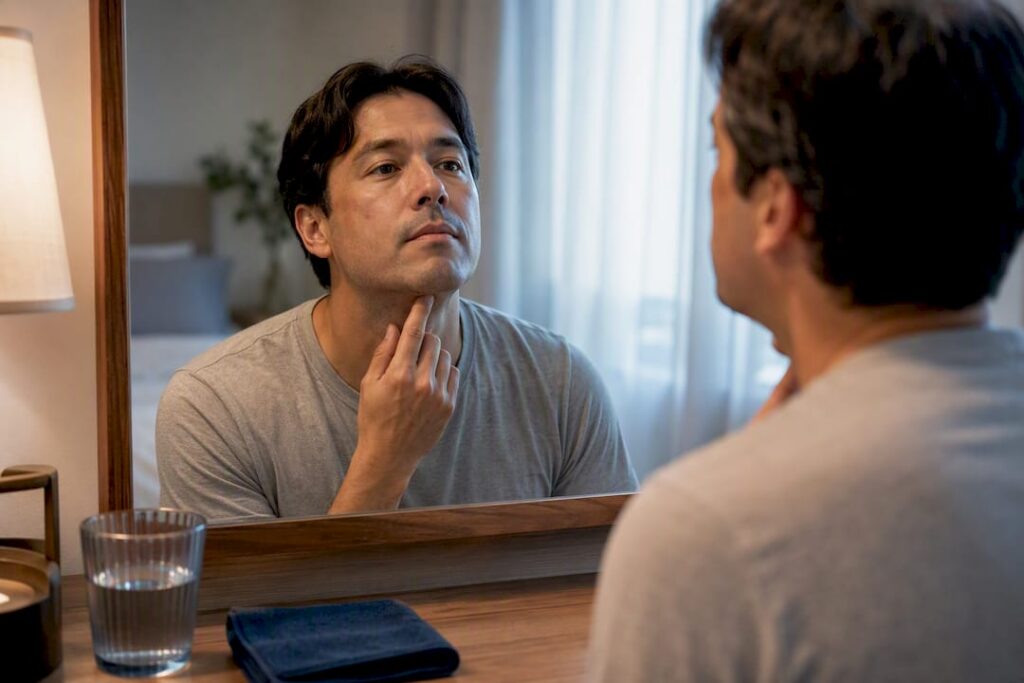
Proper tongue posture means the tip rests just behind your upper front teeth, the broad middle sits lightly against the roof of your mouth, lips stay closed, and you breathe through your nose. Try it right now: find that spot, seal your lips, and breathe nasally for 30 to 60 seconds. Tongue posture training builds on this resting habit, but it improves function and comfort. It won’t reshape an adult jaw on its own.
TL;DR:
- Proper tongue posture supports nasal breathing and helps prevent airway narrowing that can contribute to snoring and sleep apnea.
- Consistent daily training sessions, lasting just a few minutes, can produce gradual improvements in tongue positioning over several weeks or months.
- Adults with tongue thrust or mouth breathing habits often see better stability and reduced relapse in orthodontic treatment when combined with tongue posture training.
- Cases involving a restrictive tongue tie may require a frenectomy before exercises can effectively improve posture.
- Professional assessments can identify structural issues or underlying sleep issues that home drills alone cannot address effectively.
Table of Contents
- Why Tongue Posture Matters for Breathing, Swallowing, and Sleep
- Signs Your Tongue Posture May Be a Problem
- A Daily Tongue Posture Training Routine That Actually Builds Habit
- Does Tongue Posture Training Actually Work?
- When to See a Dental or Airway Specialist
- How Bay Area Dental, Airway & Sleep Approaches Tongue Posture Cases
- The Three-Step Plan to Start Training Today
- Ready for a Professional Airway and Posture Assessment?
- Sources
- FAQ
Why Tongue Posture Matters for Breathing, Swallowing, and Sleep
A tongue resting against the palate acts like a natural retainer, and it does more than sit there quietly. It supports the airway, cues nasal breathing, and stabilizes teeth against the pressure the cheeks and lips apply from the outside.
Nasal breathing pulls in nitric oxide, which helps widen blood vessels and improve oxygen uptake. Mouth breathing skips that step entirely. When the tongue drops low or pushes forward during swallowing, called a tongue thrust, it can work against orthodontic treatment for years. A prospective study on Class II malocclusion patients found that adding tongue posture training after braces cut relapse significantly compared to patients who skipped it.
Poor tongue posture also shows up in sleep clinics. A tongue that rests low and back narrows the upper airway, and that narrowing is a mechanical contributor to snoring and, in some patients, obstructive sleep apnea. The links matter here:
- Nasal breathing supports better oxygen exchange than mouth breathing.
- Tongue-to-palate contact resists the inward pressure of cheeks and lips on teeth.
- A low, retracted tongue position narrows airway space during sleep.
Signs Your Tongue Posture May Be a Problem
Most people never think about where their tongue sits until something else goes wrong first, like a dry mouth every morning or a partner complaining about snoring. Here’s how to figure out if that’s you.
- Watch for persistent mouth breathing, lips parted at rest, or a mouth that feels dry within minutes of waking.
- Check for snoring, an open bite in the front teeth, or speech sounds that feel slightly off, like a lisp that appeared later in life.
- Stand in front of a mirror with your jaw relaxed. If your lips don’t close naturally without effort, that’s worth noting.
- Try holding your tongue tip on the spot behind your upper teeth for 10 seconds. Struggling to hold it, or feeling your jaw or neck tense up, is a signal.
- Watch for red flags that need faster attention: a tight tongue tie limiting movement, loud snoring, or daytime sleepiness that doesn’t match your sleep hours.
A Daily Tongue Posture Training Routine That Actually Builds Habit
Training tongue posture works the same way training any other muscle group works: short, frequent sessions beat one long grind. The goal is to make the resting position automatic, not something you have to consciously hold all day.
Start with baseline cues. Lips closed, teeth slightly apart (not clenched), tongue tip on the spot just behind the upper incisors, and the broad middle of the tongue making light contact with the palate. No pressure, no strain.
From there, build in these core drills:
- Suction hold. Suction the entire tongue to the roof of the mouth like you’re about to click, and hold for 30 seconds. Repeat 3 times.
- Tongue push-ups. Press the broad tongue against the palate and release, 10 to 15 reps, focusing on control rather than speed.
- Lateral sweeps. Slide the tongue tip along the inside of the upper teeth from one side to the other, 10 reps, to build lateral muscle awareness.
- Swallow retraining. Practice swallowing with lips closed and tongue tip staying up, rather than pushing forward against the teeth.
- Nasal breathing drills. With lips sealed and tongue resting on the palate, breathe through the nose for one to two minutes, several times a day.
Pediatric myofunctional protocols in published research use roughly 20 minutes of daily practice sustained over about six months, and that pacing translates reasonably well to adults doing shorter, more frequent sessions. Aim for 3 to 5 short sessions a day rather than one marathon session, and expect the first few weeks to feel awkward before it feels automatic.
Pro Tip: If your jaw or neck starts aching during a drill, you’re forcing it. Drop the intensity, relax the jaw, and let the tongue do the work instead of the surrounding muscles.
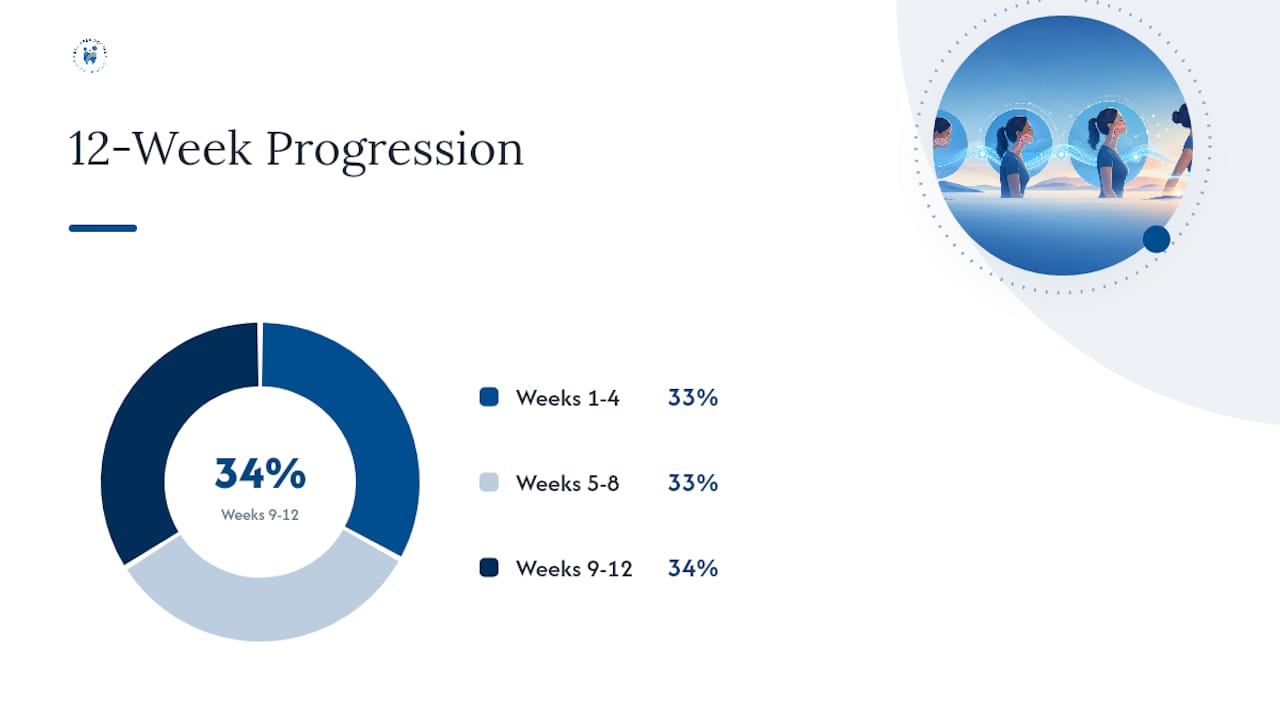
A rough 12-week arc looks like this: weeks 1 through 4 build awareness and basic holds, weeks 5 through 8 add repetitions and swallow retraining, and weeks 9 through 12 focus on maintaining posture during talking, eating, and sleep without conscious effort.
Does Tongue Posture Training Actually Work?
The clinical picture is genuinely encouraging, though not uniform across every study design. The strongest data point comes from orthodontic patients who added tongue training after treatment.
- Patients who trained showed a PAR relapse score of 1.8, compared with 3.9 for those who didn’t, at the 12 month mark.
- Trained patients held tongue-to-palate contact for about 17.5 hours a day, versus 10.8 hours in untrained patients.
- In pediatric samples, orofacial myofunctional therapy combined with airway expansion improved low tongue posture in 76.1% of children, compared with 51.2% without the therapy.
That last figure carries a caveat worth sitting with: the therapy performed better when paired with airway expansion, not as a standalone fix. Broader review literature on orofacial myofunctional therapy echoes that pattern, noting that outcomes track closely with how consistently patients practice, and that results tend to be strongest inside a coordinated treatment plan rather than isolated home drills. Expect gradual gains over weeks to months, not an overnight change.
When to See a Dental or Airway Specialist
Self-training covers a lot of ground, but certain patterns call for a professional set of eyes. Matching the right provider to the right symptom saves time.
- See a speech-language pathologist or orofacial myologist if your tongue posture drills feel physically impossible to hold, or if swallowing patterns seem off.
- See a dentist or orthodontist if you notice an open bite, teeth shifting, or you’re mid-orthodontic treatment and worried about relapse.
- See an ENT or sleep specialist if snoring is loud and frequent, or if a partner has noticed pauses in breathing during sleep.
- Expect an evaluation to include a medical history review, a hands-on oral function exam, and possibly imaging or a referral for a sleep study.
- Professional care commonly means supervised myofunctional therapy sessions, sometimes coordinated with orthodontic adjustments or ENT treatment when a structural issue is part of the picture.
An article in RDH Magazine makes a point worth remembering here: tongue-to-palate contact appears tied to a neurological circuit connected to autonomic balance, which is part of why clinicians tend to favor integrated care over isolated drills in more complicated cases.
How Bay Area Dental, Airway & Sleep Approaches Tongue Posture Cases
A specialized dental practice treats tongue posture as one piece of a larger airway picture, not an isolated habit to correct in a vacuum.
- Airway evaluation looks at how tongue position, nasal breathing, and jaw structure interact.
- Myofunctional therapy addresses muscle patterns directly, often alongside orthodontic or restorative work.
- A laser frenectomy procedure is available when a restrictive tongue or lip tie is limiting movement enough that exercises alone won’t fix the posture.
- A first visit typically means an assessment followed by a specific set of next steps, not a generic exercise handout.
The Three-Step Plan to Start Training Today
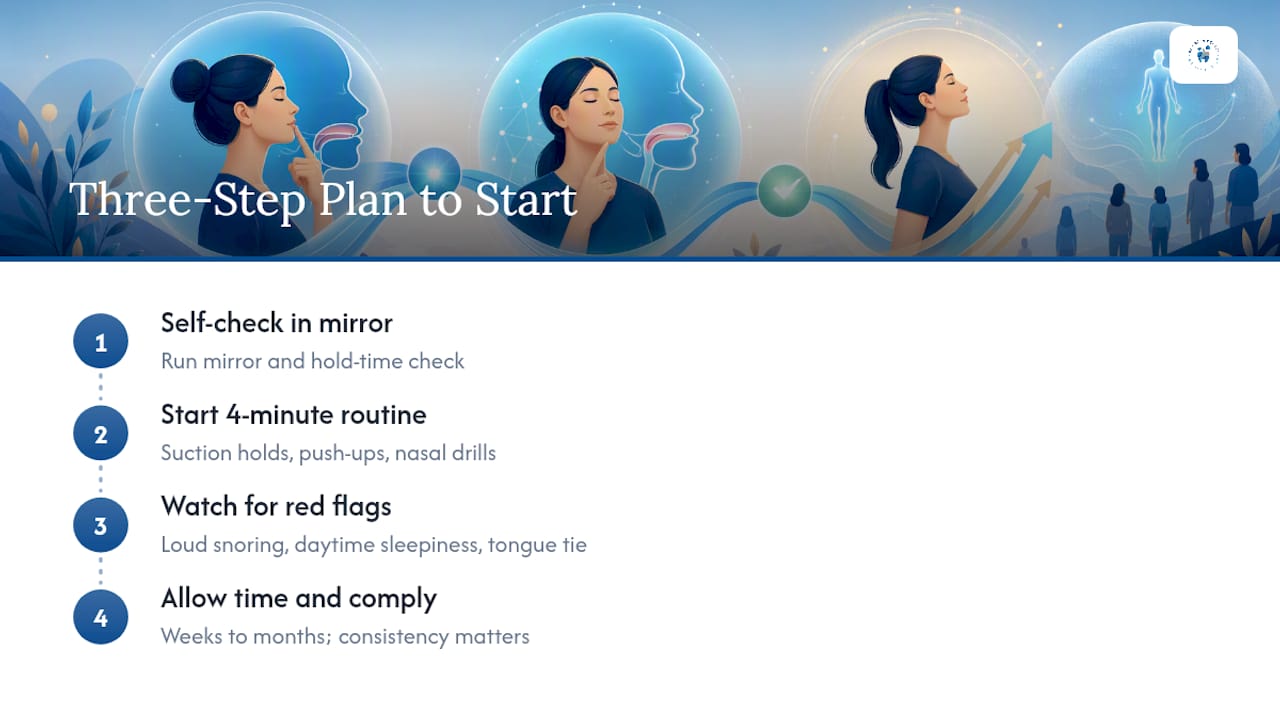
Run the mirror and hold-time self-check first. If nothing alarming shows up, commit to the four-minute daily routine of suction holds, push-ups, and nasal breathing drills for a few weeks. See a clinician if you spot red flags like loud snoring, daytime sleepiness, or a tongue tie that won’t let you hold the posture. Give it weeks to months, and stay consistent. Compliance is what separates the patients who see change from the ones who don’t.
A Clinical Note on Getting Started
Most people feel a little silly the first week, tongue glued to the roof of the mouth like a kid learning to whistle. That awkwardness fades fast. Adults absolutely can retrain this. Just don’t expect a new jawline out of it.
— Admin
Ready for a Professional Airway and Posture Assessment?
Home drills solve a real portion of tongue posture problems, but they can’t diagnose a restrictive frenulum, measure airway narrowing, or coordinate with orthodontic treatment already in progress. Some dental practices offer what a mirror and a self-check routine can’t: a hands-on airway evaluation, supervised myofunctional therapy, and laser frenectomy when a tongue tie is the real obstacle behind the posture.
A first appointment typically starts with an assessment of your tongue posture, breathing pattern, and bite, so bring notes on symptoms like snoring, morning dry mouth, or sleep quality if you have them. From there, the practice maps out whether structured exercises, a referral, or a minor procedure like frenectomy fits your situation. If you’re in the Fremont area and ready to move past guesswork, book an evaluation with Bay Area Dental, Airway & Sleep and get a plan built around your actual airway, not a generic routine.
Sources
- Prospective Study on the Influence of Tongue Posture Training on Stability of Orthodontic Treatment in Class II Malocclusion – PMC
- The importance of tongue posture – RDH Magazine
This article is general information, not a substitute for advice from a qualified doctor. Consult a qualified healthcare professional about your own circumstances before acting on anything here.
FAQ
Can You Correct Your Tongue Posture?
Yes. Most people can retrain resting tongue posture with consistent daily practice, and clinical data on orthodontic patients backs that up with measurable increases in tongue-to-palate contact time. Cases involving a tight frenulum may need a procedure like frenectomy before exercises can fully take hold.
How Long Does It Take to Train Tongue Posture?
Expect gradual change over weeks to months rather than days. Pediatric therapy studies used practice sessions of about 20 minutes a day sustained for roughly six months, and adult self-training generally follows a similar timeline when done consistently.
Do Tongue Exercises Actually Work?
They work best as part of a bigger plan rather than a standalone fix. Studies show orofacial myofunctional therapy paired with airway expansion produced meaningfully higher improvement rates in low tongue posture than expansion alone, though results depend heavily on how consistently someone practices.
Is It Too Late to Fix Tongue Posture as an Adult?
No, adults can retrain tongue posture and often see functional gains in breathing and swallowing habits. What training won’t do is dramatically reshape adult facial bone structure, so keep expectations focused on function and comfort rather than cosmetic transformation.