
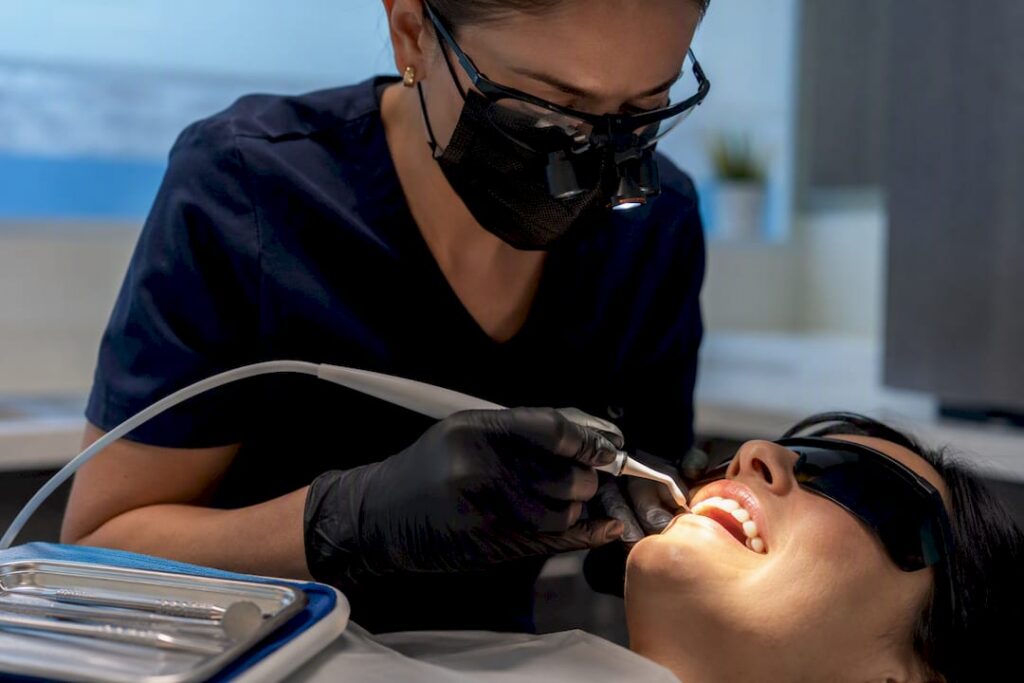
Laser gum contouring uses a focused beam of light to sculpt away excess or uneven gum tissue, exposing more of the natural tooth and correcting a gummy smile. It cuts and seals tissue at the same time, so patients typically see less bleeding and swelling than with scalpel surgery. Good candidates have healthy gums, no active periodontal disease, and want a straightforward cosmetic or functional correction to their gumline.
TL;DR:
- Laser gum contouring results in less bleeding and swelling than scalpel surgery, often eliminating the need for sutures and reducing recovery time.
- Candidates should have healthy gums, no active periodontal disease, and no medications causing gum overgrowth, with prior professional cleaning.
- Diode lasers are preferred for soft tissue reshaping due to their ability to cut and cauterize simultaneously, speeding healing and minimizing thermal impact.
- Healing typically takes two to four weeks, with mild swelling and tenderness in the first 48 hours, requiring a soft-food diet and gentle oral hygiene.
- Alternatives to laser contouring include scalpel surgery, crown lengthening, orthodontics, and veneers, with costs largely out-of-pocket unless the procedure addresses functionality.
Table of Contents
- What Is Laser Gum Contouring, and How Does It Differ From Traditional Gum Surgery?
- What Are the Benefits of Laser Gum Contouring?
- Who Is a Good Candidate for Laser Gum Contouring?
- What Types of Dental Lasers Are Used for Gum Contouring?
- What Happens During a Laser Gum Contouring Procedure?
- How Long Is Recovery After Laser Gum Contouring?
- What Are the Risks, Alternatives, and Costs?
- How Bay Area Dental, Airway & Sleep Approaches Gum Contouring
- Ready to Schedule Your Laser Gum Contouring Consultation?
- Sources
What Is Laser Gum Contouring, and How Does It Differ From Traditional Gum Surgery?
Laser gum contouring, also called laser gingivectomy or gingival recontouring, reshapes the gumline using a dental laser instead of a scalpel. The clinician removes or sculpts tissue that covers too much of the tooth surface, revealing a longer, more proportional crown.
The mechanical difference matters more than it sounds. A laser cuts and cauterizes in the same motion, sealing blood vessels as it goes. That’s why Cleveland Clinic’s overview of gum contouring notes dentists can use either a scalpel or a handheld laser, with the laser approach generally requiring no sutures.
A few scenarios push the plan past soft tissue alone:
- Excess bone beneath the gum, which requires crown lengthening to expose enough tooth structure.
- A tooth needing restoration (a crown or veneer) that first needs more visible surface to bond to.
- Uneven gum heights caused by a combination of tissue and underlying bone, not tissue alone.
When bone is involved, the laser handles the soft tissue while a separate step addresses the bone, and healing takes longer.
What Are the Benefits of Laser Gum Contouring?
The appeal starts with proportion. Teeth that look short or “toothy” because of excess gum tissue often look longer and more balanced once the gumline is reshaped, and patients typically see the new contour the moment the anesthesia wears off.
The clinical case is just as strong. A systematic review and multiple randomized trials found significantly less intraoperative bleeding and postoperative pain with diode laser gingivectomy compared with conventional scalpel surgery. Practitioners also report that laser precision affects fewer cells at the incision margin, which tends to speed healing.
Here’s what that translates to for a patient sitting in the chair:
- Less bleeding during the procedure and less swelling afterward.
- Fewer sutures needed, sometimes none at all.
- Shorter appointments with an immediately visible result.
- A gentler recovery curve than traditional gum surgery.
The evidence in plain terms: trials comparing laser and scalpel gingivectomy consistently favor the laser group on both bleeding and pain, not just one or the other.
Who Is a Good Candidate for Laser Gum Contouring?
Candidacy comes down to two questions: is the gum tissue healthy, and is the excess purely cosmetic or partly structural? People who want treatment usually fall into a few categories.
- Gummy smile. Excess tissue covers more of the tooth than proportion calls for, often making teeth look short.
- Uneven gumline. One or several teeth show noticeably more or less gum than their neighbors.
- Pre-restorative needs. A tooth needs more exposed structure before a crown or veneer can be placed properly.
Not everyone qualifies right away. Active gum disease has to be brought under control first, since treating periodontal disease before elective contouring reduces complication risk and helps results last. Certain medications, including some anticonvulsants and calcium channel blockers, cause gum tissue to overgrow and may need to be addressed with a physician before cosmetic work proceeds.
Before scheduling, expect a cleaning, a smile analysis (often with digital photos or a mock-up), and a conversation about what’s realistic for your specific gumline.
What Types of Dental Lasers Are Used for Gum Contouring?
Not all dental lasers do the same job, and the choice shapes both the experience and the outcome.
- Diode lasers (roughly 810 to 1064 nanometers). These target soft tissue almost exclusively. They’re the workhorse for cosmetic gum reshaping because they provide strong hemostasis, control bleeding well, and reduce bacterial load at the surgical site.
- Er:YAG lasers. These handle both soft and hard tissue, which makes them useful when calculus removal or root-surface decontamination is part of the plan alongside contouring.
- Er,Cr:YSGG lasers. Similar dual capability to Er:YAG, with a different absorption and thermal profile that some clinicians prefer for combined procedures.
A 2025 review of lasers in periodontal therapy confirms this split: diode systems dominate soft-tissue-only cosmetic work, while erbium lasers step in when bone or root surfaces need attention too. The tradeoff is precision versus thermal impact. Some erbium wavelengths cut with less heat buildup, while diode lasers rely on their cauterizing effect. The same research also points to photobiomodulation, a low-level laser effect that may support healing and lower inflammation after the higher-power cutting is done.
Pro Tip: Ask which laser your clinician plans to use and why. If bone or root work isn’t needed, a diode-only approach usually means a faster, simpler visit.
What Happens During a Laser Gum Contouring Procedure?
A typical visit follows a predictable sequence, which is part of why recovery expectations are so consistent across patients.
- Consultation and smile mapping. The clinician takes digital photos, sometimes builds a mock-up, and marks the target gumline.
- Local anesthesia. A numbing injection or topical anesthetic keeps the area comfortable throughout.
- Laser sculpting. The clinician removes tissue along the planned line, typically finishing in a moderate length of time depending on how many teeth are involved.
- Immediate check. The new gumline is visible right away, and the clinician checks symmetry before you leave the chair.
Sutures are rarely necessary because the laser seals tissue as it cuts. Most patients describe mild pressure or warmth during the procedure rather than sharp pain, and the numbing wears off within a few hours afterward.
How Long Is Recovery After Laser Gum Contouring?
Healing happens in stages, and knowing the timeline in advance makes the first week far less stressful.
- 24 to 48 hours: Mild swelling and tenderness are normal; over-the-counter pain relief usually covers it.
- 3 to 7 days: Most discomfort fades noticeably, though the gums may still look slightly pink or raw.
- 2 to 4 weeks: Tissue fully matures and settles into its final shape and color.
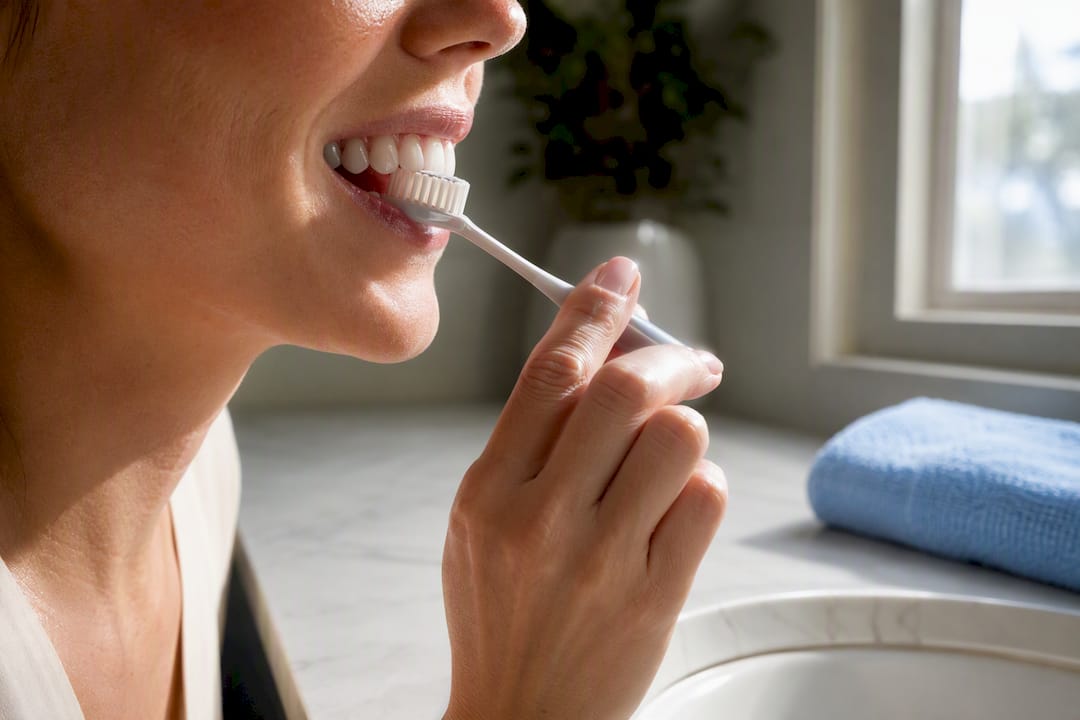
Stick to soft foods for the first few days and skip anything spicy, acidic, or crunchy that could irritate the tissue. Brush gently around the treated area, and use warm salt water rinses or a prescribed antimicrobial mouthwash if your clinician recommends one.
Pro Tip: Keep a soft toothbrush on hand and switch back to normal brushing pressure gradually. Rushing this step is the most common cause of irritation during week one.
Call the clinic if you notice increasing pain after day three, unusual swelling, fever, or any discharge. Those aren’t part of the normal healing pattern and need a follow-up look.
What Are the Risks, Alternatives, and Costs?
Complications are uncommon but worth knowing. Infection can occur if aftercare instructions aren’t followed, tissue margins can heal slightly uneven, and in rare cases gum tissue partially regrows over time, particularly if inflammation wasn’t fully controlled beforehand. Most of these are manageable with a quick touch-up or better plaque control.
Laser contouring isn’t the only route to a better-looking gumline. Depending on the underlying cause, alternatives include:
- Scalpel gum surgery, still used in some cases and effective, though with more bleeding and downtime.
- Crown lengthening, needed when excess bone rather than tissue is the main issue.
- Orthodontics, when uneven gum display is actually caused by tooth position.
- Veneers or bonding, which change how teeth look without touching the gum tissue at all.
Cost varies by how many teeth are involved and whether bone work is part of the plan. Insurance coverage generally depends on medical necessity: a functional case tied to a restoration has a better chance of partial coverage than a purely cosmetic gummy-smile correction, which is usually out-of-pocket. Always verify benefits with your insurer before scheduling.
How Bay Area Dental, Airway & Sleep Approaches Gum Contouring
Gum tissue doesn’t exist in isolation from the rest of your health, and the approach to cosmetic cases considers this comprehensive perspective. Using 3D imaging alongside laser tools, clinicians can map the gumline and underlying bone before treatment, so the plan accounts for what’s actually happening beneath the surface rather than relying on visual exam alone.
Accessibility can be an important consideration in practice operations, with tailored communication supporting clear treatment planning for diverse patient needs. At a consultation, ask what the clinician sees on your 3D scan, what your realistic healing timeline looks like, and how follow-up care is structured. A practice that takes time to answer those questions in detail is one worth trusting with your smile.
— Admin
Ready to Schedule Your Laser Gum Contouring Consultation?
This dental practice offers guidance to help patients navigate gum treatment options beyond self-directed online research. Combining 3D imaging with laser tools in one visit allows for diagnosis of soft tissue and bone health before treatment decisions, rather than relying solely on cosmetic assessment.
Bring your dental history, a list of current medications, and photos of smiles you like if you have them. It helps the team build an accurate mock-up before treatment day. If you’ve been putting off asking about a gummy smile or an uneven gumline, schedule a consultation with Bay Area Dental, Airway & Sleep and get a straight answer about whether laser gum contouring fits your case.
Sources
For readers who want the clinical detail behind the claims in this guide: