


Most people feel back to normal within a week and see the final gumline settle in over several weeks to a few months. The three things that matter most during that window: keep bleeding and pain under control, stick to a soft diet, and follow a gentle, specific oral hygiene routine instead of your normal brushing habits. Call your dentist right away for bleeding that won’t stop, pain medication can’t touch, a fever, or any sign of infection.
TL;DR:
- Most recovery occurs within four to six weeks, but full tissue maturation can take six to twelve weeks, especially if bone reshaping was involved.
- Swelling peaks on day two and then drops sharply, while a white film over the site is normal and indicates healing, not debris.
- Pain is typically mild or moderate and responds well to over-the-counter medications like acetaminophen or ibuprofen, with aspirin avoided to prevent bleeding.
- Soft, non-acidic foods should be eaten for at least a week, while strenuous activity and smoking are best avoided during the initial healing period.
- Persistent bleeding, severe pain, fever, worsening swelling after day four, or signs of infection require immediate dental consultation.
Table of Contents
- How Long Gum Contouring Recovery Actually Takes
- Pain Management and Bleeding Control
- What to Eat and How to Clean Your Mouth While Healing
- Returning to Work, Exercise, and Daily Life
- Warning Signs That Mean You Should Call Your Dentist
- Will the Results Last, and What Causes Gum Rebound
- Inside the Clinic: Technology, Follow-Up, and What to Bring
- Why the Standard Recovery Advice Undersells the Timeline
- Get Personalized Gum Contouring Aftercare Guidance
- Sources
- FAQ
How Long Gum Contouring Recovery Actually Takes
Recovery happens in stages, and knowing what’s normal at each one keeps you from panicking over things that are supposed to happen.
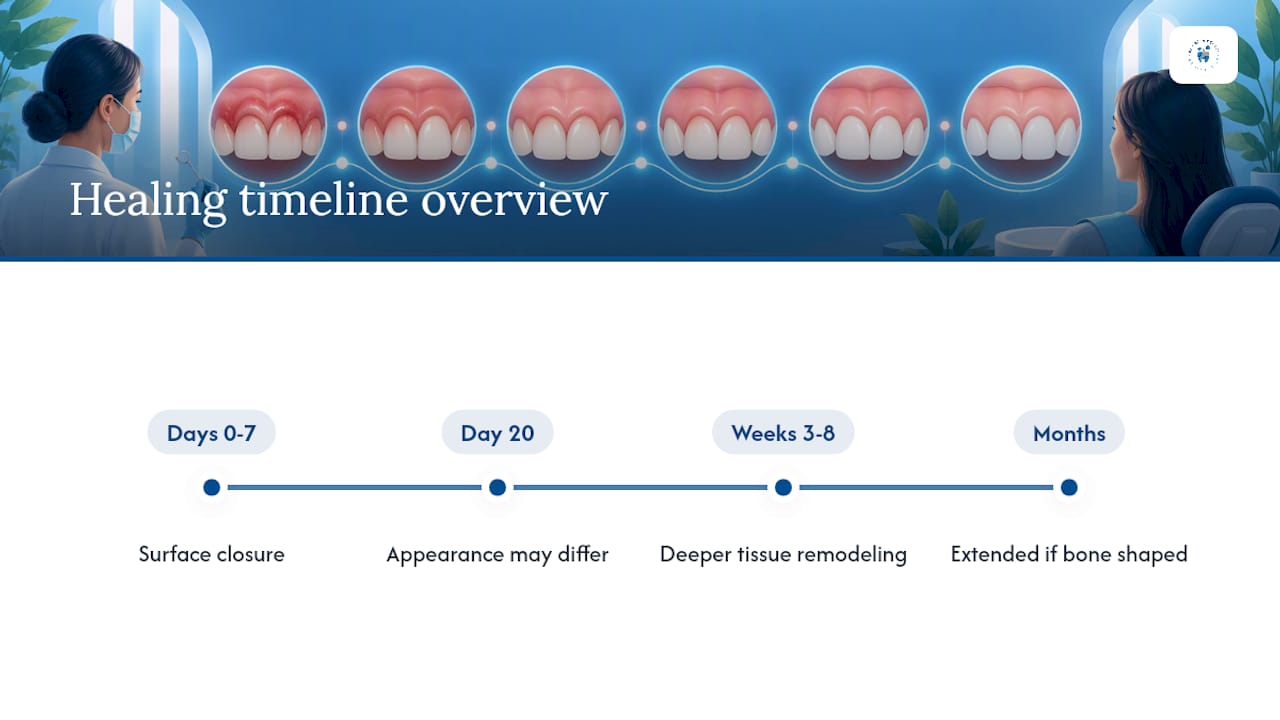
- Day 0 to 3. The numbness wears off within hours and soreness peaks here. Expect mild bleeding or pink-tinged saliva for the first day, plus swelling that’s worse on day two than day one. Rest, keep your head elevated, and use cold compresses in short intervals.
- Day 4 to 7. Swelling drops noticeably. A white or pale yellow film forms over the surgical site. That’s a protective fibrin layer, not a sign anything went wrong. Keep eating soft foods. Some practices schedule a short check-in visit around this point.
- Weeks 2 to 4. Tissue firms up and color shifts from pale pink toward a normal, healthy shade. Most patients resume regular activities without restriction. You can typically start brushing closer to the treated area, though the exact margin depends on what your provider tells you at your follow-up.
- Month 1 to 3. The contour you see now is close to final. Gum tissue treated with soft-tissue-only laser work tends to stabilize faster; procedures that reshaped underlying bone can take toward the three-month mark before everything fully matures. Clinical epithelialization, meaning the wound surface has closed over, generally happens around four to six weeks.
That gap between “healed” and “matured” trips people up. The gum can look and feel fine at three weeks while the deeper tissue is still remodeling underneath.
Pain Management and Bleeding Control
Discomfort after gum contouring is usually mild to moderate, not severe, and it responds well to standard over-the-counter medication.
- Acetaminophen or ibuprofen are the go-to options, and some providers recommend alternating the two for steadier relief over the first 48 hours.
- Skip aspirin. It thins the blood and can increase bleeding at the surgical site.
- Antibiotics or a stronger prescription painkiller come into play only if there’s a higher infection risk or the procedure involved more extensive tissue or bone work.
- Ice packs in 15 to 20 minute intervals during the first day or two limit swelling, and keeping your head elevated, even while sleeping, reduces both swelling and blood flow to the area.
Pro Tip: Apply the ice pack before the swelling peaks, not after. Starting cold therapy within the first few hours does more than trying to reduce swelling once it’s already set in on day two.
What to Eat and How to Clean Your Mouth While Healing
Your gums need a break from friction and acid while the tissue closes over. Prioritize soft, cool, non-acidic foods for the first several days: yogurt, scrambled eggs, mashed potatoes, oatmeal, and smoothies (no straw) all work well. Depending on how extensive the procedure was, plan on this soft diet for anywhere from a few days to a full week.
- Avoid hard, crunchy, spicy, or acidic foods for at least seven days.
- Skip straws, alcohol, and smoking entirely during initial healing.
- Brush other teeth normally, but go around the treated margin gently with a soft-bristle brush until your dentist clears you for full contact.
- Rinse with warm salt water or a prescribed antibacterial rinse rather than scrubbing the site directly.
That pale film covering the gum line is a normal fibrin layer forming as part of healing by secondary intention, not leftover debris. Leave it alone. Picking at it or rinsing aggressively delays healing and raises infection risk.
Returning to Work, Exercise, and Daily Life
Light desk work is realistic within one to three days for most patients. Hold off on strenuous exercise, heavy lifting, or anything that spikes your heart rate for four to seven days, since elevated blood pressure pushes more blood to the surgical site and raises both swelling and bleeding risk.
If you travel soon after the procedure, pack soft-food options and your pain medication schedule. Smoking and alcohol both slow healing and raise complication risk, so this is a good stretch to pause both. When you schedule your next dental appointment, request a shorter visit so you’re not holding your mouth open for long stretches while tissue is still tender.
Warning Signs That Mean You Should Call Your Dentist
Most discomfort during gum contouring recovery is manageable and predictable. A smaller set of symptoms means something has gone off track and needs professional attention, not more waiting.
- Bleeding that doesn’t stop after 20 minutes of firm, direct pressure with gauze.
- Pain that isn’t touched by acetaminophen or ibuprofen at the recommended dose.
- Fever, along with pus, foul-smelling drainage, or a persistent bad taste.
- Swelling that gets worse after day three or four instead of improving, or healing that’s clearly stalled past the two-week mark.
One detail worth knowing: certain medications can interfere with normal gum healing, so mention your full medication list at your consultation, not just at the emergency visit if something goes wrong.
Will the Results Last, and What Causes Gum Rebound
Gum contouring results are long-lasting for most patients when the underlying cause of excess or uneven tissue gets addressed at the same time as the cosmetic reshaping. Tissue stability typically shows up around six to twelve weeks after the procedure, longer if bone reshaping was part of the plan.
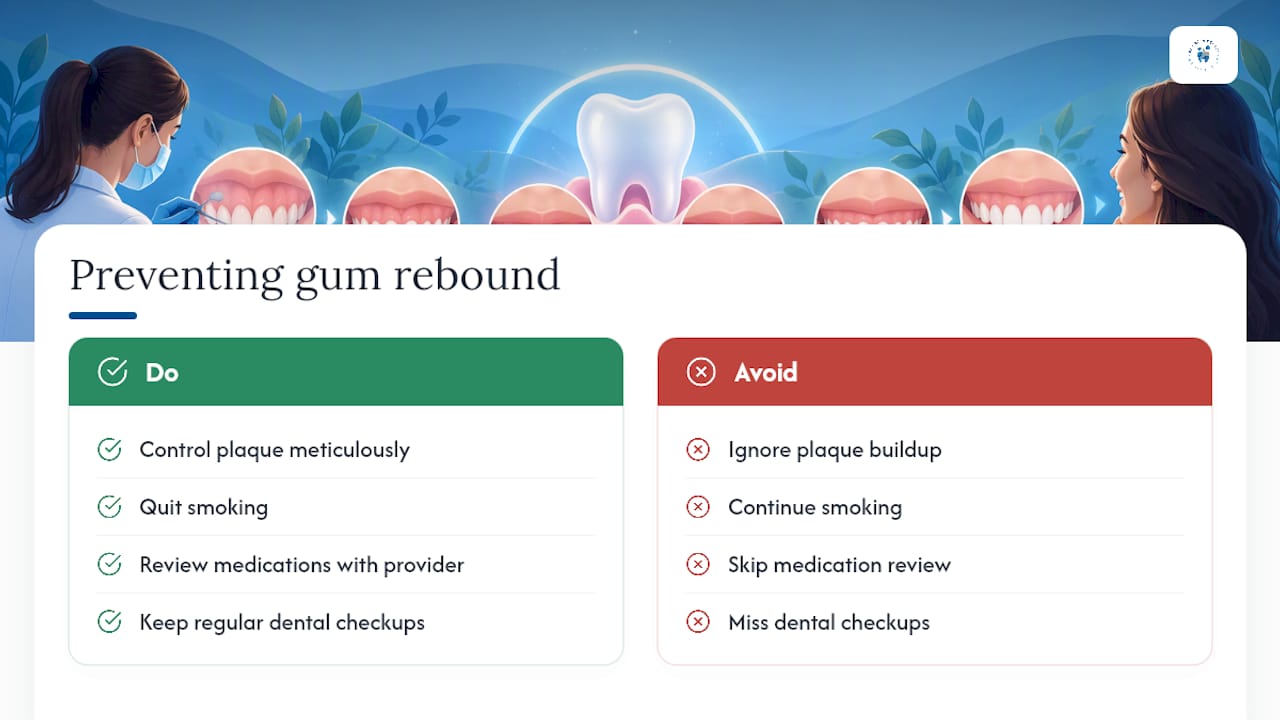
Rebound happens when the root cause was never fixed. Chronic inflammation from plaque buildup, certain medications, or untreated gum disease can cause tissue to grow back over time, essentially undoing the contouring. Meticulous plaque control, quitting smoking, a medication review with your provider, and keeping up with regular dental checkups all lower that risk substantially. If tissue does start creeping back, a touch-up procedure is usually a smaller, faster intervention than the original one.
Inside the Clinic: Technology, Follow-Up, and What to Bring
Some providers approach gum contouring as part of a bigger picture that includes airway health, restorative dentistry, and myofunctional therapy, not an isolated cosmetic fix. Addressing the reason tissue grew uneven in the first place, whether that’s a breathing pattern, a bite issue, or chronic inflammation, matters more for long-term results than the reshaping itself.
Some practices use 3D imaging and laser treatment technology, which lines up with what a small interventional trial found when comparing healing methods after gingivectomy: the low-level laser therapy group showed better clinical and histologic healing along with lower pain scores than groups treated with topical hyaluronic acid or an herbal gel. Laser-assisted approaches also tend to run with less bleeding during the procedure itself compared to traditional scalpel techniques.
Personalized care can extend to communication, including tailored educational materials for patients with diverse communication needs, so aftercare instructions land clearly.
At your follow-up visit, expect the dentist to check tissue color, firmness, and how well the margin has closed. Bring:
- A list of any medications or supplements you started or changed since surgery.
- Notes on pain levels, bleeding, or anything that felt off.
- Photos if you noticed a change between visits and want a specific area reviewed.
Why the Standard Recovery Advice Undersells the Timeline
Most recovery guides treat gum contouring like it’s over in a week. It isn’t, and treating it that way sets people up for false alarm when their gums still look a little different at day 20. The procedure heals fast on the surface, tissue closes over within weeks, but the deeper remodeling that determines your final gumline runs on a slower clock, especially if any bone reshaping was involved.
The bigger blind spot is treating gum contouring as a one-time cosmetic event instead of asking why the tissue needed reshaping in the first place. If inflammation, a medication, or an untreated bite problem caused the original unevenness, skipping that conversation just buys you a few good years before the same issue creeps back. The laser-versus-scalpel debate gets attention, and for good reason given the early healing advantage laser approaches show in trial data. But choosing minimally invasive technology matters less than choosing a provider who treats the root cause, not just the symptom sitting in front of them.
Prioritize the follow-up visit. It’s the appointment most people skip once the discomfort fades, and it’s the one most likely to catch a healing problem before it becomes a redo.
— Admin
Get Personalized Gum Contouring Aftercare Guidance
Recovery timelines in this article cover what’s typical, but your gum tissue, your bite, and your reason for needing contouring in the first place are specific to you. Bay Area Dental, Airway & Sleep treats gum reshaping as one piece of a bigger picture that includes airway health and restorative dentistry, so your aftercare plan gets built around what’s actually causing your tissue changes, not a generic checklist.
The practice’s laser technology supports the same minimally invasive, less-bleeding approach to healing that clinical trial data backs up, paired with follow-up visits designed to catch problems early rather than after they’ve become bigger fixes. If you’re weighing gum contouring or a broader smile makeover, start with a consultation at Bay Area Dental, Airway & Sleep to get a recovery plan built around your actual mouth, not an average one.
This article is general information, not a substitute for advice from a qualified doctor. Consult a qualified healthcare professional about your own circumstances before acting on anything here.
FAQ
How long does gum contouring take to heal?
Most people feel noticeably better within a week, with visible surface healing by four to six weeks. Full tissue maturation, especially if bone was reshaped, can take up to six to twelve weeks or a bit longer.
Can receding gums from brushing too hard be fixed?
Gum contouring or grafting can restore tissue lost to aggressive brushing, but the underlying habit needs to change first or the recession tends to return. A dentist can also recommend a softer brush and a gentler technique to prevent further recession while the treated area heals.
Can you live with gum recession without treating it?
Mild gum recession is common and many people live with it long-term without major issues, especially if it’s stable and not progressing. Recession that keeps advancing, causes sensitivity, or exposes more root surface over time is worth evaluating, since it can eventually affect tooth stability.
How far can gums recede before teeth are at risk?
There’s no single measurement that applies to everyone, since risk depends on how much bone support remains underneath, not just how much gum tissue has pulled back. Significant, progressive recession that reaches close to the root tip or exposes a large portion of the root is a sign to get evaluated before it threatens the tooth’s stability.
What foods should I avoid right after gum contouring?
Skip hard, crunchy, spicy, or acidic foods for at least seven days, along with straws, alcohol, and smoking. Stick to soft, cool options like yogurt, eggs, and mashed potatoes until your dentist clears you for a regular diet.