

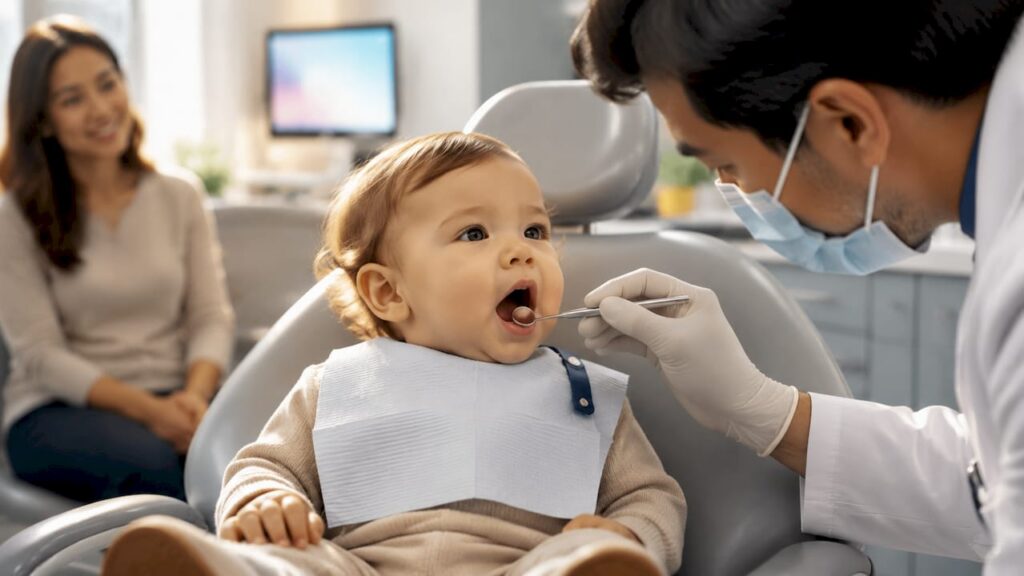
Take your child to the dentist by their first birthday, or within six months of that first tooth breaking through, whichever comes first. The American Academy of Pediatric Dentistry, the American Academy of Pediatrics, and the American Dental Association all back this timeline. The goal isn’t a deep cleaning or X-rays. It’s familiarization, a gentle exam, and a head start on prevention.
TL;DR:
- Waiting until age two or later for a dental visit increases the risk of missing early cavities and makes treatment more costly.
- Signs like white spots, feeding difficulties, or mouth trauma warrant an earlier appointment beyond the standard first-year recommendation.
- Most first visits focus on comfort and prevention, lasting about 30 to 45 minutes, with X-rays reserved for specific issues.
- Preparing your child with a morning appointment, familiar items, and simple explanations helps reduce dental anxiety.
- Early visits also serve as an opportunity to identify feeding or airway issues, such as tongue-tie or sleep problems, that could require specialist evaluation.
Table of Contents
- Why Dentists Recommend the First Birthday for a First Dental Visit
- What Happens at Your Child’s First Dental Visit
- How to Prepare Your Child for the Appointment
- The Real Payoff of Starting Dental Care Early
- When a First Visit Uncovers More Than Cavities
- Why the First Visit Matters More Than Parents Realize
- Booking Your Child’s First Visit With Bay Area Dental, Airway & Sleep
- Sources
Why Dentists Recommend the First Birthday for a First Dental Visit
The logic behind the age-1 guideline comes down to timing. Tooth decay in babies and toddlers moves fast once it starts, and catching it early is far easier than treating it after it’s spread. Pediatric and dental organizations treat childhood cavities as largely preventable when a dentist gets involved before problems take root, not after.
Here’s the gap between guideline and reality: plenty of parents wait until age two, three, or even until a child complains of pain. Some assume baby teeth “don’t count” since they’ll fall out anyway. Others simply don’t know a first-birthday appointment is a real thing dentists expect to see. Pediatricians rarely bring it up at well-child visits unless asked, so the recommendation gets lost in the shuffle of a busy first year.
Certain signs mean you shouldn’t wait for the first birthday at all:
- White or chalky spots on any tooth, which can signal early decay
- Feeding difficulty, poor latch, or slow weight gain
- Visible trauma to the mouth, teeth, or gums
- Signs of a tongue-tie or lip-tie that make nursing or bottle-feeding hard
- A tooth that looks discolored, cracked, or unusually shaped
Any of those warrants a call sooner, not a wait-and-see approach.
What Happens at Your Child’s First Dental Visit
A first dental appointment runs about 30 to 45 minutes, and most of that time is spent building comfort, not doing procedures. Here’s the typical flow:
- Introductions and warm-up. The dentist or hygienist talks to you and your child at their level, often letting the child sit in your lap or explore the chair before anything starts.
- The oral exam. The dentist checks erupting teeth, gums, jaw alignment, and soft tissue for anything unusual.
- Growth and development check. This includes a look at how the bite is forming and whether jaw growth looks on track.
- Caries risk assessment. The dentist evaluates factors like diet, fluoride exposure, and feeding habits to flag decay risk early.
- Parent counseling. You’ll get specific guidance on brushing technique, bottle or breastfeeding habits, pacifier use, and weaning off nighttime bottles.
- Fluoride varnish, if appropriate. A quick brush-on treatment that can help protect enamel once teeth have erupted.
Most offices use a technique called knee-to-knee positioning, where you and the dentist sit facing each other with your child’s head resting in the dentist’s lap and their legs wrapped around your waist. It keeps toddlers secure and lets the dentist get a clear view without a struggle. X-rays are almost never part of a first visit. They’re reserved for specific diagnostic questions, not routine screening at this age.
Pro Tip: If your child cries through most of the exam, that’s normal and not a failed visit. Dentists judge success by whether the child tolerated being in the chair at all, not by whether they smiled through it.
How to Prepare Your Child for the Appointment
A little prep work goes a long way toward making the visit smooth for everyone in the room.
- Book a morning slot if you can. Toddlers tend to be more cooperative before nap time wears them down.
- Bring your insurance card, your child’s birth date, and a quick note on feeding habits (bottle, breast, sippy cup, snacking patterns).
- Write down any questions ahead of time. It’s easy to forget them once you’re managing a wiggly toddler in the waiting room.
- Pack a favorite small toy or comfort item, but leave anything with buttons or sound effects at home.
- Skip the heavy buildup. Telling a two-year-old “we’re going somewhere fun to visit a friend” works better than a long explanation of what a dentist does.
- Expect to sit knee-to-knee with the dentist during the exam. Nobody expects your toddler to sit still solo in a big chair.
Getting kids comfortable with new environments early tends to pay off across the board, not just at the dentist. Some parenting resources on preparing children for new experiences apply the same logic to starting daycare or preschool: familiarity beats surprise every time.
The Real Payoff of Starting Dental Care Early
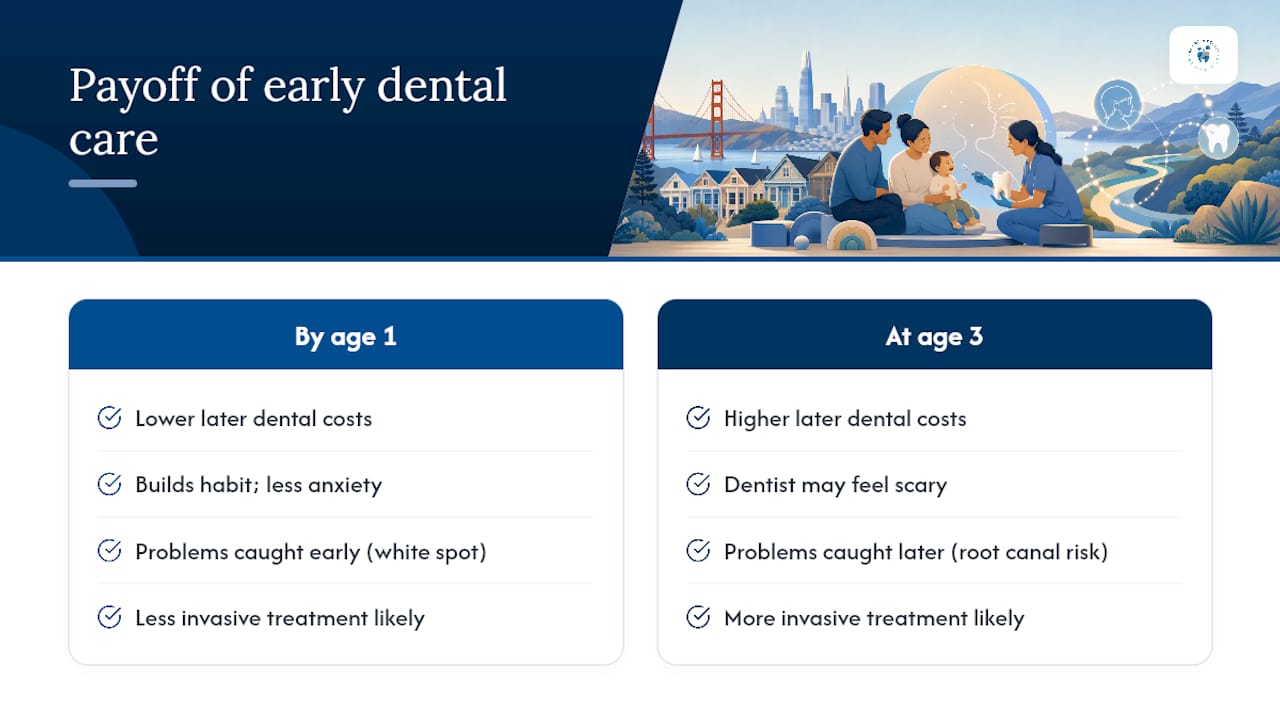
Early visits do more than check a box. They build a habit loop where the dentist’s chair feels normal instead of scary, which tends to lower dental anxiety well into childhood and beyond.
There’s also a financial case for going early. Research tracking children’s dental costs found that kids who started preventive visits by age one had notably lower dental expenses later compared to children whose first visit didn’t happen until age three. Catching a problem when it’s a white spot costs a lot less, in money and in stress, than catching it when it’s a root canal.
Before you book, call your insurance provider or check your Medicaid or CHIP plan. Preventive visits for infants are typically covered, and many plans cover fluoride varnish at no extra cost. It’s worth confirming before the appointment so there are no surprises at checkout.
When a First Visit Uncovers More Than Cavities
Sometimes a routine check turns up something bigger than tooth decay. If your baby struggles to latch, gains weight slowly, or has noisy or labored breathing during sleep, those are worth mentioning at the first visit, not waiting on.
A handful of signs point toward an airway or myofunctional evaluation rather than a standard checkup:
- Snoring, mouth breathing, or restless sleep in an infant or toddler
- A suspected tongue-tie or lip-tie affecting feeding or speech
- Poor weight gain tied to feeding difficulty
- A narrow palate or crowding that shows up even in baby teeth
A specialty evaluation for these concerns usually includes a clinical exam, sometimes supported by 3D imaging, and an assessment of oral muscle function through myofunctional therapy screening. When you’re choosing a practice for this kind of concern, look for one that communicates clearly with families, offers accessible scheduling, and has working relationships with pediatricians, lactation consultants, and ENTs. A practice that only fixes teeth in isolation may miss the bigger picture entirely.
Why the First Visit Matters More Than Parents Realize
Dentistry has a trust problem, and it starts early. A lot of dental anxiety in adults traces back to a rough or delayed introduction to the dentist’s chair as a kid. Starting at age one, before a child has any memory of “the dentist” being a big deal, sidesteps that entirely.
The bigger opportunity most parents miss isn’t just cavity prevention. It’s the chance to flag feeding, breathing, or development concerns to someone trained to notice them before they become bigger issues. If your baby snores, struggles to nurse, or seems to breathe through their mouth constantly, say so at that first visit. Don’t wait for a pediatrician to bring it up first, because airway and feeding issues don’t always come up in a standard well-child check.
Treat the relationship as a partnership from day one. The parents who get the most out of early dental care are the ones who show up with questions, not just teeth to inspect.
— Admin
Booking Your Child’s First Visit With Bay Area Dental, Airway & Sleep
Bay Area Dental, Airway & Sleep treats a child’s first appointment as more than a quick look in the mouth. The practice combines a standard pediatric exam with screening for issues that may be missed in generic checkups, such as feeding difficulty, tongue-tie and lip-tie, and early signs of airway or sleep-related breathing concerns. Families receive appropriate diagnostic and treatment options delivered with family-centered communication that includes accessible care for Deaf patients.
At intake, expect a conversation before an exam. The team wants to know about feeding history, sleep patterns, and any concerns you’ve noticed, not just a look at teeth that haven’t fully erupted yet. If your child is approaching their first birthday, or you’ve noticed feeding or breathing red flags at any age, schedule a first visit with Bay Area Dental, Airway & Sleep and get real answers instead of guesses.