Scaling and root planing, laser gum disinfection, and antibiotic therapy to stop gum disease and give your smile a healthy foundation. Serving the East Bay from our Fremont practice.
More Than a Cleaning
Nearly half of adults over 30 have some form of gum disease, and many have no idea. It does not always cause pain. It does not always cause obvious symptoms. But left untreated, it destroys the bone and tissue supporting your teeth — and research increasingly links it to heart disease, diabetes, and other systemic conditions.
A dental deep cleaning, also called scaling and root planing, is the most effective non-surgical treatment for gum disease. At Bay Area Dental, Dr. Weisman pairs it with laser disinfection and antibiotic therapy when needed for more thorough results than scaling alone can achieve.
Serving patients from Fremont, Newark, Hayward, Milpitas, Union City, Pleasanton, Dublin, and across the East Bay.
The Basics
Scaling and root planing is a deep cleaning procedure that removes plaque, tartar, and bacterial toxins from below the gumline and along the root surfaces of your teeth. It is the standard of care for patients diagnosed with periodontal disease and the most effective way to stop its progression without surgery.
A regular cleaning addresses the surfaces of teeth above the gums. A deep cleaning goes further — cleaning the pockets that form between the teeth and gums when disease is present, and smoothing the root surfaces to make it harder for bacteria to reattach.
Understanding the Difference
These are two different procedures with two different purposes. Understanding which one you need starts with a gum health evaluation.
Removes plaque and tartar from tooth surfaces above the gumline. Recommended every six months for patients with healthy gums and no signs of periodontal disease. Keeps healthy teeth healthy.
Goes below the gumline to clean root surfaces and remove bacterial deposits from periodontal pockets. A treatment procedure for patients with active gum disease. Stops disease progression and creates conditions for the gums to heal.
Warning Signs
Gum disease often has no pain in its early stages. These are the most common indicators that something is happening below the gumline.
Gums that bleed when you brush or floss are not normal. Bleeding is one of the earliest and most reliable signs of gum inflammation that needs attention.
Gums that look red, swollen, or pulled away from the teeth indicate active inflammation. Left untreated, this progresses to deeper bone loss.
Chronic bad breath that does not respond to brushing is often caused by bacteria in deep periodontal pockets that regular brushing cannot reach.
When gums pull away from the teeth, they expose root surfaces and create deeper pockets where bacteria accumulate. Gum recession is often a sign of established gum disease.
Teeth that feel loose or have shifted position indicate that the bone supporting them has been compromised. This is a sign of advanced periodontal disease that needs immediate attention.
Patients who have not had a dental cleaning in over a year often have significant buildup below the gumline even without obvious symptoms. A full evaluation will determine what level of care is needed.
What Sets This Practice Apart
Most dental practices perform scaling and root planing and stop there. At Bay Area Dental, Dr. Weisman uses adjunctive laser disinfection and antibiotic pellet therapy when the clinical situation calls for a more thorough approach.
These additional steps target the bacteria that scaling alone cannot always fully eliminate, giving the gums a better environment in which to heal and reattach to the tooth surface.
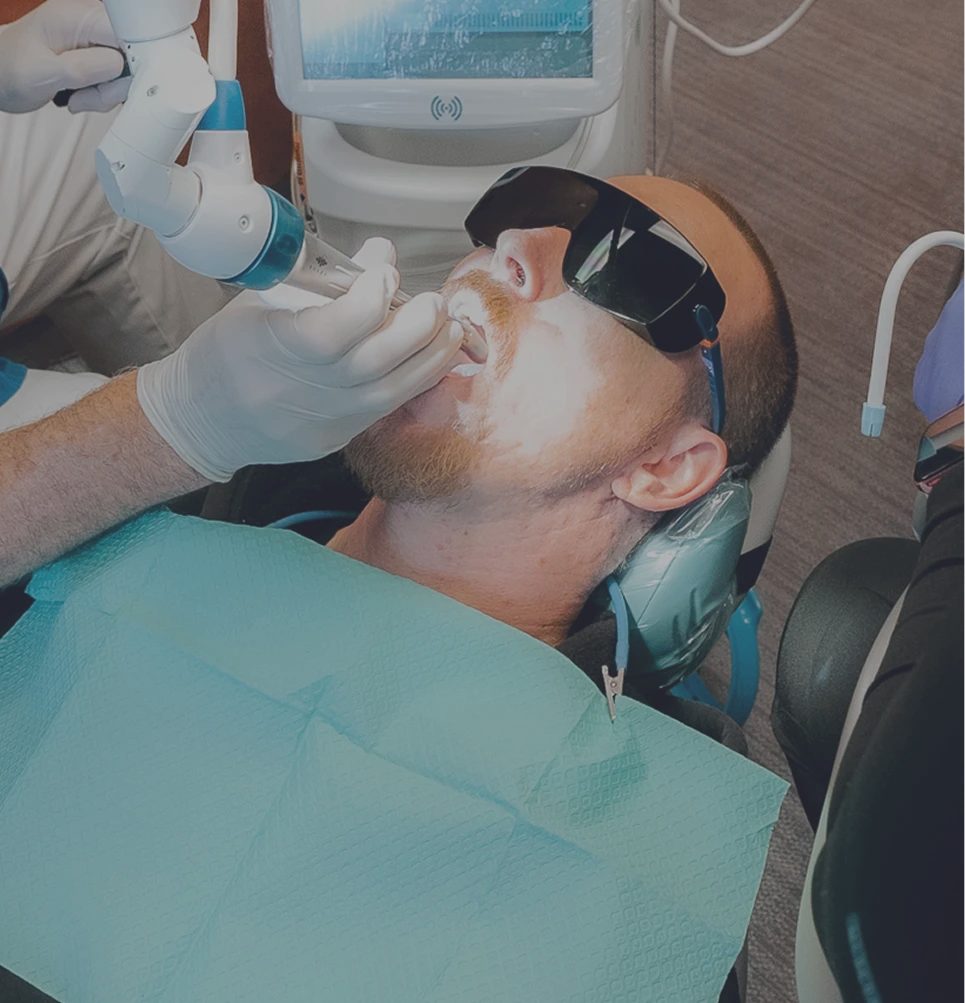
A dental laser is used to disinfect the periodontal pockets after scaling, targeting bacteria that live in soft tissue and cannot be reached by instruments alone. Reduces bacterial load significantly and supports faster healing.
Small antibiotic pellets are placed directly into the periodontal pockets after deep cleaning. They release medication locally over several days, reducing the bacterial infection at the source without the side effects of systemic antibiotics.
After treatment, patients transition to a periodontal maintenance schedule with more frequent cleanings to keep the disease from returning. Dr. Weisman monitors pocket depths at every visit to track the health of your gums over time.
What to Expect
Here is exactly what happens from your first appointment through recovery.
Dr. Weisman measures pocket depths, reviews X-rays, and assesses the extent of gum disease. You leave with a clear picture of what is happening and what is recommended.
Local anesthetic is applied so you feel nothing during the procedure. Dr. Weisman takes the time to ensure you are fully comfortable before starting.
Plaque, tartar, and bacterial deposits are removed from below the gumline and along the root surfaces. The mouth is typically treated in quadrants across one or two appointments.
Where indicated, laser disinfection and antibiotic pellets are applied to the treated areas for enhanced bacterial reduction and faster healing.
Pocket depths are re-evaluated at a follow-up visit to measure the response to treatment. Most patients then transition to a periodontal maintenance schedule every three to four months.
Common Questions
Questions we hear most often from patients in Fremont, Newark, Hayward, Milpitas, Union City, Pleasanton, Dublin, and across the East Bay.
A dental deep cleaning, clinically called scaling and root planing, is a procedure that removes plaque, tartar, and bacterial deposits from below the gumline and along the root surfaces of the teeth. It is the standard non-surgical treatment for gum disease and the most important step in stopping its progression.
The procedure is done under local anesthetic so most patients feel little to no discomfort during treatment. Some tenderness and sensitivity in the gums for a few days afterward is normal. Dr. Weisman will give you specific aftercare instructions and let you know what to expect before starting.
If gum disease is present, yes. Leaving it untreated allows bacteria to continue destroying the bone and tissue that hold your teeth in place. Dr. Weisman only recommends deep cleaning when the clinical signs genuinely call for it — pocket depths, bone loss on X-rays, and bleeding on probing are the diagnostic criteria. He will never recommend a procedure you do not need.
A full-mouth deep cleaning is typically completed over one or two appointments. Each quadrant of the mouth takes approximately 45 to 60 minutes. The exact timeline depends on the severity of the disease and how many areas require treatment. Dr. Weisman will give you a clear schedule at your consultation.
A regular cleaning removes plaque and tartar from tooth surfaces above the gumline. It is a preventive procedure for patients with healthy gums. A deep cleaning goes below the gumline to treat active gum disease. The two procedures have different goals, different techniques, and different indications. Your gum health evaluation determines which one you need.
Some patients experience temporary gum sensitivity, slight recession as swollen tissue returns to a healthy state, and mild discomfort for a few days after treatment. These effects are temporary. The alternative — leaving gum disease untreated — leads to continued bone loss, eventual tooth loss, and documented links to systemic health conditions including heart disease and diabetes.
The cost of a dental deep cleaning varies depending on the severity of the gum disease, the number of areas requiring treatment, and whether additional therapies like laser disinfection are indicated. Every case is different. Dr. Weisman provides a detailed cost estimate at your evaluation appointment. Many insurance plans provide partial or full coverage for deep cleaning as a medically necessary procedure.
Serving patients needing deep cleaning and periodontal treatment from Fremont, Newark, Union City, Hayward, Milpitas, Pleasanton, Dublin, and Castro Valley. Located at 43195 Mission Blvd #B4, Fremont, CA 94539.
Schedule an evaluation with Dr. Weisman at our Fremont, CA practice. We will measure your pocket depths, review your X-rays, and give you an honest assessment of what your gums need — nothing more, nothing less.
Book an Appointment Call 510.651.8479