

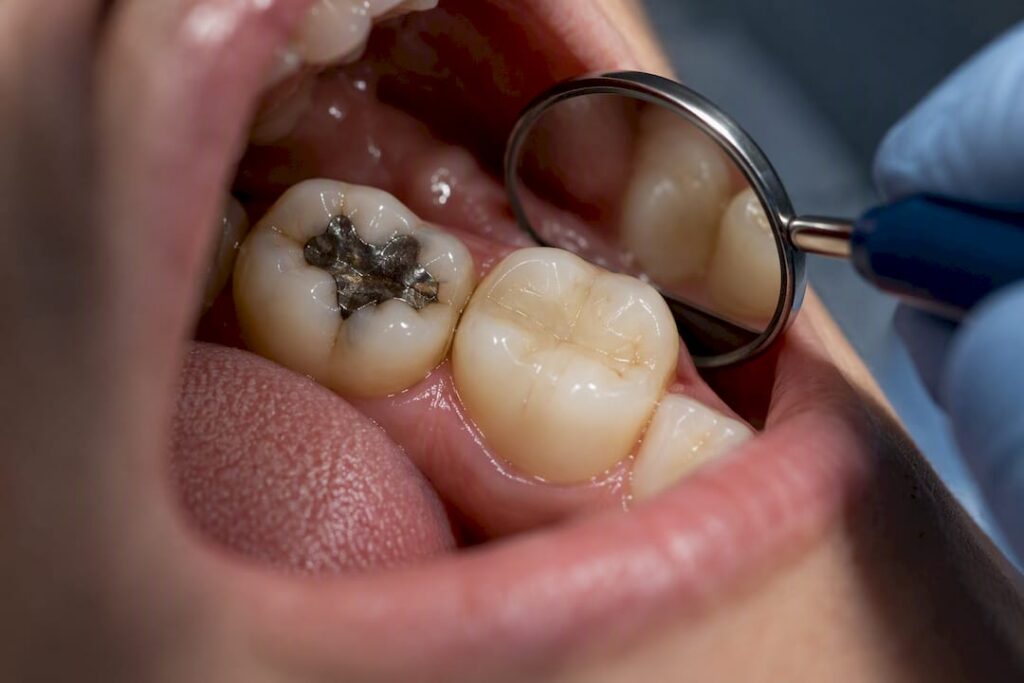
Most patients today choose composite fillings because they blend in with natural teeth and require less removal of healthy tooth structure. Amalgam still wins on raw durability and cost, and remains a safe, legitimate choice for many back-tooth cavities. The right pick depends on where the cavity sits, how big it is, your health history, and your budget, all of which are worth a direct conversation with your dentist before you commit.
TL;DR:
- Amalgam typically lasts longer, up to 20 years, especially in molars with heavy chewing forces, compared to composite’s 7 to 12-year lifespan.
- Placement of composite requires a dry, well-isolated site and layering in thin increments, making it more technique-sensitive than amalgam.
- Amalgam remains safe for most patients, but certain groups such as pregnant women, young children, and those with mercury allergies are advised to choose mercury-free alternatives.
- Cost-wise, amalgam is generally cheaper upfront due to faster placement, while composite may be worth the extra expense for aesthetic and minimally invasive benefits.
- Large cavities on molars or patients with bruxism may favor amalgam or other durable materials due to their higher stress resistance.
Table of Contents
- Composite Filling vs Amalgam: Materials and Placement
- Is Amalgam Safe? What the FDA, ADA, and NIDCR Say
- How Long Do Composite and Amalgam Fillings Last?
- Appearance and Tooth Preservation: Why Composite Wins Cosmetically
- Cost of Composite Versus Amalgam: What to Budget For
- Composite or Amalgam? A Practical Decision Checklist
- Should You Replace Existing Amalgam Fillings?
- How Bay Area Dental, Airway & Sleep Evaluates and Treats Restorations
- Choosing Between Composite and Amalgam Comes Down to Priorities
- Get a Personalized Filling Consultation at Bay Area Dental, Airway & Sleep
- Sources
- FAQ
Composite Filling vs Amalgam: Materials and Placement
Amalgam is a metal alloy made of silver, tin, copper, and roughly 50% elemental mercury, mixed into a pliable paste that hardens once packed into a cavity. Composite is a resin matrix loaded with glass or quartz particles, tinted to match your enamel and cured layer by layer with a blue LED light. Amalgam has been used in dentistry for over 150 years, while composite resin has been the mainstream alternative since the 1960s and is now the more commonly placed material.
The placement techniques differ in ways that matter for your tooth’s long-term health.
- Amalgam relies on mechanical retention: the dentist shapes an undercut into the tooth so the hardened metal has something to physically grip.
- Composite bonds chemically to enamel and dentin through an adhesive layer, so the prep can follow the shape of the decay instead of a set geometry.
- Composite must be placed in thin increments and cured between each layer, adding chair time compared with a single amalgam packing.
- Amalgam tolerates a damp field better; composite needs a dry, well-isolated site (often a rubber dam) for the bond to hold.
That moisture sensitivity is a real clinical variable, not a minor detail. A composite placed in a wet, hard-to-isolate area is more likely to fail early, which is one reason amalgam still gets chosen for certain back-tooth situations.
Is Amalgam Safe? What the FDA, ADA, and NIDCR Say
Amalgam is safe for the general population, according to both the FDA and the ADA. The mercury in amalgam is bound in an alloy, not sitting loose in your mouth, and the amount released as vapor during normal chewing and brushing is small.
Quick fact: Mercury exposure rises with the number of amalgam surfaces in your mouth, but studies show that urinary mercury levels for most patients stay below the health-based reference values set by agencies like the ATSDR and EPA, even with multiple fillings.
The FDA does flag specific groups where the calculation shifts:
- Pregnant and nursing individuals.
- Children, especially those under six.
- People with pre-existing neurological conditions.
- Patients with kidney disease that affects mercury clearance.
- Anyone with a known allergy or heightened sensitivity to mercury.
If you fall into one of these categories, tell your dentist before treatment starts. Composite, glass ionomer, and other mercury-free materials work as substitutes in nearly all clinical situations, so switching materials rarely means giving up a durable filling.
How Long Do Composite and Amalgam Fillings Last?
Composite fillings typically last 7 to 12 years, while amalgam often holds up for 10 to 20 years or longer. That gap has narrowed over the past decade as bonding agents, curing lights, and isolation techniques have improved, but amalgam still tends to outlast composite in molars that take heavy chewing force.
Several variables swing the outcome more than the material itself:
- Cavity size. Small to medium cavities favor either material; very large cavities put more stress on a composite’s bond.
- Tooth position. Back teeth absorb more bite force than front teeth, accelerating wear on any filling.
- Bite forces. Patients who grind or clench (bruxism) wear down composite edges faster.
- Isolation during placement. A composite placed without proper moisture control fails sooner, sometimes within a couple of years.
- Operator technique. Incremental layering and a careful bonding protocol are among the strongest predictors of how long a composite restoration survives, arguably more important than the brand of resin used.
“Failure” for a filling usually means one of three things: secondary decay creeping in around the edges, a fracture in the material or the surrounding tooth, or gradual wear that opens a gap. A NIDCR-funded study tracking more than 700,000 tooth-colored fillings found 16% failed within five years, with recurrent decay responsible for 53% of failures and fracture for 23%. That figure sounds high in isolation, but it reflects a mix of placement conditions and older techniques alongside modern ones.
Appearance and Tooth Preservation: Why Composite Wins Cosmetically
Composite is shade-matched to your natural enamel before placement, so a well-done filling on a front tooth is essentially invisible. Amalgam’s dark gray color has never been subtle, and it can eventually cause a faint grayish tint to spread into the surrounding tooth structure as the metal reacts over time.
- Composite resists visible seams but can pick up staining from coffee, tea, or tobacco over the years.
- Amalgam never stains, but it never blends in either.
- Composite bonding allows a more conservative prep, since the adhesive does the retention work instead of a carved-out mechanical shape.
- Amalgam’s requirement for mechanical retention means removing more sound tooth structure just to give the filling something to hold onto.
- The two materials expand and contract at different rates when exposed to hot and cold, and amalgam’s larger expansion swings have been linked to a higher long-term risk of cracked cusps in some molars.
Pro Tip: Ask your dentist to show you the shade guide before a front-tooth filling is placed. A slightly warmer or cooler resin shade than your natural enamel is one of the most common, and most avoidable, cosmetic complaints patients bring up later.
Cost of Composite Versus Amalgam: What to Budget For
Amalgam is almost always the less expensive option upfront. It requires less chair time, no layering, and no bonding agents, all of which keeps the lab and labor cost lower.
Composite costs more because of the technique itself: multiple resin layers, a curing light for each one, and stricter isolation requirements all add time to the appointment.
- Many dental insurance plans still classify tooth-colored fillings on molars as a cosmetic upgrade, covering only the amalgam-equivalent cost and leaving you to pay the difference out of pocket.
- Front-tooth composite is usually covered at full value, since there’s no amalgam-colored alternative that makes cosmetic sense there.
- If you’re weighing a molar restoration purely on price, ask your insurer directly what percentage they cover for composite versus amalgam before you decide.
Paying more for composite tends to make sense in visible areas or when you’re planning to keep the tooth for decades and want to avoid removing extra structure later.
Composite or Amalgam? A Practical Decision Checklist
Walk into your consultation with these questions answered, or ready to ask:
- Where is the cavity? Front teeth or anywhere visible when you smile point strongly toward composite.
- How big is the cavity? Small to moderate cavities work well with either material; very large ones on molars sometimes favor amalgam’s mechanical strength.
- Can the site stay dry during placement? Poor isolation, often from a tooth low in the mouth or heavy saliva flow, tilts the balance toward amalgam.
- Do you grind or clench your teeth? Heavy bite forces wear composite edges faster and may argue for a more wear-resistant option.
- Do you have a metal sensitivity or allergy? This rules amalgam out regardless of any other factor.
- Are you pregnant, nursing, or is this filling for a young child? The FDA’s high-risk group guidance applies here.
- What’s your budget, and what does your insurance actually cover? Get the number before the drill starts, not after.
A small cavity on a front incisor is close to an automatic composite case. A large cavity on a lower molar with poor access and heavy grinding is where amalgam, or another durable alternative, still earns its place.
Pro Tip: If a dentist recommends removing an existing amalgam filling that shows no decay, cracking, or leakage, ask why. Removing intact amalgam solely over general mercury worry isn’t supported by current clinical guidance and does more harm than good to the tooth.
Should You Replace Existing Amalgam Fillings?
Clinical guidance is consistent on this: don’t remove an intact, functioning amalgam filling just because it’s amalgam. Removal itself causes a temporary spike in mercury vapor exposure, higher than what the filling releases sitting still, and the process removes additional healthy tooth structure to get it out.
Quick fact: The exposure spike from drilling out amalgam is short-lived, but it’s still real, which is why dentists reserve removal for cases with an actual clinical reason.
Replacement makes sense when:
- The filling shows clear failure: fracture, leakage, or recurrent decay underneath.
- You’ve developed a documented mercury or metal allergy.
- A medical condition newly puts you in one of the FDA’s high-risk categories.
If removal is warranted, ask about precautions that reduce exposure: high-volume suction, a rubber dam to isolate the site, and sectioning the old filling into pieces rather than grinding it out in one pass.
How Bay Area Dental, Airway & Sleep Evaluates and Treats Restorations
Restoration decisions should start with the whole picture, not just the cavity. Considerations include airway health, bite mechanics, and long-term tooth preservation alongside the immediate repair, using 3D imaging and laser treatment options to plan conservative preparations that remove less healthy structure.

Consults walk through your options, an honest cost estimate, and what to expect for longevity, with communication accommodations available so nothing gets lost in translation. Follow-up visits track how the restoration is holding up over time, catching small issues before they become a bigger repair.
Choosing Between Composite and Amalgam Comes Down to Priorities
The honest answer is that both materials work. Composite preserves more of your natural tooth and looks better; amalgam lasts longer in high-stress molars and costs less. Ask your dentist for a specific treatment plan, a real cost breakdown, and a candid longevity estimate for your exact cavity before deciding, and lean toward whichever option removes the least tooth structure for the outcome you need.
— Admin
Get a Personalized Filling Consultation at Bay Area Dental, Airway & Sleep
Reading about composite versus amalgam only gets you so far. The cavity in your mouth has its own size, location, and bite pattern, and that’s what actually decides which material fits. Each restoration should be evaluated individually, using 3D imaging to plan conservative preparations that favor keeping more of your natural tooth intact whenever composite is the right call, while considering durable alternatives when a molar needs them.

Restorative and cosmetic dentistry, including composite bonding, is one of the practice’s core services, alongside general dentistry, orthodontics, and sleep and airway care. Bring notes on any sensitivity, past filling history, and your insurance details to your visit so the team can give you a real cost estimate on the spot. Book a consultation through the Bay Area Dental, Airway & Sleep website to get a treatment plan built around your specific tooth, not a generic recommendation.
Sources
- Direct composite resin vs amalgam restorations — comparative evidence (PMC)
- Ask the Expert: What Do I Need to Know About Silver Fillings? | NIDCR
- Amalgam | American Dental Association
This article is general information, not a substitute for advice from a qualified doctor. Consult a qualified healthcare professional about your own circumstances before acting on anything here.
FAQ
What Are the Downsides of Composite Fillings?
Composite costs more, takes longer to place because of its layered application, and typically lasts a shorter 7 to 12 years compared with amalgam’s 10 to 20 or more. It’s also more sensitive to moisture during placement and can stain over time from coffee, tea, or tobacco.
Why Don’t Some Dentists Use Amalgam Anymore?
Many dentists have shifted toward composite mainly for aesthetics and because bonding preserves more natural tooth structure than the mechanical retention amalgam requires. Amalgam remains an ADA-recognized and FDA-approved material, so the shift reflects patient preference and technique, not a safety reversal.
What Is the Healthiest Tooth Filling to Get?
There’s no single “healthiest” filling for every patient; the right material depends on cavity size, location, and your health history. Both composite and amalgam are considered safe for the general population by the FDA, with alternatives to amalgam recommended for pregnant or nursing individuals, young children, and people with certain health conditions.
Should I Replace My Amalgam Fillings With Composite?
Not unless there’s a clinical reason, such as visible decay, a crack, or a new allergy diagnosis. Removing an intact, functioning amalgam filling causes a temporary spike in mercury exposure and removes extra tooth structure, so current clinical guidance advises against replacing it for mercury concerns alone.
Is Composite Filling Better Than Amalgam Overall?
Neither material is universally better; composite wins on appearance and tooth preservation, while amalgam wins on durability and cost in high-stress molars. A dentist at a practice like Bay Area Dental, Airway & Sleep can match the material to your specific cavity size, location, and bite pattern during a consult.