


Dental patients who use American Sign Language have a legal right to effective communication, which usually means a qualified ASL interpreter provided at no cost to them. This right comes from ADA Title III and federal health nondiscrimination guidance under Section 1557. Video remote interpreting can satisfy that duty when it works well, but the dental office must still talk with the patient about which option fits the visit.
TL;DR:
- Dental offices must provide a qualified interpreter at no cost when needed; relatives, minor children, and automated captions generally do not meet the standard.
- Request your preferred format before the visit, especially for treatment risks, consent, medical history, or financial terms, and put the request in writing.
- VRI is acceptable only when video, audio, and internet stay clear; if communication fails, the office must switch to an in person interpreter or reschedule.
- If dental offices refuse interpreters, patients can file complaints with HHS Office for Civil Rights or the Justice Department’s Civil Rights Division.
Table of Contents
- Federal legal basis: ADA Title III, Section 1557, and dental offices
- What counts as a qualified interpreter
- When an interpreter is required in dental care
- How to request an ASL interpreter at a dental office
- Provider obligations: notice, documentation, and limits on refusal
- Video remote interpreting: when it works and when it doesn’t
- Enforcement, complaints, and remedies
- How Bay Area Dental, Airway & Sleep approaches access for Deaf patients
- Schedule accessible dental care with us
- FAQ
- Sources
Federal legal basis: ADA Title III, Section 1557, and dental offices
Dental practices count as public accommodations under ADA Title III, which means they must ensure effective communication with Deaf and hard-of-hearing patients. That obligation covers providing qualified interpreters or other auxiliary aids whenever necessary, typically at no charge to the patient, and it applies regardless of the practice’s size.
Section 1557 adds a parallel layer for health programs: covered entities must supply auxiliary aids and services, tell patients those services are free, and keep procedures in place to deliver them without unreasonable delay.
Two regulatory citations anchor the whole framework:
- 28 C.F.R. § 36.104 defines who qualifies as an interpreter.
- 28 C.F.R. § 36.303 spells out the auxiliary aids and services requirement, including interpreters, note-taking, and assistive technology.
Together, these rules mean a receptionist jotting notes or a relative mouthing instructions rarely satisfies the legal standard dental offices must meet.
What counts as a qualified interpreter
A “qualified interpreter” is someone who can interpret effectively, accurately, and impartially, in both directions, using any specialized vocabulary the appointment requires, while keeping the conversation confidential. That standard rules out casual signers and anyone with a personal stake in what gets said.
Services that typically meet the bar include:
- On-site ASL interpreters scheduled for the appointment.
- Oral or tactile transliterators for patients who use those methods.
- Video remote interpreting (VRI) staffed by a qualified interpreter, not an automated captioning tool.
Minor children and family members are generally excluded, except in true emergencies, because they lack formal training and often have a conflict of interest in sensitive medical conversations.
Pro Tip: Ask the office directly whether the interpreter is credentialed through a recognized agency before the appointment, not after you arrive.
When an interpreter is required in dental care
Need for a qualified interpreter rises with the length, complexity, and stakes of the conversation. A quick appointment reminder is different from a conversation that shapes treatment or financial commitment.
- Taking a medical and dental history, including medications and allergies.
- Explaining treatment options and risks before a filling, extraction, or surgery.
- Obtaining informed consent for anesthesia or any invasive procedure.
- Reviewing financing agreements or insurance terms.
- Discussing diagnoses, such as sleep apnea findings or orthodontic treatment plans.
The patient’s own primary mode of communication, whether ASL, oral interpretation, or written notes, should guide which aid the office arranges, not what is easiest for the front desk.
How to request an ASL interpreter at a dental office
Requesting an interpreter works best when it happens before you arrive, though offices still have to respond to short-notice requests.
- Call or email ahead and state clearly that you need a qualified ASL interpreter, noting whether you prefer on-site or VRI.
- For routine visits, give as much lead time as you can so the office can confirm an interpreter’s availability.
- For urgent or same-day appointments, ask what the practice’s standard turnaround is for arranging an interpreter on short notice.
- If the office offers an untrained staff member, asks you to bring your own interpreter, or refuses outright, say plainly that this does not meet ADA requirements and ask to speak with an office manager.
Pro Tip: Put your interpreter request in writing, even a short email, so there is a record if the office later claims it never received one.
Provider obligations: notice, documentation, and limits on refusal
Dental offices carry real operational duties once a patient identifies a communication need, not just a general policy on paper.
- Post visible notice that auxiliary aids and interpreter services are available free of charge, as outlined in HHS Section 1557 guidance.
- Document the patient’s communication preference and the chosen aid in the clinical record.
- Honor the patient’s stated preference when reasonably possible, rather than defaulting to whatever is cheapest.
- Reschedule the appointment if a qualified interpreter is unavailable, instead of proceeding without effective communication.
“Undue burden” is a narrow defense in healthcare. Cost alone rarely justifies denial, and larger or better-resourced practices are expected to absorb the cost of interpreter services as a normal part of patient care.
Video remote interpreting: when it works and when it doesn’t
VRI is a lawful way to meet the effective communication requirement, but only when the picture is clear, the audio is reliable, and the interpreter can see and be seen without interruption. Before relying on it, confirm the camera angle, screen size, speaker volume, and internet connection can support a live video feed throughout the visit.
- Check that the screen is large enough to see facial expressions and handshapes clearly.
- Confirm a stable internet connection before the appointment starts, not mid-procedure.
- Make sure the interpreter remains visible even when the patient is reclined in the dental chair.
VRI guidance from ADA.gov notes that technical failures do not excuse the practice from the underlying obligation. If the connection drops or the interpreter can’t be understood, the correct response is switching to an on-site interpreter or rescheduling, not pushing forward with guesswork.
Enforcement, complaints, and remedies
Patients who are denied effective communication can file a complaint with HHS Office for Civil Rights or the Department of Justice Civil Rights Division, and most complaints are reviewed over a period of months rather than resolved instantly.
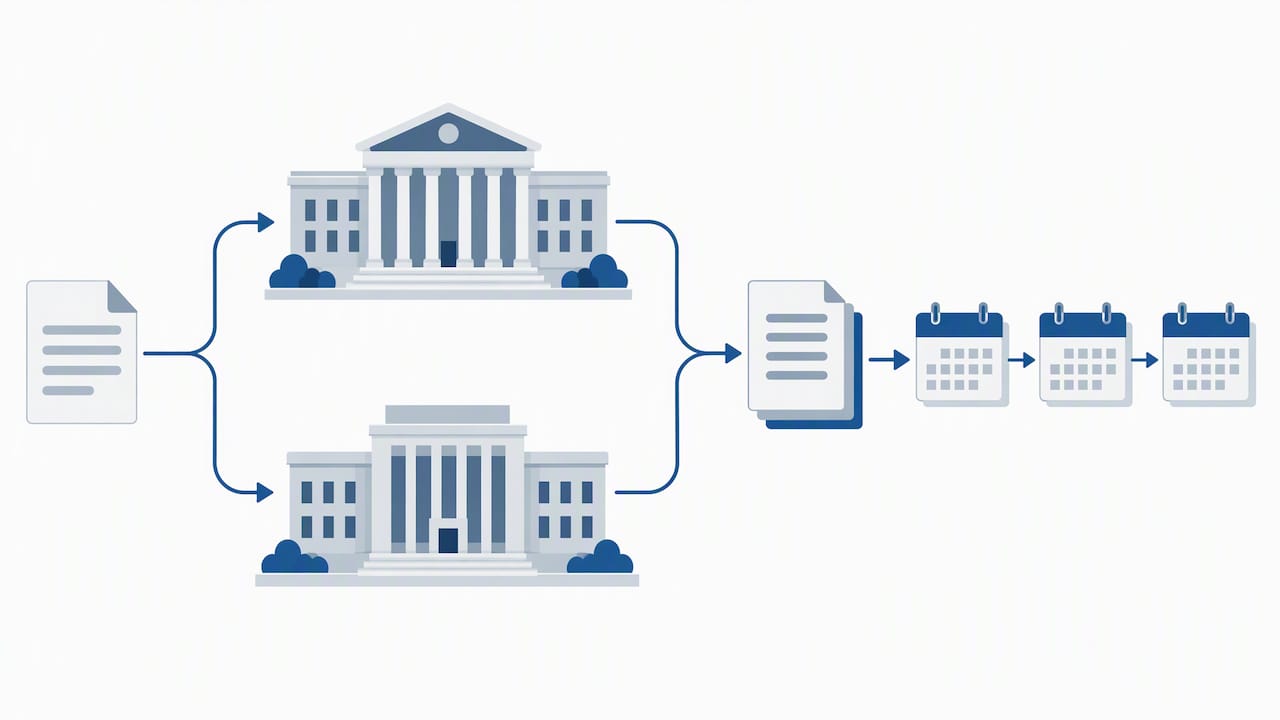
Settlement agreements show what enforcement actually looks like. The Mountain Peak Dentistry settlement required the practice to furnish qualified interpreters at no charge, contract with an interpreter vendor, post notices describing how to request auxiliary aids, and reschedule appointments when an interpreter wasn’t available.
Typical remedies include:
- Rescheduling appointments rather than proceeding without an interpreter.
- Adopting written policies and designating a staff coordinator for access requests.
- Posting notices and maintaining logs of interpreter requests and outcomes.
How Bay Area Dental, Airway & Sleep approaches access for Deaf patients
We built our communication practices around the idea that accessible care should feel ordinary, not exceptional. For Deaf patients, that means documenting communication preferences at intake, arranging qualified interpreters or vetted VRI vendors ahead of the visit, and training staff to recognize when a conversation, like treatment consent, calls for more than written notes. These steps mirror the federal framework rather than substitute for legal advice.
— Admin
Schedule accessible dental care with us
We welcome Deaf patients and work to arrange qualified ASL interpreters or vetted VRI services to support clear communication about your treatment. Whether you need a routine cleaning, a consultation about sleep apnea treatment, or care for your child, just tell us when you book that you’d like an interpreter and your preferred format.
- Mention your interpreter preference when you call or submit our online contact form.
- Ask about turnaround time if your appointment is urgent.
- Let us know if VRI quality becomes a problem during a visit so we can adjust on the spot.
Request your next appointment through our general dentistry page or reach out through our main site to get started.
This article is general information, not a substitute for advice from a qualified lawyer. Consult a qualified legal professional about your own circumstances before acting on anything here.
FAQ
Do dental offices have to pay for ASL interpreters?
Yes. Under ADA Title III, dental offices must provide qualified interpreters at no cost to the patient when needed for effective communication. Patients should never be asked to pay for or supply their own interpreter.
Can a family member interpret at my dental appointment instead?
Generally, no. Family members and minor children usually don’t meet the legal definition of a “qualified interpreter” because they lack formal training and may have a personal stake in the conversation, except in genuine emergencies.
Is video remote interpreting legal for dental visits?
Yes, VRI is an acceptable option as long as it delivers clear, uninterrupted communication, with reliable video, audio, and internet connection throughout the appointment. If the technology fails, the office must offer an on-site interpreter or reschedule.
What should I do if a dental office refuses to provide an interpreter?
You can file a complaint with HHS Office for Civil Rights or the Department of Justice Civil Rights Division. Settlement agreements, like the one involving Mountain Peak Dentistry, show that enforcement can require practices to provide interpreters, post notices, and reschedule missed appointments.
How far in advance should I request an ASL interpreter?
Requesting as early as possible gives the office the best chance to confirm a qualified interpreter’s availability. Offices are still expected to respond to short-notice or urgent requests, though turnaround time will vary by availability.