
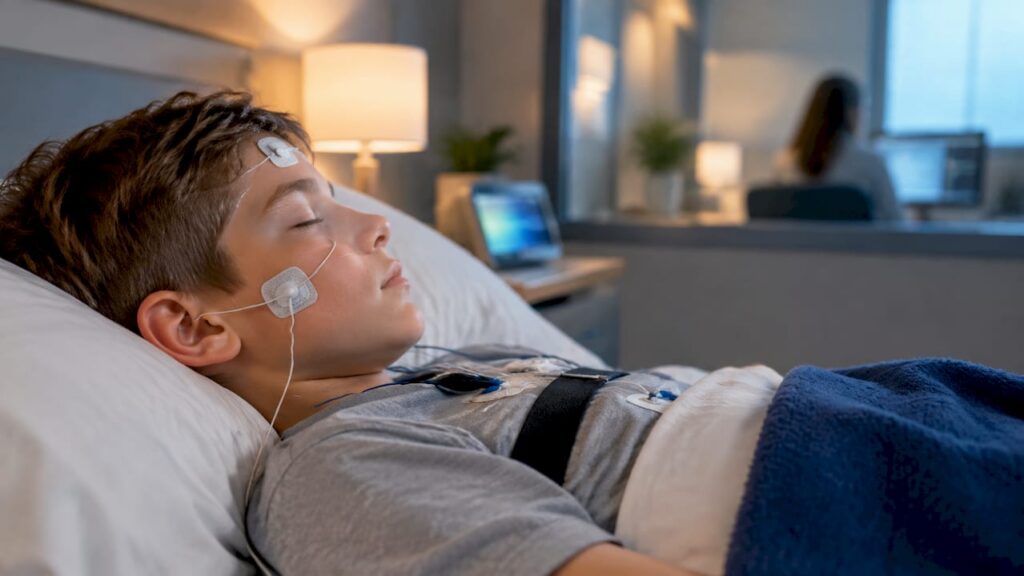
ADHD and sleep apnea occur together far more often than chance would predict, and untreated obstructive sleep apnea (OSA) can produce inattention, hyperactivity, and mood symptoms that look almost identical to primary ADHD. Between 20% and 30% of children with ADHD have diagnosable OSA, with some co-occurrence estimates reaching 50%. If your child or you experience snoring, gasping during sleep, or persistent daytime inattention alongside an ADHD diagnosis, the first move is a sleep screening or a referral to a sleep medicine specialist, not another medication adjustment.
TL;DR:
- Up to 50% of children with ADHD experience combined sleep-disorder issues, with 20% to 30% confirmed to have obstructive sleep apnea.
- Signs like loud snoring, gasping, or mouth breathing are key indicators that should prompt a sleep study referral.
- Treating sleep apnea through surgery or CPAP can significantly improve attention and behavior in some children, though adult outcomes vary based on adherence.
- Ongoing screening for sleep problems is necessary throughout childhood and adulthood, especially if symptoms worsen or treatment responses plateau.
- ADHD management should include routine inquiry about sleep quality and airway issues, with referrals to specialists as needed.
Table of Contents
- How Common Is the Link Between ADHD and Sleep Apnea?
- What Does Sleep Apnea Look Like When It Mimics ADHD?
- Why Does Sleep Apnea Affect Attention and Behavior?
- How Is Sleep Apnea Diagnosed in Someone With ADHD?
- Can Treating Sleep Apnea Improve ADHD Symptoms?
- Getting Ready for an Evaluation: What to Bring and Who to See
- Does Untreated Sleep Apnea Make ADHD Worse Over Time?
- Does ADHD Change How Sleep Apnea Shows Up or Gets Diagnosed?
- How Often Should ADHD Patients Be Screened for Sleep Apnea?
- What Are the Trade-Offs of OSA Treatments in ADHD Patients?
- How Do Weight Management and Sleep Habits Fit Into Treatment?
- Why Routine Sleep Screening Deserves a Permanent Place in ADHD Care
- Getting an Airway-Focused Dental Evaluation at Bay Area Dental, Airway & Sleep
- Sources
- FAQ
How Common Is the Link Between ADHD and Sleep Apnea?
The connection between ADHD and sleep apnea shows up consistently across pediatric and adult research, though the exact numbers shift depending on how each study defines and measures sleep problems.
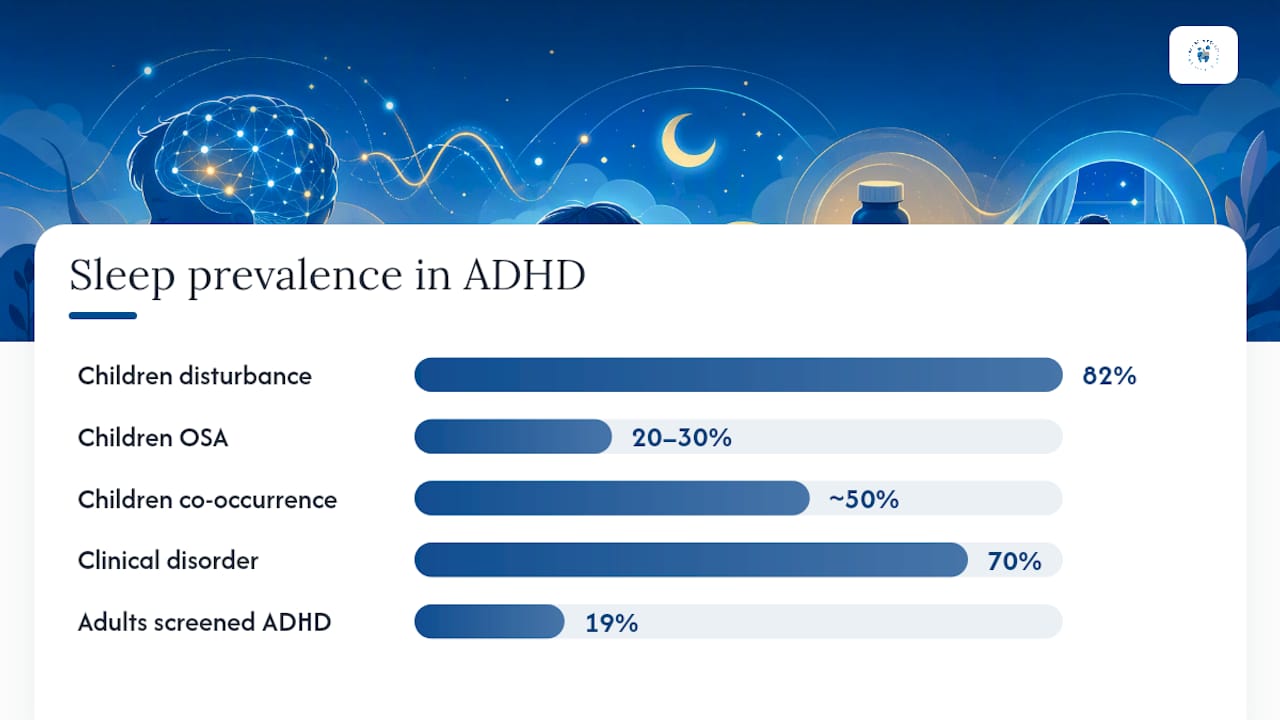
In children, the pattern is striking. Roughly 82% of kids with ADHD report some kind of sleep disturbance, and 20% to 30% carry a confirmed OSA diagnosis, with combined sleep-disorder and OSA prevalence in some studies climbing toward half of all ADHD cases. A separate clinical sample found that 70% of children with ADHD met criteria for at least one sleep disorder, and OSA specifically was confirmed in about 23.4% of that group through objective testing.
Adults get less research attention, but the signal is still there. One study of patients referred for sleep testing found that 19% screened positive for ADHD, and those who screened positive reported significantly more daytime sleepiness than their peers, though the link to OSA severity itself was inconsistent.
Key numbers to remember: In children with ADHD, sleep disturbances affect roughly 82%, OSA affects 20% to 30%, and combined co-occurrence estimates reach as high as 50% in some studies. Nearly 1 in 5 adults referred for sleep testing screen positive for ADHD.
Study methods vary widely. Some rely on parent questionnaires, others on overnight polysomnography, and sample sizes range from small clinical cohorts to larger community studies. That heterogeneity is why prevalence figures span a range rather than landing on one clean number, but every major study points the same direction: ADHD and sleep-disordered breathing cluster together more than random chance would explain.
What Does Sleep Apnea Look Like When It Mimics ADHD?
Sleep-disordered breathing and ADHD share a symptom list long enough to confuse even experienced clinicians. Inattention, poor working memory, emotional dysregulation, and trouble sitting still can stem from either condition, or from both layered on top of each other.
The twist is that sleep deprivation doesn’t always produce sleepiness in kids. It often produces the opposite. A child running on fragmented, oxygen-poor sleep frequently becomes more wired, not more tired, chasing stimulation to fight off drowsiness. Clinicians sometimes call this presentation “wired but tired,” a pattern where apparent hyperactivity actually reflects fragmented, arousal-disrupted sleep rather than a primary attention disorder. Adults tend to show the more familiar pattern: daytime sleepiness, brain fog, and slowed processing speed that gets labeled as ADHD inattention.
Certain signs point specifically toward airway obstruction rather than, or in addition to, primary ADHD:
- Loud, habitual snoring on most nights, not just during colds
- Witnessed pauses in breathing or gasping/choking sounds during sleep
- Mouth breathing, both during sleep and while awake
- Restless sleep with frequent position changes or sweating
- Morning headaches or a dry mouth on waking
- Bedwetting past the age it’s typically resolved in children
Pro Tip: Record a short video or audio clip of your child sleeping on a night when snoring seems worse. A ten-second clip showing a breathing pause followed by a gasp is often more useful to a sleep specialist than a page of written description.
None of these signs confirm OSA on their own, but two or more together, especially loud snoring plus witnessed breathing pauses, are the combination that most reliably prompts a referral for testing.
Why Does Sleep Apnea Affect Attention and Behavior?
The biological pathways linking OSA to ADHD-like symptoms are well enough understood to explain why treating sleep problems sometimes changes daytime behavior dramatically.
Intermittent hypoxia is the first mechanism. Each time the airway partially or fully collapses during sleep, blood oxygen dips, and the brain briefly rouses to reopen the airway. Repeated dozens or hundreds of times a night, these oxygen swings stress the prefrontal cortex, the same region responsible for sustained attention and impulse control. Sleep fragmentation compounds the problem. Even without measurable oxygen drops, constant micro-arousals prevent the deep and REM sleep stages where memory consolidation and emotional regulation get processed overnight.
In children, chronic sleep-disordered breathing has also been tied to low-grade systemic inflammation, which some researchers believe interacts with developing neural circuits during critical windows of brain maturation. Add to that a circadian piece: delayed sleep-wake timing is unusually common in people with ADHD, meaning many already fight an internal clock that wants to sleep and wake later than their schedule allows. Layer sleep apnea on top of a circadian phenotype like that, and the daytime symptoms compound rather than simply add up. Interventions that shift circadian timing, such as melatonin or timed morning light, have been shown to improve both sleep metrics and, in some patients, ADHD symptom severity, which is one more argument for treating sleep issues as their own clinical target rather than a side note to ADHD management.
How Is Sleep Apnea Diagnosed in Someone With ADHD?
Diagnosis follows a fairly standard path, though clinicians treating ADHD patients tend to have a lower threshold for ordering a sleep study given how much overlap exists between the two conditions.
- Screening questionnaires come first. Pediatricians commonly use the Pediatric Sleep Questionnaire (PSQ) to flag snoring, breathing pauses, and daytime sleepiness in kids. Adults are typically screened with the Epworth Sleepiness Scale, which scores the likelihood of dozing off during routine daily activities. A positive screen doesn’t diagnose OSA, but it justifies moving to objective testing.
- Referral triggers matter more than any single symptom. A clinician is likely to refer for sleep testing when snoring is loud and frequent, when a parent or partner reports witnessed breathing pauses, or when daytime symptoms persist despite optimized ADHD treatment.
- Polysomnography remains the gold standard. An overnight, in-lab polysomnogram (PSG) records breathing patterns, oxygen saturation, heart rate, and sleep stage, giving clinicians the most complete picture available.
- Home sleep apnea testing works for select adult cases. It records fewer channels than a full PSG but is an accepted, less expensive alternative for adults with a straightforward clinical picture and no complicating medical conditions.
- Results get translated into a severity score. The Apnea Hypopnea Index (AHI) counts breathing disruptions per hour of sleep, and oxygen desaturation levels round out the picture. An AHI under 5 is generally normal, 5 to 15 signals mild OSA, and higher numbers point toward moderate or severe disease, each carrying different treatment urgency.
Turnaround time varies by clinic and insurance authorization, but families should expect several weeks between the initial referral and a completed sleep study, longer in areas with limited pediatric sleep lab availability.
Can Treating Sleep Apnea Improve ADHD Symptoms?
Treating OSA doesn’t cure ADHD, but a meaningful subset of patients see real improvement in attention, behavior, and daytime function once sleep-disordered breathing is addressed.
The pediatric evidence is the strongest piece of this picture. Adenotonsillectomy, removal of the tonsils and adenoids, is the frontline treatment for childhood OSA caused by airway obstruction, and systematic reviews of interventional studies report measurable improvements in attention and behavior following surgery in children with both OSA and ADHD symptoms.
What the numbers show: Interventional research consistently links OSA treatment, particularly adenotonsillectomy in children, with improved attention and behavioral scores, evidence strong enough that pediatric sleep guidelines now factor ADHD symptoms into surgical decision-making.
Adult treatment looks different. Continuous positive airway pressure (CPAP) therapy is the standard first-line treatment for moderate to severe OSA, and it reliably reduces daytime sleepiness. Attention and cognitive improvements follow in many patients, but adherence is the deciding factor; a mask that goes unused overnight provides zero benefit. Dental and myofunctional therapy occupy a supporting role for select patients:
- Oral appliances can reposition the jaw to keep the airway open in mild to moderate cases.
- Myofunctional therapy retrains tongue and facial muscle patterns that contribute to airway collapse.
- Both work best as part of a coordinated plan with ENT and sleep medicine, not as standalone fixes for moderate or severe OSA.
Medication timing deserves a mention here too. Stimulant medications taken too late in the day can suppress sleep onset and worsen the very sleep problems being investigated, so any workup should include a review of dosing schedule alongside airway evaluation. Set expectations honestly: some patients see dramatic behavioral shifts after OSA treatment, while others retain a clear ADHD diagnosis that needs its own management even after sleep is fully resolved.
Getting Ready for an Evaluation: What to Bring and Who to See
A little preparation before the first appointment saves weeks of back-and-forth.
- Keep a two-week sleep diary. Note bedtime, wake time, snoring intensity, and any witnessed breathing pauses.
- Record medication timing. List every ADHD medication dose and time, since afternoon or evening stimulant dosing can masquerade as a sleep disorder.
- Gather witness accounts. A partner, sibling, or parent who has heard breathing pauses or gasping is often more reliable than the sleeping person’s own report.
- Choose the right specialist for the entry point. A pediatrician or treating psychiatrist can order initial screening; an ENT evaluates tonsil and adenoid size; a sleep medicine physician orders and interprets PSG or home testing; an airway-aware dentist assesses jaw structure and muscle function.
- Ask direct questions at the visit. Which test fits this situation, PSG or home testing? What AHI would justify treatment? How will we know if treating sleep apnea changed the ADHD symptoms specifically?
Does Untreated Sleep Apnea Make ADHD Worse Over Time?
Untreated OSA doesn’t just coexist with ADHD symptoms, it actively compounds them, and the effect tends to build the longer treatment is delayed. Chronic intermittent hypoxia and fragmented sleep keep the prefrontal cortex operating on a deficit night after night, which shows up as worsening working memory, slower processing speed, and reduced impulse control during the day.
Behaviorally, the picture often gets misread as ADHD getting harder to manage, when the real driver is accumulating sleep debt. Parents frequently report that a child’s school performance, emotional outbursts, and peer conflicts all worsen in tandem, tracking more closely with sleep quality than with any change in ADHD medication dosing. In adults, chronic OSA left untreated is associated with worsening mood symptoms, memory complaints, and daytime fatigue severe enough to affect job performance and driving safety.
There’s also a long-game concern worth naming directly: chronic intermittent hypoxia during childhood coincides with a period of active brain development, which is part of why pediatric sleep specialists tend to move faster on evaluation and treatment rather than adopting a wait-and-see approach. The takeaway isn’t that every attention problem traces back to breathing at night. It’s that when OSA is present and untreated, it removes the ceiling on how well ADHD can ever be managed, no matter how well-tuned the medication regimen is.
Does ADHD Change How Sleep Apnea Shows Up or Gets Diagnosed?
Sleep apnea in someone with ADHD often presents with a behavioral fingerprint that differs from the general population, and that difference can delay diagnosis if clinicians aren’t specifically looking for it.
In the general population, OSA symptoms tend to read clearly: snoring, witnessed pauses, morning grogginess, daytime sleepiness. In someone with ADHD, those same physiologic events get filtered through an already-dysregulated attention and arousal system, and the resulting daytime presentation often looks like ADHD getting worse rather than a distinct sleep problem emerging. A clinician unfamiliar with the overlap may increase a stimulant dose in response to worsening inattention when the actual driver is untreated airway obstruction.
There’s also a masking effect in the other direction. Stimulant medications can suppress appetite and, indirectly, some markers clinicians associate with pediatric OSA risk, such as weight gain, which can make screening tools calibrated for the general population less reliable in ADHD patients. And because hyperactive, sleep-deprived children often present as more energetic rather than more sleepy, standard sleepiness scales built around adult presentations can undercount pediatric cases entirely.
The practical fix is straightforward, even if it’s not universally applied: clinicians managing ADHD should ask about snoring and witnessed apneas as a routine part of every visit, not just when a parent brings it up unprompted, and should hold a lower threshold for ordering a sleep study when treatment response plateaus or reverses.
How Often Should ADHD Patients Be Screened for Sleep Apnea?
Sleep screening shouldn’t be a one-time checkbox at the initial ADHD diagnosis. It works better as an ongoing part of routine ADHD management, since airway anatomy, weight, and tonsil size all change over childhood and adolescence.
A reasonable monitoring rhythm looks like this: ask about snoring, witnessed pauses, and daytime sleepiness at every ADHD medication follow-up, typically every three to six months in children and annually in stable adult patients. Any new onset of loud snoring, a noticeable weight change, or a plateau or reversal in ADHD treatment response should trigger a fresh screening conversation rather than waiting for the next scheduled visit. Clinical guidance from advocacy groups consistently recommends this kind of routine, repeated screening rather than a single upfront evaluation, precisely because sleep-disordered breathing risk shifts over time.
Tonsil and adenoid size, a major driver of pediatric OSA, tends to peak between ages 3 and 7 and can shrink with age, meaning a child cleared of OSA risk at age 5 isn’t necessarily clear at age 10 if other risk factors like weight or nasal obstruction have changed. Puberty introduces its own shift, particularly in boys, where hormonal and craniofacial changes can either resolve mild airway issues or introduce new ones. Adults aren’t exempt from ongoing monitoring either: weight gain, alcohol use, and aging-related changes in muscle tone all raise OSA risk over time, so a clean sleep study at age 30 doesn’t guarantee the same result at 45.
What Are the Trade-Offs of OSA Treatments in ADHD Patients?
Every OSA treatment carries adherence challenges, and those challenges often intersect with ADHD-specific traits in ways that are worth planning for upfront.
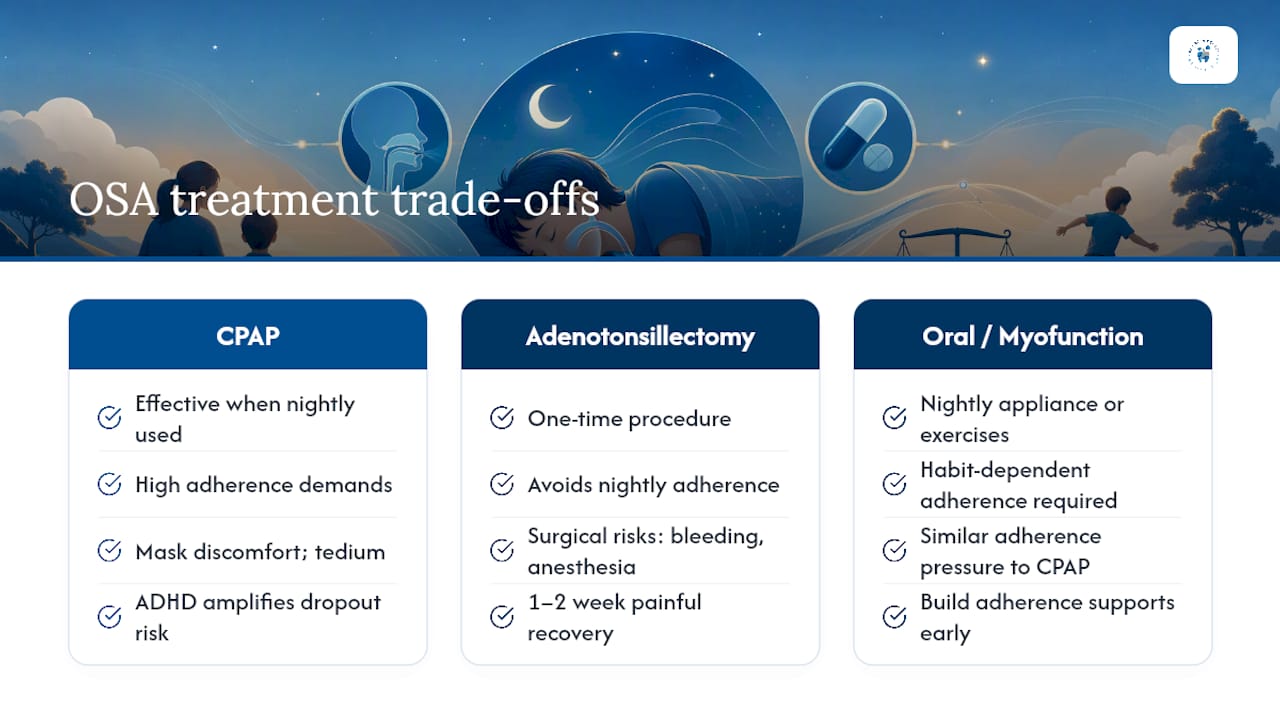
CPAP therapy is the clearest example. It works well when used consistently, but consistent nightly mask use requires exactly the kind of routine-building and delayed-gratification tolerance that ADHD makes difficult. Mask discomfort, dry mouth, and the sheer tedium of a nightly medical device contribute to dropout rates that clinicians already consider one of CPAP’s biggest limitations across the general population, and ADHD traits can amplify that friction rather than create a wholly new problem.
Adenotonsillectomy avoids the adherence issue entirely since it’s a one-time procedure, but it carries standard surgical risks, including bleeding, anesthesia complications, and a recovery period of one to two weeks with significant throat pain, and it doesn’t guarantee complete symptom resolution if other airway risk factors remain.
Oral appliances and myofunctional therapy ask for a different kind of consistency: nightly appliance wear or regular practice of prescribed exercises, both of which face the same adherence pressure as any habit-dependent treatment in a population that struggles with habit formation by definition. This isn’t a reason to avoid these treatments. It’s a reason to build adherence support into the plan from day one, whether that means phone reminders, a rewards system for kids, or simply setting the expectation that the first few weeks of any new sleep treatment will feel effortful before they feel automatic. Medication timing also needs monitoring throughout treatment, since a stimulant dose that lingers into the evening can undercut even a well-fitted CPAP machine or successful surgery by making sleep onset difficult regardless of how clear the airway is.
How Do Weight Management and Sleep Habits Fit Into Treatment?
Lifestyle interventions won’t replace medical treatment for moderate or severe OSA, but they meaningfully improve outcomes for mild cases and support every other treatment layered on top of them.
Weight management carries the most direct physiologic impact. Excess tissue around the neck and airway is one of the most modifiable OSA risk factors in both children and adults, and even modest weight reduction has been shown to lower AHI scores in patients with overweight-related OSA. This doesn’t mean every child or adult with ADHD and OSA needs to focus on weight loss, plenty of cases stem primarily from tonsil size or craniofacial structure, but where excess weight is a contributing factor, addressing it produces measurable airway benefits alongside any surgical or CPAP treatment.
Sleep hygiene matters just as much, arguably more for the ADHD population specifically. A consistent bedtime and wake time, even on weekends, helps stabilize the circadian delay that’s already common in ADHD. Reducing screen exposure in the hour before bed, keeping the bedroom cool and dark, and avoiding caffeine after early afternoon all support sleep onset in a population that often already fights a naturally delayed internal clock. None of these habits treat OSA directly, but they reduce the total sleep debt a person is carrying, which makes every other symptom, ADHD-related or apnea-related, easier to manage. Think of lifestyle changes as the foundation that makes medical treatment work better, not a substitute for it.
Why Routine Sleep Screening Deserves a Permanent Place in ADHD Care
Sleep screening gets treated as optional in too many ADHD workups, and that’s a mistake the evidence doesn’t support. When 20% to 30% of children with ADHD have OSA, asking about snoring should carry the same weight as asking about school performance.
Coordinated care between ADHD prescribers, sleep medicine, and airway-focused dental evaluation catches cases that a single specialist working alone would likely miss. One pattern shows up often enough to be worth naming: a child treated for years for straightforward ADHD sees a real shift in attention and irritability only after an airway issue gets identified and addressed, not because the ADHD diagnosis was wrong, but because sleep had never been part of the equation.
— Admin
Getting an Airway-Focused Dental Evaluation at Bay Area Dental, Airway & Sleep
If a sleep study or clinician conversation has pointed toward airway obstruction, some dental practices offer dedicated airway and sleep evaluations built specifically around cases like this, instead of a brief add-on to a routine cleaning.
A typical evaluation may include a full airway exam, imaging to assess jaw structure and nasal passage size, and a direct conversation about which treatment path fits the situation, such as myofunctional therapy, an oral appliance, or coordination with an ENT or sleep physician for surgical or CPAP treatment. Families and adults who’ve already completed a sleep study, or who have snoring and mouth-breathing concerns a pediatrician flagged, tend to get the most out of this visit; bringing along any existing sleep-study results, referral notes, or medication lists helps the team build a plan that fits into care you’re already receiving elsewhere, rather than duplicating it.
If snoring, mouth breathing, or airway concerns have come up alongside an ADHD diagnosis in your household, schedule an airway and sleep evaluation with Bay Area Dental, Airway & Sleep to see where dental and myofunctional therapy might fit into the bigger picture.
Sources
- Prevalence data on sleep disorders in children and adults with ADHD
- Is Obstructive Sleep Apnea Associated with ADHD? (systematic review of interventional studies)
- Obstructive sleep apnea and sleep disorders in children with ADHD
FAQ
Is Sleep Apnea Common in People With ADHD?
Yes. Between 20% and 30% of children with ADHD have diagnosable OSA, and some studies put combined sleep-disorder co-occurrence as high as 50%, making it one of the more common coexisting conditions clinicians should screen for.
How Much Sleep Do Adults With ADHD Need?
Adults with ADHD generally need the same 7 hours most adults need, but circadian delay common in ADHD often pushes natural sleep and wake times later, which can create a gap between biological sleep need and daily schedule demands.
What Sleep Medication Is Recommended for People With ADHD?
There’s no single approved sleep medication specific to ADHD; melatonin is commonly used to address circadian delay, and phase-advancing interventions like timed morning light have shown benefit for sleep timing, but any medication decision should involve the prescribing clinician given interactions with stimulant timing.
Can Sleep Apnea Cause ADHD Symptoms Without a True ADHD Diagnosis?
Yes. Untreated OSA can produce inattention, hyperactivity, and emotional dysregulation that closely mimics ADHD, which is why a sleep evaluation, including airway assessment through a provider like Bay Area Dental, Airway & Sleep, is a reasonable step before assuming symptoms are purely attention-related.
What’s the Best First Step if I Suspect Both Conditions?
Start with a screening conversation with your child’s pediatrician or your own primary care provider, bring a sleep diary and any witnessed snoring or breathing-pause observations, and expect a referral to sleep medicine or an airway-focused dental evaluation if screening flags concern.