

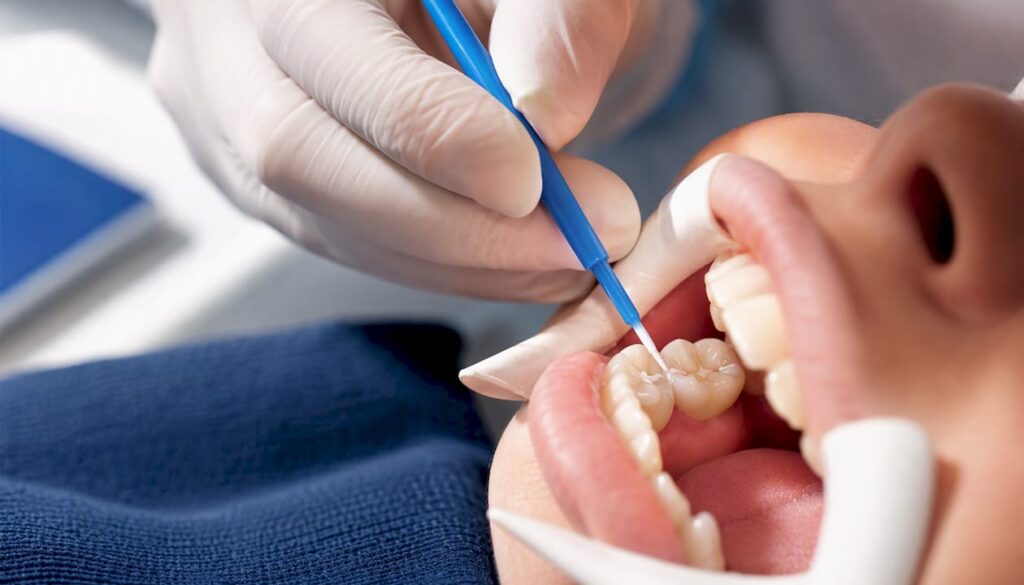
Dental sealants are a recommended preventive option for most children, especially right after their first and second permanent molars come in. The CDC reports that sealants cut cavity risk in molars by about 80% at two years, with protection lasting up to nine years for many kids. Major dental organizations back their safety, though a dentist still needs to check them at regular visits.
TL;DR:
- Sealants reduce cavity risk by about 80 percent in molars within two years, offering protection that can last up to nine years with regular checkups.
- They are most effective when applied soon after molars erupt, typically around ages 6 and 12, especially for children at higher cavity risk.
- Resin-based sealants tend to last longer and bond better, but glass ionomer sealants are suitable when moisture control is difficult, such as with young or uncooperative children.
- Sealants contain trace BPA compounds that are safe, with no proven adverse health effects, especially when proper dental protocols are followed.
- Cost varies widely, but school-based programs provide a cost-effective way for high-risk children to access sealants for free or at low cost.
Table of Contents
- Why children and molars are at higher risk for cavities
- How effective are sealants? Evidence and guideline recommendations
- What sealants are made of and how the main types differ
- What to expect during a sealant appointment
- When to get sealants: the right ages and teeth
- Safety and downsides: what the research actually shows
- Cost, insurance, and school-based access programs
- How long sealants last and when they need repair
- How a pediatric-aware practice approaches sealants
- A pediatrician’s-eye view on prevention-first choices
- How to get a sealant evaluation at Bay Area Dental, Airway & Sleep
- Sources
- FAQ
Why children and molars are at higher risk for cavities
The chewing surfaces of back teeth are covered in tiny pits and grooves called fissures. They form naturally as teeth develop, and they’re often too narrow for a toothbrush bristle to reach, even with careful brushing. Food particles and bacteria settle into these grooves and stay there, which is why molars account for most cavities in kids.
A few things make children especially vulnerable:
- Newly erupted permanent teeth have softer enamel that hasn’t fully hardened yet.
- Diets higher in sugary snacks and drinks feed the bacteria that cause decay.
- Young kids often need help brushing thoroughly, especially on back teeth.
Despite how well sealants work, access is uneven. NIDCR data show that only about 41.7% of children ages 6 to 11 have sealants, with lower rates among kids from lower-income households.
How effective are sealants? Evidence and guideline recommendations
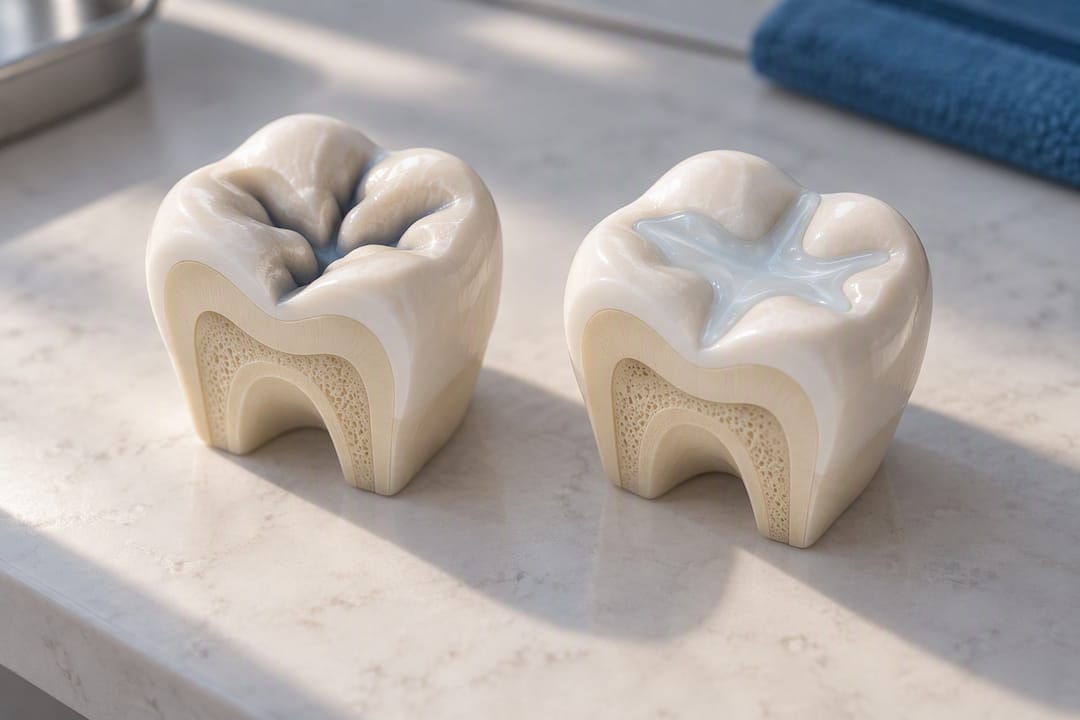
The case for sealants rests on decades of clinical research, not marketing claims. The CDC’s data on sealants show that school-aged children without sealants are almost three times more likely to develop cavities in their first molars than children who have them.
Sealants reduce cavity risk in molars by about 80% at two years, and protection can last up to nine years in many children, according to the CDC. That single statistic explains why pediatric dentists bring sealants up early and often.
The evidence holds up under scrutiny. A systematic review published on PMC found that resin-based sealants reduce occlusal (chewing-surface) cavities in children and teens compared with no sealant at all, with moderate-quality evidence supporting the effect. The American Dental Association and the American Academy of Pediatric Dentistry jointly recommend sealants for both primary and permanent molars, including use on early, noncavitated lesions to stop decay before it spreads.
The public-health case is just as strong:
- School-based sealant programs targeting high-risk children become cost-saving within two years, according to CDC’s Vital Signs report.
- Those programs meaningfully reduce untreated decay among low-income children.
- Sealants shift care away from fillings and toward prevention, which costs families less over time.
What sealants are made of and how the main types differ
Most sealants placed today are resin-based, a tooth-colored plastic material that bonds directly to the enamel in the pits and grooves. Some dentists use glass ionomer sealants instead, particularly for younger or less cooperative children, because they tolerate a bit of moisture during placement better than resin does. Resin-modified glass ionomer sealants split the difference, offering some fluoride release along with reasonable retention.
Here’s what actually matters in practice:
- Resin-based sealants generally last longer and bond more securely to dry enamel.
- Glass ionomer sealants release fluoride and work better on teeth that are hard to keep completely dry.
- Retention, not material chemistry, is usually the deciding factor in long-term protection.
No single material wins for every child. The AAPD’s guideline review notes that resin sealants typically retain better over time, but glass ionomer remains a reasonable choice when isolating the tooth from saliva is difficult, such as with a squirmy toddler or in a school-based clinic setting.
What to expect during a sealant appointment
Placing a sealant is quick, painless, and doesn’t usually require numbing or drilling. A typical visit follows the same basic sequence for each molar:
- The dentist or hygienist examines the tooth and confirms the pits and grooves are deep enough to benefit from a sealant.
- The tooth is cleaned and thoroughly dried.
- A mild acidic gel etches the enamel surface for a few seconds, then gets rinsed and the tooth is dried again.
- The liquid sealant is painted directly into the pits and fissures.
- A curing light hardens the sealant in seconds, or it sets on its own depending on the material.
- The dentist checks the bite to confirm the sealant doesn’t interfere with normal chewing.
Each tooth takes just a few minutes, and most kids handle the whole appointment without any complaints. If a tooth can’t stay dry, perhaps because a child is anxious or squirming, the dentist may postpone that tooth for another visit rather than risk poor bonding.
Pro Tip: Bring a favorite toy or let your child watch a short video during the appointment; sitting still is the only real challenge, and a distraction usually solves it.
When to get sealants: the right ages and teeth
Timing matters because sealants work best on molars that haven’t already decayed. Dentists generally recommend:
- Sealing first permanent molars soon after they erupt, typically around age 6.
- Sealing second permanent molars around age 12, when they come in.
- Considering sealants on baby molars for children at higher cavity risk, since those teeth hold space for permanent teeth.
- Moving faster for kids with deep grooves, a family history of cavities, or a personal history of prior decay.
A dentist looks at groove depth and cavity history at a checkup to decide whether a tooth is a good candidate right away or can wait.
Safety and downsides: what the research actually shows
Parents often ask about BPA in resin sealants, and it’s a fair question. Trace amounts of BPA-related compounds can be detected briefly after placement, but research summarized in a PMC systematic review found these levels return to baseline within about 14 days and stay there at six months, with no demonstrated adverse health outcomes tied to sealant placement.
Current evidence has not shown adverse health effects from sealants when they’re placed using standard precautions, according to the same review. Using isolation methods like a rubber dam and cleaning the enamel with pumice before bonding, standard steps in most offices, further reduces trace exposure and improves how well the sealant holds.
Realistic limitations still apply:
- Sealants can chip or wear partially, which means they need periodic checking.
- They don’t replace brushing, flossing, or a lower-sugar diet.
- They aren’t placed over teeth with large existing cavities or teeth that can’t be kept dry enough to bond properly.
Cost, insurance, and school-based access programs
Sealant cost varies by dental office, the number of teeth treated, and whether insurance or Medicaid covers part of the fee. Because pricing differs so much by plan and provider, the most reliable step is calling your dental office directly to confirm what your specific coverage includes before scheduling.
Beyond private insurance, school-based sealant programs fill a real gap. The CDC’s Vital Signs analysis found these programs are cost-effective, become cost-saving within two years when they target high-risk children, and meaningfully reduce untreated decay among kids from lower-income families.
A few practical next steps:
- Ask your dental office to verify your insurance or Medicaid benefits for sealants before the visit.
- Check with your child’s school or local public health department about free or low-cost sealant programs.
- Ask what happens if a sealant needs repair later, and whether that’s covered too.
How long sealants last and when they need repair
Sealants offer their strongest protection in the first two years, and many continue protecting teeth for up to nine years, per CDC data. Wear and partial loss happen gradually, which is why regular monitoring matters more than a one-time application.
- At every routine dental exam, the dentist checks each sealant for chipping, wear, or partial loss.
- If part of a sealant has worn away, the dentist can usually just repair that section rather than redoing the whole tooth.
- Kids with a history of decay may need more frequent checks to catch problems early.
How a pediatric-aware practice approaches sealants
Some pediatric-aware dental practices treat sealants as one piece of a child’s whole-body oral health, not an isolated procedure. They may use advanced imaging to assess risk and offer laser treatments for a gentler experience during pediatric visits. Extending accessible, tailored communication to patients with diverse needs reflects a broader commitment to care that fits each child, followed by clear guidance on maintenance and recall timing.
A pediatrician’s-eye view on prevention-first choices
Sealants are one of the most pragmatic tools in pediatric dentistry: low effort, strong evidence, minimal downside. The real decision isn’t whether to consider them, it’s asking your child’s dentist about their specific risk assessment and follow-up plan.
— Admin
How to get a sealant evaluation at Bay Area Dental, Airway & Sleep
A sealant evaluation typically includes a full exam, a cavity-risk assessment, and a conversation about which material fits your child’s teeth and behavior best. The dental team can also help verify your insurance coverage before scheduling a visit.
Bring your insurance information and any details about a school sealant program your child may already qualify for. You can review pediatric dental care options or explore the full range of services on the practice’s main site to schedule an evaluation.
Sources
- CDC: Fast facts about dental sealants
- ADA: Sealants resources
- Cochrane/PMC review: Pit and fissure sealants for preventing dental decay in permanent teeth
- NIDCR: Dental sealants in children (data & statistics)
- AAPD systematic review on sealants
This article is general information, not a substitute for advice from a qualified doctor. Consult a qualified healthcare professional about your own circumstances before acting on anything here.
FAQ
Should kids get sealants on their teeth?
Yes, sealants are recommended for most children, particularly on first and second permanent molars soon after they erupt. The CDC reports they reduce cavity risk in molars by about 80% at two years.
What are the downsides of dental sealants?
Sealants can chip or wear partially over time, which means they need to be checked at regular dental visits and occasionally repaired. They also aren’t a substitute for brushing, flossing, and a healthy diet, and they aren’t suitable for teeth with existing large cavities.
What should I do if my child has cavities?
Schedule a dental exam as soon as possible so the dentist can evaluate the extent of decay and recommend treatment, which may include fillings alongside sealants on unaffected molars. Sealants won’t fix an existing cavity, but they can help protect other vulnerable teeth going forward.
Is it appropriate to get sealants on second molars around age 12?
Yes, dentists commonly recommend sealing second permanent molars around age 12, right after they finish erupting. This timing follows the same logic as sealing first molars at age 6: catching the tooth before decay has a chance to start.