


Gentle diagnosis and laser treatment for Tongue Tie at Bay Area Dental, Airway & Sleep in Fremont, CA
A tongue tie is a short or tight band of tissue beneath the tongue that limits movement, making feeding difficult for many newborns. At Bay Area Dental, Airway & Sleep in Fremont, CA, our team frequently evaluates infants for tongue and lip ties that can interfere with feeding, swallowing, and early airway development. Recognizing the signs early allows parents to seek gentle, precise treatment that supports healthy growth and development.
What Is Tongue Tie in Newborns?
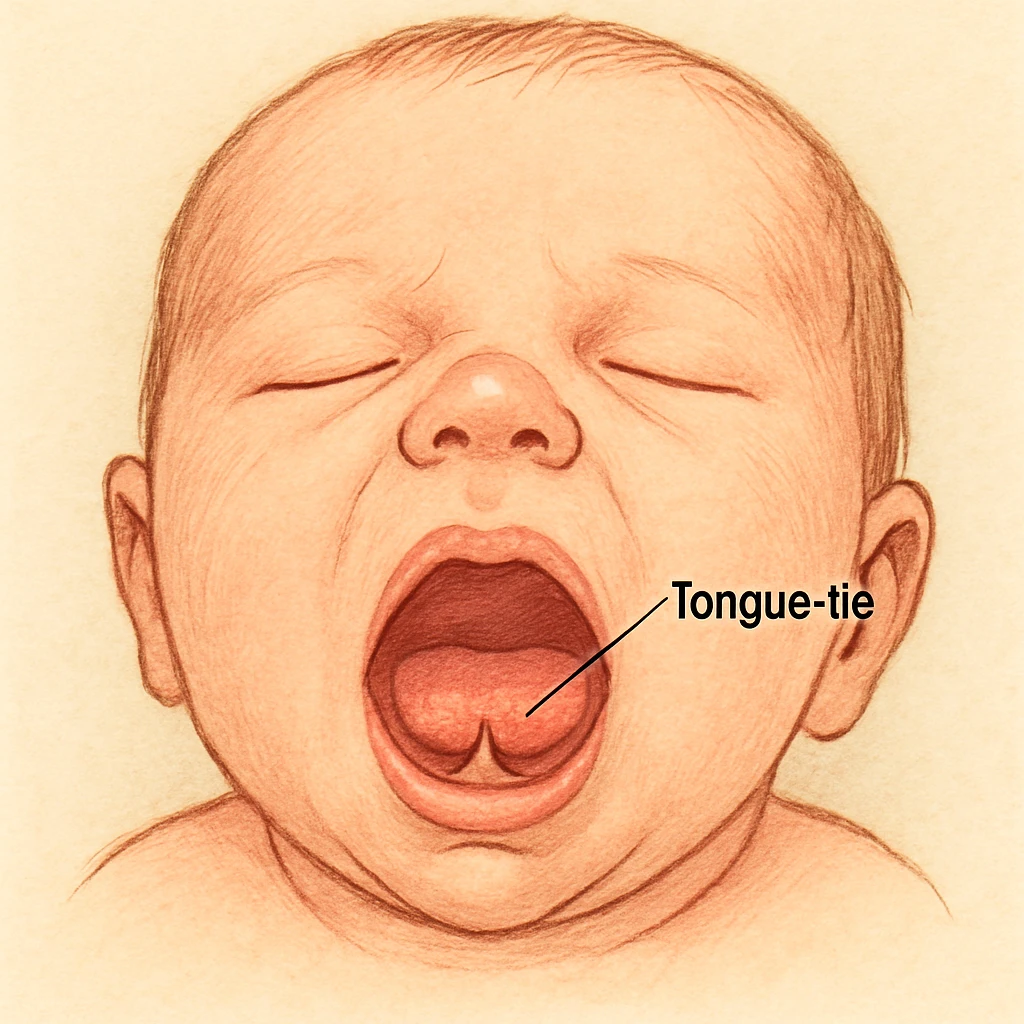
Tongue tie, or ankyloglossia, is a congenital condition where the tissue connecting the tongue to the floor of the mouth—called the lingual frenulum—is unusually short or tight. This restriction can limit how far the tongue moves, creating challenges for latching, sucking, and swallowing. Tongue ties occur in roughly 4–11% of newborns and may range from mild to severe.
According to the American Academy of Pediatrics (AAP), tongue tie can affect feeding but should be evaluated carefully, as not every case requires immediate surgical treatment. In Fremont and throughout the Bay Area, many parents visit our practice after noticing prolonged feedings, difficulty latching, or unexplained fussiness during nursing.
Key Features of Tongue Tie
- Restricted tongue movement
- Breastfeeding difficulties
- Possible long-term impact on speech or jaw development
Early identification is important because early treatment helps avoid later oral or airway issues.
Anatomy and Types of Tongue Ties
The lingual frenulum plays a vital role in sucking, swallowing, and speech. When it’s too tight, tongue motion becomes restricted.
Tongue ties are classified into two main types:
- Anterior tongue tie: Easily visible near the tip of the tongue. The tongue may appear heart-shaped or tethered.
- Posterior tongue tie: Hidden deeper, often requiring professional examination to detect.
Each type affects feeding differently. Our Fremont dental team uses magnified oral exams and gentle functional tests to identify the exact type and severity before recommending care.
What Does a Tongue Tie Look Like?
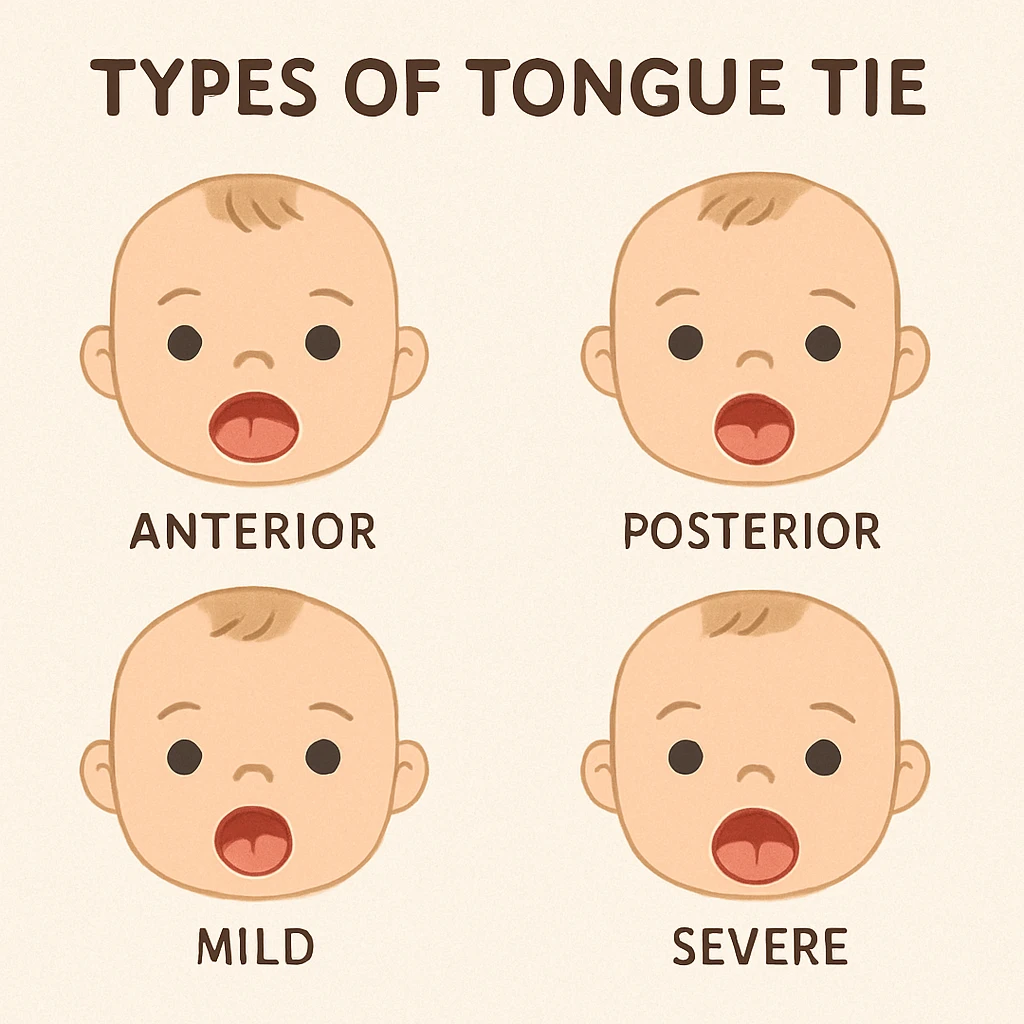
A tongue tie often appears as a thin or thick band under the tongue that prevents it from lifting or extending fully. Parents may notice a heart-shaped tongue tip, limited side-to-side motion, or difficulty touching the roof of the mouth. Some ties are easy to see; others are subtle and require trained evaluation.
Typical visual cues include:
- Short, tight frenulum connecting tongue to the mouth floor
- Tongue that pulls inward when lifted
- Limited tongue elevation or extension
Recognizing these early allows for gentle correction before feeding problems worsen.
Common Symptoms in Infants
Infants with tongue tie often struggle to maintain suction, resulting in prolonged or inefficient feedings. Parents may hear clicking sounds during nursing, and mothers may experience nipple pain or cracking. Babies can tire easily, swallow excess air, and show slower weight gain.
Common symptoms include:
- Difficulty latching
- Frequent or prolonged feeding sessions
- Clicking or leaking during feeding
- Fussiness or sleepiness at the breast
- Slow weight gain or reflux symptoms
Families from Fremont, Newark, and Union City often come to us seeking answers when these feeding patterns persist despite lactation support.
How Tongue Tie Affects Feeding and Development
Tongue tie limits the tongue’s ability to move and coordinate properly, which can lead to inefficient feeding, poor growth, and airway concerns. Because the tongue shapes the palate and jaw, restricted motion may contribute to narrow arches, mouth-open posture, and even future sleep-disordered breathing. Infants with unresolved ties may develop compensatory habits that persist into childhood, including mouth breathing or speech distortion. Our airway-focused team evaluates these patterns early to prevent long-term effects on oral and facial development.
Diagnosing Tongue Tie
Diagnosis involves examining tongue mobility, frenulum tension, and how the baby feeds. During your visit to our Fremont, CA office, our clinicians gently inspect the mouth while observing latch and tongue function. We sometimes coordinate with lactation consultants to evaluate both oral structure and feeding technique. A scoring system may be used to assess severity, measuring tongue lift and extension, frenulum elasticity, and the impact on feeding and comfort. This comprehensive approach ensures we recommend only the necessary level of intervention.
Treatment Options for Tongue Tie in Newborns
The most effective treatment is a precise laser frenectomy that safely releases the restricted tissue with minimal discomfort. At Bay Area Dental, Airway & Sleep, we use advanced laser technology to perform quick, anesthesia-free procedures that allow immediate feeding afterward. The laser seals small blood vessels as it works, reducing bleeding and promoting faster healing.
Clinical research supports these outcomes. A 2016 PubMed study found that infants who underwent tongue-tie or lip-tie release showed significant improvement in breastfeeding within one week of treatment.
Some mild tongue ties can be monitored, but early treatment often prevents chronic feeding issues or later speech challenges. Our team reviews all options with parents before proceeding.
Treatment Overview
- Laser frenectomy: Precise, gentle, and fast
- Conservative monitoring: Used for mild restrictions
- Collaborative care: Guidance from pediatricians and lactation specialists
Aftercare and Recovery
Most babies recover quickly after a laser release and show noticeable improvement in feeding within days. Parents are guided through gentle stretching exercises to keep tissue flexible and prevent reattachment. Follow-up visits allow us to monitor healing and ensure optimal tongue mobility.
Post-release care typically includes:
- Performing recommended tongue exercises
- Watching for infection or re-tightening
- Maintaining regular feeding routines
- Scheduling follow-up appointments with our Fremont office
Our goal is a smooth recovery and confident feeding experience for both baby and parents.
When to Seek Help
Parents should seek professional evaluation if their baby has ongoing latch problems, prolonged feedings, or slow weight gain. The sooner a restriction is identified, the easier it is to correct. Families across the Bay Area turn to Bay Area Dental, Airway & Sleep for gentle, laser-based frenectomy that supports feeding, growth, and comfort.
Schedule a Tongue Tie Consultation →
Frequently Asked Questions
What is an infant tongue tie?
An infant tongue tie, or ankyloglossia, is a short or tight band under the tongue that limits movement and can interfere with breastfeeding.
Does it affect all babies the same way?
No. Some babies have mild ties with minimal issues, while others experience feeding or speech concerns requiring treatment.
Can a tongue tie fix itself?
Occasionally mild ties loosen as babies grow, but most benefit from gentle laser release to restore full tongue mobility and effective feeding.
Is treatment painful for my baby?
Laser frenectomy is fast and precise. Most infants nurse immediately afterward with minimal discomfort and quick healing.
Local Support and Resources
Families throughout Fremont and the Bay Area trust Bay Area Dental, Airway & Sleep for compassionate, airway-centered care. We provide:
Laser frenectomy for infants, children, and adults
Collaboration with pediatricians, lactation consultants, and myofunctional therapists
Education for parents on feeding and airway development
Address: 43195 Mission Blvd #B4, Fremont, CA 94539
Book an Appointment Online →