


If you wake with a sticky, parched mouth most mornings, the cause is often how you breathe while you sleep, not how much water you drank. Snoring and breathing through an open mouth are well-known triggers, and Mayo Clinic lists them among the causes of dry mouth. Medicines and some medical conditions are others. An airway-focused dentist can help you work out which cause applies to you, and that is how we approach it at Bay Area Dental, Airway & Sleep in Fremont.
TL;DR
- Dry mouth at night usually comes from mouth breathing, snoring, medications, or a medical condition. Sleep apnea is one possible cause.
- Water, sugarless gum, a bedside humidifier and avoiding alcohol and tobacco can ease symptoms, but they do not tell you why your mouth is open.
- Dry mouth raises the risk of cavities and gum problems, so extra dental care matters.
- See a doctor if it persists, disturbs sleep, or comes with dry eyes or swollen glands. Loud snoring, gasping or heavy daytime tiredness call for a sleep evaluation.
- Our Fremont practice looks at the airway as well as the teeth, for adults and children.
Table of Contents
- Why your mouth dries out while you sleep
- Mouth breathing, snoring and sleep apnea
- Medications and medical causes
- What helps tonight
- Protect your teeth while you find the cause
- When to see a dentist or doctor
- How an airway-focused dentist helps
- Start with an evaluation
- Our perspective
- FAQ
- Sources
Why your mouth dries out while you sleep
Saliva keeps the gums and tongue moist, protects teeth and helps you swallow. During sleep you produce less of it, and anything that moves air across the mouth dries it further. The Sleep Foundation notes that mouth breathing can dry the mouth, and that a blocked nose is a common reason people breathe through the mouth at night.
Most nighttime dry mouth falls into four groups:
- Mouth breathing. Congestion, allergies or a narrow airway push air through the mouth.
- Snoring and sleep apnea. Both involve a partly or fully narrowed airway.
- Medications. Cleveland Clinic names medications as the most common cause of dry mouth.
- Health conditions and habits. Mayo Clinic lists diabetes, stroke, Sjögren syndrome, aging, cancer therapy, and tobacco or alcohol use.
Mouth breathing, snoring and sleep apnea
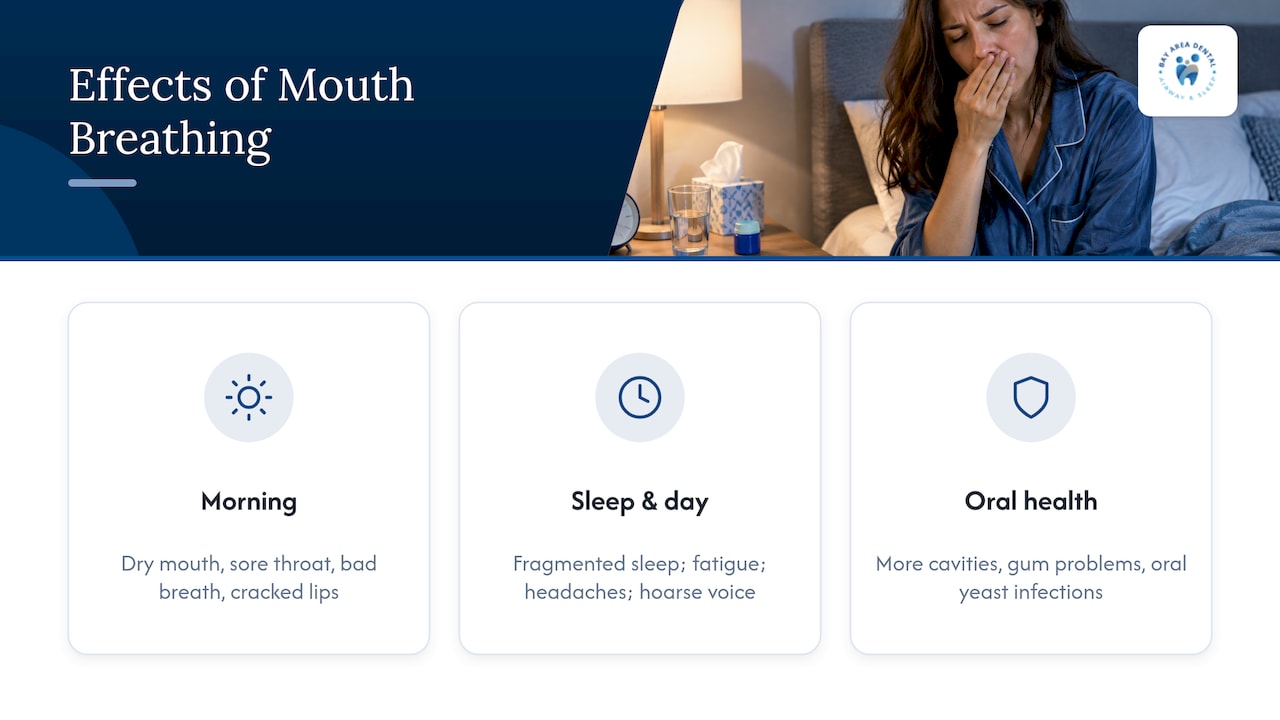
This is the group a dentist can examine directly. The Sleep Foundation says sleeping with your mouth open can bring a dry mouth or sore throat, morning bad breath, cracked lips, fragmented sleep, daytime fatigue, morning headaches and a hoarse voice. It also links long-term mouth breathing to more cavities, gum problems and oral yeast infections.
It also says mouth breathing can be a sign of obstructive sleep apnea, a condition where the airway repeatedly narrows or closes during sleep. If you snore loudly, gasp for air or feel very tired in the daytime, it advises talking with a doctor about a sleep study. The link runs both ways: people with sleep apnea are more likely to wake with a dry mouth, and the likelihood rises with severity, though the connection may partly reflect differences in body weight.
Snoring can also wear on teeth and the jaw. Our pages on how snoring damages teeth and on diagnosing the cause of mouth breathing go deeper on what we look for.
Dry mouth with CPAP
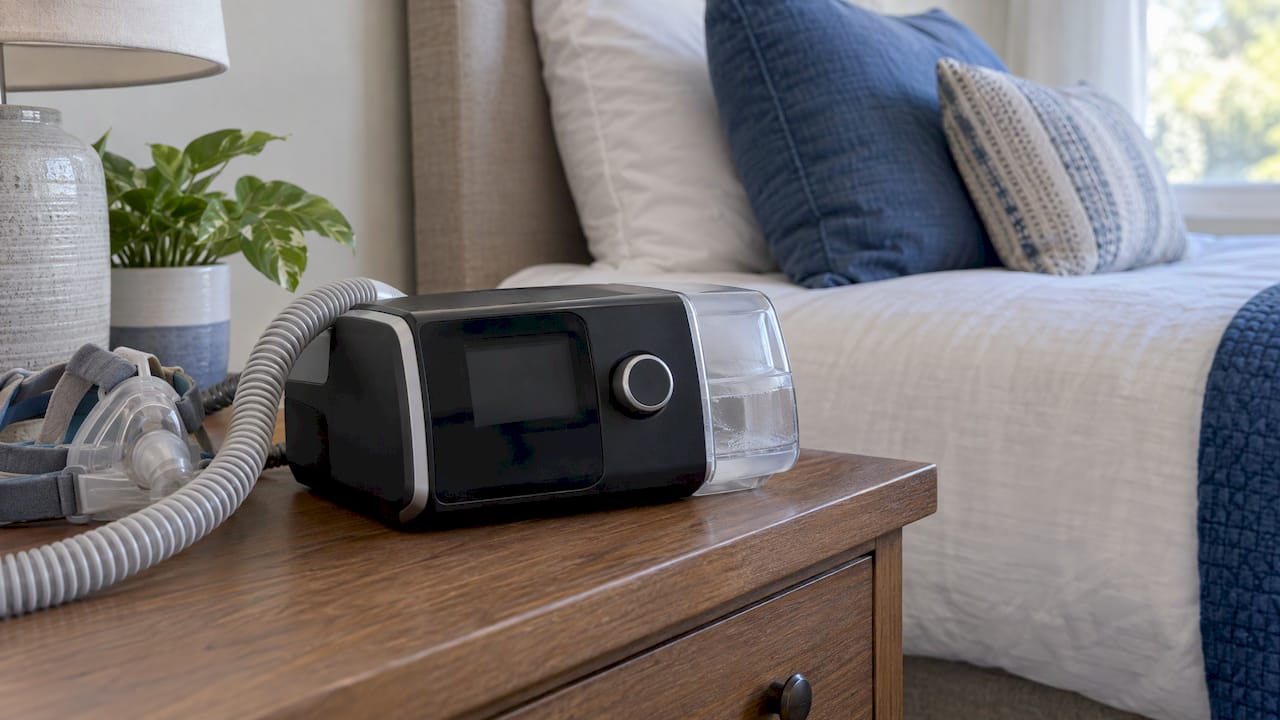
If you already use CPAP, a machine that delivers pressurized air during sleep, the device itself may be the source. The Sleep Foundation notes CPAP commonly causes dry mouth, and some people get it even with the mouth closed. Adding a humidifier to the device can help. Tell the doctor who prescribed it, and ask whether an oral appliance is an option for you.
Medications and medical causes
The Sleep Foundation’s dry mouth guide lists drug types that can dry the mouth: antihistamines, decongestants, antidepressants, antipsychotics, muscle relaxants, diuretics, ADHD stimulants, bladder medications and sedatives, among others. Head and neck radiation is also associated with dry mouth.
Never stop a prescription on your own. The National Institute of Dental and Craniofacial Research (NIDCR) says a physician may change a prescription or dosage when a medicine is the cause. Bring your medication list to that appointment.
Does dry mouth mean diabetes?
Not by itself. Mayo Clinic lists diabetes, stroke, Alzheimer’s disease, Sjögren syndrome and HIV/AIDS among conditions that can cause dry mouth, and advises making an appointment if symptoms do not go away. Dry mouth that continues despite the fixes below deserves a conversation with your physician.
Why water alone may not fix it
Cleveland Clinic explains that saliva coats and protects the mouth lining in ways water cannot. If the salivary glands are not working well, water gives only brief relief. That is one reason persistent dryness is worth investigating rather than just drinking more.
What helps tonight
NIDCR’s guidance gives a practical starting list:
- Drink water through the day (it suggests 8 to 12 eight-ounce glasses) and sip water or sugarless drinks with meals.
- Chew sugarless gum or suck sugarless hard candy to stimulate saliva.
- Limit caffeine and avoid tobacco and alcohol.
- Run a humidifier in the bedroom at night.
- Ask about artificial saliva or other products that keep the mouth wet.
The Sleep Foundation adds keeping water by the bed and using a non-alcoholic mouthwash before sleep. If a stuffy nose is pushing you to breathe through your mouth, treating the congestion helps.
Be careful with mouth taping. The Sleep Foundation says research is very limited, and that if your nasal passages are blocked, taping removes your backup airway and may worsen sleep apnea symptoms. Talk with a doctor first.
If thirst and dryness are part of a broader pattern for you, such as hormonal changes, this overview of thirst during perimenopause covers what drives it and what can ease it.
Protect your teeth while you find the cause
Less saliva means less protection against decay. The American Dental Association’s xerostomia guidance states the goals as finding possible causes, relieving discomfort and preventing complications like cavities and gum infections. It recommends:
- Brushing gently at least twice a day with fluoride toothpaste and flossing daily.
- Dental visits at least twice a year, with yearly bitewing X-rays.
- Daily prescription-strength fluoride gel (0.4% stannous fluoride or 1.1% sodium fluoride) when your dentist advises it.
- Prompt treatment of any fungal or bacterial infection in the mouth.
- Fluoride varnish (0.5%) applied in the office.
A 2014 peer-reviewed review describes xerostomia care as a team effort among dentist, physician and, where relevant, oncologist, with reduced saliva built into each patient’s cavity risk assessment. Our preventative and general dentistry team handles the dental side of that plan.
When to see a dentist or doctor
The Sleep Foundation advises seeing a primary care physician if home treatments fail, dry mouth disrupts your sleep, or it comes with dry eyes or enlarged salivary glands. The doctor can review medications or order tests.
Book a dental visit when you notice:
- Dry mouth most mornings for more than a few weeks.
- Snoring, jaw pain or worn teeth along with the dryness.
- New cavities, gum irritation or persistent bad breath.
- A child who sleeps with an open mouth, snores or has dark circles and restless sleep.
Seek a medical sleep evaluation for loud snoring, gasping or heavy daytime sleepiness.
How an airway-focused dentist helps
A standard checkup treats the dry mouth as a surface problem. We start from the question of why the mouth is open at night. Our practice combines general dentistry with airway and sleep care, so the dryness, the teeth and the breathing can be looked at together.
Depending on what the evaluation shows, our relevant services include oral appliance therapy and sleep solutions for sleep-disordered breathing, myofunctional therapy, and airway-friendly orthodontics. For children, we offer pediatric dental care and laser frenectomy for tongue and lip ties. You can read more about sleep apnea dentistry in Fremont, and about how nasal breathing supports a child’s jaw growth.
Start with an evaluation
If dry mouth has become your normal morning, we can look at your teeth, tongue and airway together and tell you what we find. We use 3D imaging and laser technology to keep treatment minimal and comfortable, and we offer accessible care for Deaf patients with tailored communication. Visit Bay Area Dental, Airway & Sleep to book.
Our perspective
Dry mouth at night is one of the most common things patients mention almost in passing, and it is rarely just a dry mouth. Often it is the visible end of a breathing problem.
We believe dental care should look at the whole person. A mouth that stays open at night points us to the nose, the tongue, the jaw and the airway, and that is where we look for root causes instead of only treating symptoms.
That is why we bring airway therapy, myofunctional therapy, orthodontics and restorative dentistry under one roof, for children and adults alike. When the cause is outside dentistry, such as a medication or a medical condition, we will tell you so and work alongside your physician.
Bay Area Dental, Airway & Sleep
FAQ
How do you stop dry mouth at night?
Start with water through the day, sugarless gum or candy before bed, a bedroom humidifier, and no alcohol or tobacco. Treat nasal congestion if it forces you to breathe through your mouth. If dryness continues, find out whether mouth breathing, snoring or a medication is behind it.
Can sleep apnea cause dry mouth?
Yes. People with sleep apnea are more likely to wake with a dry mouth, and mouth breathing during sleep can be a sign of it. Loud snoring, gasping or heavy daytime tiredness are reasons to ask a doctor about a sleep study.
Why is my mouth dry even though I drink water?
Saliva protects the mouth in ways water does not. If your glands are making less of it, or air keeps moving over an open mouth, water gives only temporary relief. A dentist or physician can look for the cause.
Can a dentist treat dry mouth?
A dentist can check for cavity and gum damage, recommend fluoride and saliva-supporting products, and look at airway-related causes such as mouth breathing and snoring. If a medication or condition is responsible, your physician manages that part.
Sources
- Dry mouth: Symptoms and causes, Mayo Clinic
- Dry Mouth (Xerostomia), Cleveland Clinic
- Sleeping With Mouth Open and Mouth Breathing, Sleep Foundation
- Dry Mouth at Night: Causes, Prevention, and Treatment, Sleep Foundation
- Waking Up With a Dry Throat, Sleep Foundation
- Dry Mouth: Questions and Answers, NIDCR
- Xerostomia (Dry Mouth), American Dental Association
- Managing xerostomia and salivary gland hypofunction, 2014 review
- Perimenopause Thirst: Why It Happens and What Helps